


 Cart
Cart
 sales@molnova.com



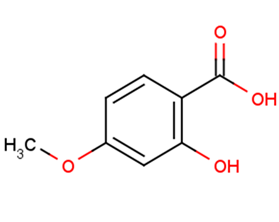
4-Methoxysalicylic acid
CAS No. 2237-36-7
4-Methoxysalicylic acid( 4-Methoxysalicylic Acid )
Catalog No. M18258 CAS No. 2237-36-7
2-hydroxy-4-methoxybenzoic acid is a predicted metabolite generated by BioTransformer1 that is produced by the metabolism of 3-(2-hydroxy-4-methoxyphenyl)propanoic acid.
Purity : >98% (HPLC)
 COA
Datasheet
HNMR
HPLC
MSDS
Handing Instructions
COA
Datasheet
HNMR
HPLC
MSDS
Handing Instructions
| Size | Price / USD | Stock | Quantity |
| 1 mL x 10 mM in DMSO | 29 | In Stock |


|
| 100MG | Get Quote | In Stock |
|
| 200MG | Get Quote | In Stock |
|
| 500MG | Get Quote | In Stock |
|
| 1G | 27 | In Stock |
|
Biological Information
-
Product Name4-Methoxysalicylic acid
-
NoteResearch use only, not for human use.
-
Brief Description2-hydroxy-4-methoxybenzoic acid is a predicted metabolite generated by BioTransformer1 that is produced by the metabolism of 3-(2-hydroxy-4-methoxyphenyl)propanoic acid.
-
Description2-hydroxy-4-methoxybenzoic acid is a predicted metabolite generated by BioTransformer1 that is produced by the metabolism of 3-(2-hydroxy-4-methoxyphenyl)propanoic acid. It is generated by unspecified-gutmicro enzyme via a beta-oxidation-of-carbxoylic-acid reaction. This beta-oxidation-of-carbxoylic-acid occurs in human gut microbiota.
-
In Vitro——
-
In Vivo——
-
Synonyms4-Methoxysalicylic Acid
-
PathwayOthers
-
TargetOther Targets
-
RecptorOthers
-
Research Area——
-
Indication——
Chemical Information
-
CAS Number2237-36-7
-
Formula Weight168.14
-
Molecular FormulaC8H8O4
-
Purity>98% (HPLC)
-
SolubilityIn Vitro:?DMSO : 50 mg/mL (297.35 mM)
-
SMILESCOC1=CC(=C(C=C1)C(=O)O)O
-
Chemical Name——
Shipping & Storage Information
-
Storage(-20℃)
-
ShippingWith Ice Pack
-
Stability≥ 2 years
Reference
molnova catalog



related products
-
α-CGRP (31-37) (cani...
α-CGRP (31-37) (canine, mouse, rat)
-
Band 3 Protein (547-...
Band 3 Protein (547-553) (human)
-
Porcine dynorphin A(...
Porcine dynorphin A (1-13) is a potent, endogenous κ opioid receptor agonist and is antinociceptive at physiological concentrations. Exposure to dynorphin A (1-13) causes acute increases in [Ca2+]i in individual neurons similar to increases seen with acute NMDA treatment.
