


 Cart
Cart
 sales@molnova.com



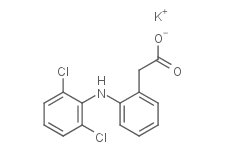
Diclofenac Potassium
CAS No. 15307-81-0
Diclofenac Potassium( —— )
Catalog No. M18067 CAS No. 15307-81-0
Diclofenac potassium is a nonsteroidal anti-inflammatory drug taken to reduce inflammation and as an analgesic reducing pain in certain conditions.
Purity : >98% (HPLC)
 COA
Datasheet
HNMR
HPLC
MSDS
Handing Instructions
COA
Datasheet
HNMR
HPLC
MSDS
Handing Instructions
| Size | Price / USD | Stock | Quantity |
| 1 mL x 10 mM in DMSO | 35 | In Stock |


|
| 100MG | Get Quote | In Stock |
|
| 200MG | Get Quote | In Stock |
|
| 500MG | 37 | In Stock |
|
| 1G | 39 | In Stock |
|
Biological Information
-
Product NameDiclofenac Potassium
-
NoteResearch use only, not for human use.
-
Brief DescriptionDiclofenac potassium is a nonsteroidal anti-inflammatory drug taken to reduce inflammation and as an analgesic reducing pain in certain conditions.
-
DescriptionDiclofenac potassium is a nonsteroidal anti-inflammatory drug taken to reduce inflammation and as an analgesic reducing pain in certain conditions.(In Vitro):Diclofenac effectively blocks COX-1 mediated prostanoid production from U937 cell microsomes, with an IC50 of 7±3 nM.Diclofenac (1-60 μM; 1 day) induces neural stem cells (NSCs) death in a concentration-dependent manner.Diclofenac (10-60 μM; 6 hours) increases the expression of cleaved (activated) caspase-3.(In Vivo):Diclofenac (3 mg/kg, b.i.d., for 5 days) significantly increases faecal 51Cr excretion in rats, and such effect is also observed in squirrel monkeys after administrated of 1 mg/kg twice daily for 4 days.Diclofenac (10 mg/kg; administered via oral route just prior to induction of inflammation) shows in vivo anti-inflammatory activity in Wistar rats.
-
In VitroDiclofenac effectively blocks COX-1 mediated prostanoid production from U937 cell microsomes, with an IC50 of 7±3 nM. Diclofenac (1-60 μM; 1 day) induces neural stem cells (NSCs) death in a concentration-dependent manner.Diclofenac (10-60 μM; 6 hours) increases the expression of cleaved (activated) caspase-3. Cell Viability Assay Cell Line:Neural stem cells (NSCs) Concentration:1, 3, 10, 30, 60 μM Incubation Time:1 day Result:Induction of cell death was concentration-dependent and the effect was not saturated at a concentration of up to 60 μM.Western Blot Analysis Cell Line:Neural stem cells (NSCs) Concentration:10, 30 or 60 μM Incubation Time:6 hours Result:The activation of caspase-3 was increased in a concentration-dependent manner.
-
In VivoDiclofenac (3 mg/kg, b.i.d., for 5 days) significantly increases faecal 51Cr excretion in rats, and such effect is also observed in squirrel monkeys after administrated of 1 mg/kg twice daily for 4 days. Diclofenac (10 mg/kg; administered via oral route just prior to induction of inflammation) shows in vivo anti-inflammatory activity in Wistar rats. Animal Model:Male Sprague-Dawley rats (150±200 g) Dosage:3 mg/kg Administration:Oral administration, b.i.d., for 5 days Result:Resulted in a significant increase in faecal 51Cr excretion.Animal Model:Wistar rats (150-175 g) bearing Formalin-induced rat foot paw edema model Dosage:10 mg/kg Administration:Administered via oral route just prior to induction of inflammation Result:Showed in vivo anti-inflammatory activity (% edema inhibition=29.2, 1 h; 22.2, 3 h; 20, 6 h).
-
Synonyms——
-
PathwayOthers
-
TargetOther Targets
-
RecptorOthers
-
Research AreaOthers-Field
-
Indication——
Chemical Information
-
CAS Number15307-81-0
-
Formula Weight334.24
-
Molecular FormulaC14H10Cl2KNO2
-
Purity>98% (HPLC)
-
SolubilityIn Vitro:?DMSO : 100 mg/mL (299.19 mM)
-
SMILES[K+].[O-]C(=O)CC1=CC=CC=C1NC1=C(Cl)C=CC=C1Cl
-
Chemical Name——
Shipping & Storage Information
-
Storage(-20℃)
-
ShippingWith Ice Pack
-
Stability≥ 2 years
Reference
1. Dastidar SG, et al. Int J Antimicrob Agents, 2000, 14(3), 249-251.
molnova catalog



related products
-
Nepetalacton
4aα,7α,7aα-Nepetalactone exhibits antibacterial activity, and inhibits Escherichia coli, Pseudomonas aeruginosa, Staphylococcus aureus, Salmonella typhi and Enterococcus faecalis.
-
TH1085
TH1085 is an enhancer of OGG1. TH1085 stimulates DNA repair and protects cells from the environmental hazard paraquat (PQ).
-
2-Pentadecanone
2-Pentadecanone is a marine derived natural products found in Caulocystis cephalornithos.
