


 Cart
Cart
 sales@molnova.com



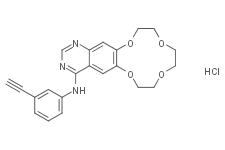
Icotinib Hydrochloride
CAS No. 1204313-51-8
Icotinib Hydrochloride( BPI-2009H )
Catalog No. M17189 CAS No. 1204313-51-8
Icotinib Hydrochloride is the hydrochloride salt form of icotinib, an orally available quinazoline-based inhibitor of EGFR, with potential antineoplastic activity.
Purity : >98% (HPLC)
 COA
Datasheet
HNMR
HPLC
MSDS
Handing Instructions
COA
Datasheet
HNMR
HPLC
MSDS
Handing Instructions
| Size | Price / USD | Stock | Quantity |
| 1 mL x 10 mM in DMSO | 58 | In Stock |


|
| 5MG | 52 | In Stock |
|
| 10MG | 76 | In Stock |
|
| 25MG | 136 | In Stock |
|
| 50MG | 222 | In Stock |
|
| 100MG | 330 | In Stock |
|
| 200MG | 490 | In Stock |
|
| 500MG | Get Quote | In Stock |
|
| 1G | Get Quote | In Stock |
|
Biological Information
-
Product NameIcotinib Hydrochloride
-
NoteResearch use only, not for human use.
-
Brief DescriptionIcotinib Hydrochloride is the hydrochloride salt form of icotinib, an orally available quinazoline-based inhibitor of EGFR, with potential antineoplastic activity.
-
DescriptionIcotinib Hydrochloride is the hydrochloride salt form of icotinib, an orally available quinazoline-based inhibitor of EGFR, with potential antineoplastic activity. Icotinib selectively inhibits the wild-type and several mutated forms of EGFR tyrosine kinase. This may lead to an inhibition of EGFR-mediated signal transduction and may inhibit cancer cell proliferation. EGFR, a receptor tyrosine kinase, has been upregulated in a variety of cancer cell types.
-
In VitroIncubation with Iconitib at 0.5 μM results in kinase activity inhibition of 91%, 99%, 96%, 61% and 61%, respectively. Iconitib inhibits the proliferation of A431 and BGC-823 A549, H460 and KB cell lines with IC50s of 1, 4.06, 12.16, 16.08, 40.71 μM. When profiled with 88 kinases, Icotinib only shows meaningful inhibitory activity to EGFR and its mutants. Icotinib blocks EGFR-mediated intracellular tyrosine phosphorylation (IC50=45 nM) in the human epidermoid carcinoma A431 cell line and inhibits tumor cell proliferation.
-
In VivoIcotinib exhibits potent dose-dependent antitumor effects in nude mice carrying a variety of human tumor-derived xenografts. The drug is well tolerated at doses up to 120 mg/kg/day in mice without mortality or significant body weight loss during the treatment. Icotinib inhibits tumor growth at a rate of 25.2%, 45.6% and 51.5% in the A431 cell line groups; 3.4%, 25.9% and 31.0% in the A549 cell line groups; 49.4%, 52.6% and 67.4% in the H460 cell line groups, and 30.3%, 36.4% and 46.5% in the HCT8 cell line groups, at 30, 60 and 120 mg/kg/dose, respectively.
-
SynonymsBPI-2009H
-
PathwayOthers
-
TargetOther Targets
-
RecptorEGFR| EGFR mutants
-
Research AreaCancer
-
Indication——
Chemical Information
-
CAS Number1204313-51-8
-
Formula Weight427.88
-
Molecular FormulaC22H22ClN3O4
-
Purity>98% (HPLC)
-
SolubilityDMSO : 25 mg/mL. 58.43 mM;
-
SMILESC#Cc1cc(ccc1)Nc1ncnc2cc3OCCOCCOCCOc3cc12.Cl
-
Chemical Name——
Shipping & Storage Information
-
Storage(-20℃)
-
ShippingWith Ice Pack
-
Stability≥ 2 years
Reference
1. Tan F, et al. Lung Y. 2012 May;76(2):177-82.
molnova catalog



related products
-
Mps1-IN-1
Mps1-IN-1 is a potent, selective, and ATP-competitive inhibitor of Mps1 kinase (IC50: 367 nM).
-
(z)-4,6-Dihydroxy-2-...
4,6,4'-Trihydroxy-3'-methoxyaurone is an herbicide. At concentrations of 100 and 1000 μg/mL, 4,6,4'-Trihydroxy-3'-methoxyaurone is able to inhibit the growth of rape root and barnyardgrass seedlings1.
-
Mannitol
Mannitol is a osmotic diuretic it may play a role in reducing off-target 68Ga-PSMA renal uptake
