


 Cart
Cart
 sales@molnova.com



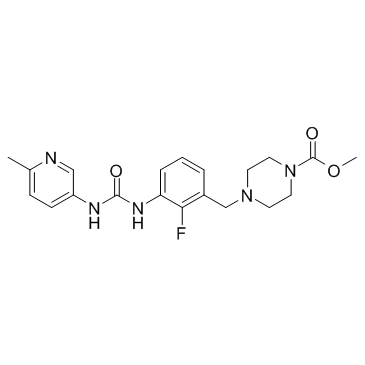
Omecamtiv mecarbil
CAS No. 873697-71-3
Omecamtiv mecarbil ( CK-1827452 )
Catalog No. M16353 CAS No. 873697-71-3
Omecamtiv mecarbil (CK-1827452) is the first potent cardiac myosin activator that can specifically activate the cardiac myosin S1 domain but not other muscle myosins.
Purity : >98% (HPLC)
 COA
Datasheet
HNMR
HPLC
MSDS
Handing Instructions
COA
Datasheet
HNMR
HPLC
MSDS
Handing Instructions
| Size | Price / USD | Stock | Quantity |
| 1 mL x 10 mM in DMSO | 65 | In Stock |


|
| 2MG | 46 | In Stock |
|
| 5MG | 73 | In Stock |
|
| 10MG | 120 | In Stock |
|
| 25MG | 197 | In Stock |
|
| 50MG | 343 | In Stock |
|
| 100MG | 511 | In Stock |
|
| 200MG | Get Quote | In Stock |
|
| 500MG | Get Quote | In Stock |
|
| 1G | Get Quote | In Stock |
|
Biological Information
-
Product NameOmecamtiv mecarbil
-
NoteResearch use only, not for human use.
-
Brief DescriptionOmecamtiv mecarbil (CK-1827452) is the first potent cardiac myosin activator that can specifically activate the cardiac myosin S1 domain but not other muscle myosins.
-
DescriptionOmecamtiv mecarbil (CK-1827452) is the first potent cardiac myosin activator that can specifically activate the cardiac myosin S1 domain but not other muscle myosins. In clinical trials, omecamtiv mecarbil has been considered as a promising therapeutic approach to treat systolic heart failure1.(In Vitro):Omecamtiv mecarbil (10 μM) reduces the maximal ATPase (kcat) 4.5-fold and dramatically reduces the actin concentration at which ATPase is half-maximal (KATPase) 30-fold. The Omecamtiv mecarbil-induced inhibition of the actin-activated ATPase is evaluated in a concentration-dependent manner to determine the EC50 (0.52 ± 0.10 μM). Omecamtiv mecarbil does not change the overall actin affinity. Omecamtiv mecarbil traps a population of myosin heads in a weak actin affinity state with slow product release. Omecamtiv mecarbil can reduce the actin sliding velocity more than 100-fold in the in vitro motility assay. (In Vivo):Omecamtiv mecarbil (100-1000 ng/mL) demonstrates concentration-dependent increases in FS in Sprague Dawley rats model. Omecamtiv mecarbil demonstrates good PK parameters in both rats (Sprague Dawley) and dogs (Beagle) with clearances of 22 and 7.2 mL/min/kg, volumes of 3.5 and 3.6 L/kg, and bioavailabilities (F%) of 100 and 80%, respectively. Omecamtiv mecarbil does not affect the phosphorylation status of myofilament proteins in both WT and KO hearts as shown by the absence of significant differences between pre and post Omecamtiv mecarbil samples within WT and KO groups, or affect the force generation at maximal Ca2+ activation (pCa 4.5) in any of the groups. Omecamtiv mecarbil increases the responsiveness of the cardiac myofilaments to Ca2+ at submaximal Ca2+-activations.
-
In VitroOmecamtiv mecarbil (10 μM) reduces the maximal ATPase (kcat) 4.5-fold and dramatically reduces the actin concentration at which ATPase is half-maximal (KATPase) 30-fold. The Omecamtiv mecarbil-induced inhibition of the actin-activated ATPase is evaluated in a concentration-dependent manner to determine the EC50 (0.52 ± 0.10 μM). Omecamtiv mecarbil does not change the overall actin affinity. Omecamtiv mecarbil traps a population of myosin heads in a weak actin affinity state with slow product release. Omecamtiv mecarbil can reduce the actin sliding velocity more than 100-fold in the in vitro motility assay.
-
In VivoOmecamtiv mecarbil (100-1000 ng/mL) demonstrates concentration-dependent increases in FS in Sprague?Dawley rats model. Omecamtiv mecarbil demonstrates good PK parameters in both rats (Sprague Dawley) and dogs (Beagle) with clearances of 22 and 7.2 mL/min/kg, volumes of 3.5 and 3.6 L/kg, and bioavailabilities (F%) of 100 and 80%, respectively. Omecamtiv mecarbil does not affect the phosphorylation status of myofilament proteins in both WT and KO hearts as shown by the absence of significant differences between pre and post Omecamtiv mecarbil samples within WT and KO groups, or affect the force generation at maximal Ca2+ activation (pCa 4.5) in any of the groups. Omecamtiv mecarbil increases the responsiveness of the cardiac myofilaments to Ca2+ at submaximal Ca2+-activations.
-
SynonymsCK-1827452
-
PathwayEndocrinology/Hormones
-
TargetATPase
-
RecptorATPase
-
Research AreaCardiovascular Disease
-
Indication——
Chemical Information
-
CAS Number873697-71-3
-
Formula Weight401.43
-
Molecular FormulaC20H24FN5O3
-
Purity>98% (HPLC)
-
SolubilityEthanol: 6 mg/mL (14.94 mM); DMSO: 80 mg/mL (199.28 mM)
-
SMILESO=C(N1CCN(CC2=CC=CC(NC(NC3=CC=C(C)N=C3)=O)=C2F)CC1)OC
-
Chemical Namemethyl 4-(2-fluoro-3-(3-(6-methylpyridin-3-yl)ureido)benzyl)piperazine-1-carboxylate
Shipping & Storage Information
-
Storage(-20℃)
-
ShippingWith Ice Pack
-
Stability≥ 2 years
Reference
1.Anderson RL, et al. Mol Bio Cell, 2005, 16.
molnova catalog



related products
-
AGN-201904
AGN-201904 is an omeprazole prodrug and proton pump inhibitor, which may delay aging and be used for the prevention and treatment of peptic ulcers.
-
Oligomycin A
Oligomycin A, created by Streptomyces, acts as a mitochondrial F0F1-ATPase inhibitor, with a Ki of 1 μM.
-
Brefeldin A
Brefeldin A is a lactone antibiotic and ATPase inhibitor for protein transport with IC50 of 0.2 μM in HCT 116 cells, induces Y cell differentiation and apoptosis.
