


 Cart
Cart
 sales@molnova.com



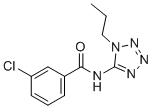
SRJ-23
CAS No. 865285-29-6
SRJ-23( SRJ23 | SRJ 23 )
Catalog No. M16278 CAS No. 865285-29-6
A novel semisynthetic derivative of andrographolide that directly target Ras to block the exchange of GDP for GTP and thus prevent Ras activation.
Purity : >98% (HPLC)
 COA
Datasheet
HNMR
HPLC
MSDS
Handing Instructions
COA
Datasheet
HNMR
HPLC
MSDS
Handing Instructions
| Size | Price / USD | Stock | Quantity |
| 1 mL x 10 mM in DMSO | 73 | In Stock |


|
| 5MG | 65 | In Stock |
|
| 10MG | 107 | In Stock |
|
| 25MG | 217 | In Stock |
|
| 50MG | 346 | In Stock |
|
| 100MG | 554 | In Stock |
|
| 200MG | 788 | In Stock |
|
| 500MG | Get Quote | In Stock |
|
| 1G | Get Quote | In Stock |
|
Biological Information
-
Product NameSRJ-23
-
NoteResearch use only, not for human use.
-
Brief DescriptionA novel semisynthetic derivative of andrographolide that directly target Ras to block the exchange of GDP for GTP and thus prevent Ras activation.
-
DescriptionA novel semisynthetic derivative of andrographolide that directly target Ras to block the exchange of GDP for GTP and thus prevent Ras activation; significantly suppresses K-Ras GTP loading, whereas H-Ras and N-Ras GTP loading are much less sensitive; reduceds K-RasG12V GTP, phosphorylated ERK (ppERK) levels in K-RasG12V-transformed cells; induces G1 arrest and apoptosis in MCF-7 and HCT-116 cells, respectively.
-
In VitroKKL-35 exhibits broad-spectrum antibiotic activity. KKL-35 prevents growth of B. anthracis and M. smegmatis with minimum inhibitory concentration (MIC) values of less than 6 μM. KKL-35 inhibit trans-translation at some step before proteolysis of tagged proteins. KKL-35 inhibits tagging of DHFR-ns. A large amount of untagged DHFR is produced in reactions with the highest concentrations of KKL-35, indicating that KKL-35 does not inhibit translation. KKL-35 prevents growth of WT S. flexneri with a MIC of 6 μM, and addition of KKL-35 to a growing culture of S. flexneri stops growth. In an S. flexneri strain expressing ArfA and deleted for ssrA, addition of KKL-35 has little effect on viability or growth rate. KKL-35 inhibits the growth of E. coli ?tolC, which is deficient in small molecule efflux, with an MIC of 0.3 μM.
-
In VivoEvidence suggest that the in vivo effects of KKL-35 are caused by inhibition of the release of nonstop translation complexes by trans-translation. KKL-35 inhibits trans-translation and prevents growth of S. flexneri strains that require trans-translation. The correlation between inhibition of trans-translation and growth is supported by genetic and pharmacological experiments showing that alternative mechanisms to release nonstop translation complexes relieve the growth suppression of KKL-35.
-
SynonymsSRJ23 | SRJ 23
-
PathwayMAPK/ERK Signaling
-
TargetRas
-
Recptortrans-translationtaggingreaction
-
Research Area——
-
Indication——
Chemical Information
-
CAS Number865285-29-6
-
Formula Weight317.704
-
Molecular FormulaC15H9ClFN3O2
-
Purity>98% (HPLC)
-
SolubilityDMSO: Soluble ( < 1 mg/ml refers to the product slightly soluble or insoluble )
-
SMILESO=C(NC1=NN=NN1CCC)C2=CC=CC(Cl)=C2
-
Chemical Name4-Chloro-N-[5-(4-fluorophenyl)-1,3,4-oxadiazol-2-yl]-benzamide
Shipping & Storage Information
-
Storage(-20℃)
-
ShippingWith Ice Pack
-
Stability≥ 2 years
Reference
1. Hocker HJ, et al. Proc Natl Acad Sci U S A. 2013 Jun 18;110(25):10201-6.
2. Jada SR, et al. Br J Pharmacol. 2008 Nov;155(5):641-54.
3. Wong HC, et al. Cell Biol Toxicol. 2014 Oct;30(5):269-88.
molnova catalog



related products
-
6H05
6H05 is a selective, allosteric inhibitor of oncogenic mutant K-Ras(G12C).
-
ML-098
ML-098 (CID-7345532) is a small molecule pan activator families of Ras-related GTPases (EC50=77-588 nM for Rab7, Rab-2A, Cdc42, Rac1).
-
KRAS G12C inhibitor ...
A potent, selective, covalent KRAS G12C inhibitor that selectively inhibit KRAS G12C-dependent signaling and cancer cell growth at sub-micromolar concentrations.
