


 Cart
Cart
 sales@molnova.com



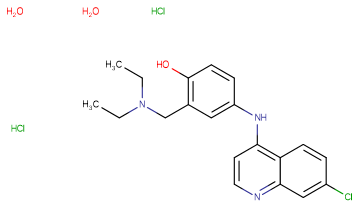
Amodiaquine hydrochloride
CAS No. 6398-98-7
Amodiaquine hydrochloride( —— )
Catalog No. M15431 CAS No. 6398-98-7
A 4-aminoquinoline compound with anti-inflammatory properties.
Purity : >98% (HPLC)
 COA
Datasheet
HNMR
HPLC
MSDS
Handing Instructions
COA
Datasheet
HNMR
HPLC
MSDS
Handing Instructions
| Size | Price / USD | Stock | Quantity |
| 1 mL x 10 mM in DMSO | 34 | In Stock |


|
| 100MG | 31 | In Stock |
|
| 200MG | Get Quote | In Stock |
|
| 500MG | 69 | In Stock |
|
| 1G | Get Quote | In Stock |
|
Biological Information
-
Product NameAmodiaquine hydrochloride
-
NoteResearch use only, not for human use.
-
Brief DescriptionA 4-aminoquinoline compound with anti-inflammatory properties.
-
DescriptionA 4-aminoquinoline compound with anti-inflammatory properties. (In Vitro):Amodiaquine (10-20 μM; 4 hours) treatment suppresses LPS-induced expression of proinflammatory cytokines (IL-1β, interleukin-6, TNF-α and iNOS) in a dose-dependent manner.Amodiaquine (5 μM; 24 hours) significantly inhibits neurotoxin (6-OHDA-induced cell death in primary dopamine cells as examined by the number of TH+ neurons and dopamine uptake. The neuroprotective effect of Amodiaquine is also observed in rat PC12 cells.(In Vivo):Amodiaquine (40 mg/kg; intraperitoneal injection; daily; for 3 days; male ICR mice) treatment diminishes perihematomal activation of microglia/macrophages and astrocytes. Amodiaquine also suppresses ICH-induced mRNA expression of IL-1β, CCL2 and CXCL2, and ameliorated motor dysfunction of mice.
-
In VitroAmodiaquine (10-20 μM; 4 hours) treatment suppresses LPS-induced expression of proinflammatory cytokines (IL-1β, interleukin-6, TNF-α and iNOS) in a dose-dependent manner.Amodiaquine (5 μM; 24 hours) significantly inhibits neurotoxin (6-OHDA-induced cell death in primary dopamine cells as examined by the number of TH+ neurons and dopamine uptake. The neuroprotective effect of Amodiaquine is also observed in rat PC12 cells. RT-PCR Cell Line:Primary microglia Concentration:10 μM, 15 μM, 20 μM Incubation Time:4 hours Result:Suppressed LPS-induced expression of proinflammatory cytokines (IL-1β, interleukin-6, TNF-α and iNOS) in a dose-dependent manner.
-
In VivoAmodiaquine (40 mg/kg; intraperitoneal injection; daily; for 3 days; male ICR mice) treatment diminishes perihematomal activation of microglia/macrophages and astrocytes. Amodiaquine also suppresses ICH-induced mRNA expression of IL-1β, CCL2 and CXCL2, and ameliorated motor dysfunction of mice. Animal Model:Male ICR mice (8-10?weeks of age) induced ntracerebral hemorrhage (ICH) Dosage:40 mg/kg Administration:Intraperitoneal injection; daily; for 3 days Result:Diminished perihematomal activation of microglia/macrophages and astrocytes.
-
Synonyms——
-
PathwayGPCR/G Protein
-
TargetHistamine Receptor
-
Recptorhistamine N-methyl transferase
-
Research AreaInfection
-
Indication——
Chemical Information
-
CAS Number6398-98-7
-
Formula Weight464.82
-
Molecular FormulaC20H28Cl3N3O3
-
Purity>98% (HPLC)
-
SolubilityWater: 10 mM
-
SMILESO.O.Cl.Cl.CCN(CC)CC1=C(O)C=CC(NC2=C3C=CC(Cl)=CC3=NC=C2)=C1
-
Chemical Name——
Shipping & Storage Information
-
Storage(-20℃)
-
ShippingWith Ice Pack
-
Stability≥ 2 years
Reference
1.de Villiers KA, et al. J Inorg Biochem. 2008 Aug;102(8):1660-7.
molnova catalog



related products
-
Chlorphenoxamine
Chlorphenoxamine is an antihistamine and anticholinergic used as an antipruritic and antiparkinsonian agent.
-
Fexofenadine
Fexofenadine, an antihistamine pharmaceutical drug, is used to treat allergy symptoms, such as nasal congestion, hay fever, and urticaria.
-
Hydroxyzine free bas...
Hydroxyzine is an antagonist of histamine H1-receptor. Hydroxyzine is an antihistaminic with sedative properties used in the control of anxiety and emesis.
