


 Cart
 sales@molnova.com




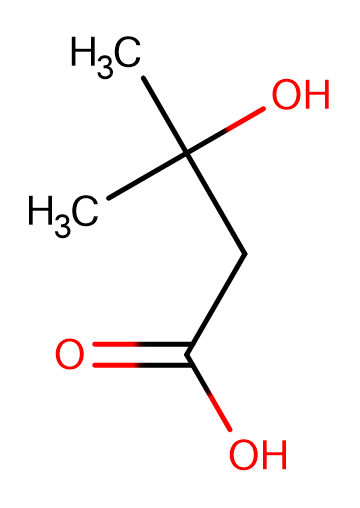
Beta-Hydroxyisovaleric acid
CAS No. 625-08-1
Beta-Hydroxyisovaleric acid( —— )
Catalog No. M15365 CAS No. 625-08-1
Used as pharmaceutical intermediates.
Purity : >98% (HPLC)
 COA
Datasheet
HNMR
HPLC
MSDS
Handing Instructions
| Size | Price / USD | Stock | Quantity |
| 1 mL x 10 mM in DMSO | 44 | In Stock |


|
| 100MG | Get Quote | In Stock |
|
| 200MG | Get Quote | In Stock |
|
| 500MG | 39 | In Stock |
|
| 1G | 54 | In Stock |
|
Biological Information
-
Product NameBeta-Hydroxyisovaleric acid
-
NoteResearch use only, not for human use.
-
Brief DescriptionUsed as pharmaceutical intermediates.
-
DescriptionUsed as pharmaceutical intermediates.
-
In VitroThe reduced activity of methylcrotonyl-CoA carboxylase (MCC) leads to an elevated excretion of 3-methylcrotonic acid, the product of its hydration (3-hydroxyisovaleric acid: 3-HIA), and 3-methylcrotonylglycine, formed by conjugation with glycine.
-
In VivoIn male mice (ICR/Jcl) at 8 weeks of age fed the biotin-deficient diet for 6 weeks, the concentration of urinary 3-Hydroxyisovaleric acid is 114.2 mM creatinine, which is higher than the concentration of 35.2 mM creatinine in mice fed the biotin-deficient diet for 4 weeks.
-
Synonyms——
-
PathwayOthers
-
TargetOther Targets
-
RecptorOthers
-
Research Area——
-
Indication——
Chemical Information
-
CAS Number625-08-1
-
Formula Weight118.13
-
Molecular FormulaC5H10O3
-
Purity>98% (HPLC)
-
SolubilityLimited solubility
-
SMILESCC(C)(O)CC(O)=O
-
Chemical Name——
Shipping & Storage Information
-
Storage(-20℃)
-
ShippingWith Ice Pack
-
Stability≥ 2 years
Reference
1. Sabourin PJ, Bieber LL. Arch Biochem Biophys. 1981 Jan;206(1):132-44.
molnova catalog


related products
-
diethyl hexyl phtha...
Bis(2-ethylhexyl) Phthalate plasticizer is used to impart softness and flexibility to PVC products. Bis(2-ethylhexyl) Phthalate has been implicated in obesity and insulin resistance. It inhibits prostaglandin synthesis and adversely affects the endocrine system.
-
16,17-Epoxypregnenol...
16, 17-Epoxypregnenolone acetate can be produced by Burkholderia cepacia SE-1.
-
Dynorphin B (1-13) (...
Dynorphin B (1-13), a 13 amino acid, is an extraordinarily potent opioid peptide.
