


 Cart
Cart
 sales@molnova.com



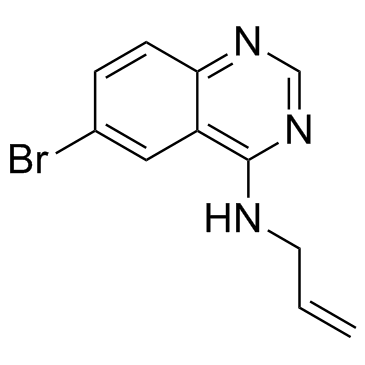
SMER-28
CAS No. 307538-42-7
SMER-28( SMER28 )
Catalog No. M13983 CAS No. 307538-42-7
A small-molecule enhancer/inducer of Autophagy; decreases the levels of Aβ peptide (EC50=10 uM) and APP-CTF (EC50 of 20 uM) in a γ-secretase-independent manner in primary neuronal cultures, Atg5, Beclin1 and Ulk1 are shown to be involved in the degradation of Aβ and APP-CTF.
Purity : >98% (HPLC)
 COA
Datasheet
HNMR
HPLC
MSDS
Handing Instructions
COA
Datasheet
HNMR
HPLC
MSDS
Handing Instructions
| Size | Price / USD | Stock | Quantity |
| 1 mL x 10 mM in DMSO | 45 | In Stock |


|
| 2MG | 29 | In Stock |
|
| 5MG | 43 | In Stock |
|
| 10MG | 64 | In Stock |
|
| 25MG | 123 | In Stock |
|
| 50MG | 226 | In Stock |
|
| 100MG | 365 | In Stock |
|
| 200MG | Get Quote | In Stock |
|
| 500MG | Get Quote | In Stock |
|
| 1G | Get Quote | In Stock |
|
Biological Information
-
Product NameSMER-28
-
NoteResearch use only, not for human use.
-
Brief DescriptionA small-molecule enhancer/inducer of Autophagy; decreases the levels of Aβ peptide (EC50=10 uM) and APP-CTF (EC50 of 20 uM) in a γ-secretase-independent manner in primary neuronal cultures, Atg5, Beclin1 and Ulk1 are shown to be involved in the degradation of Aβ and APP-CTF.
-
DescriptionA small-molecule enhancer/inducer of Autophagy; decreases the levels of Aβ peptide (EC50=10 uM) and APP-CTF (EC50 of 20 uM) in a γ-secretase-independent manner in primary neuronal cultures, Atg5, Beclin1 and Ulk1 are shown to be involved in the degradation of Aβ and APP-CTF; enhances erythropoiesis in a range of in vitro and in vivo models of DBA, and protects against neurodegeneration in Drosophila model of Huntington’s disease.
-
In VitroSMER28 (5-200 μM; 24 hours) shows a dose dependent decline of cell viability. Cell Viability Assay Cell Line:MMS1 cells Concentration:5, 25, 50, 75, 100, 150, 200 μM Incubation Time:24 hours Result:Showed a dose dependent decline of cell viability.
-
In VivoSMER28 (15-65 mg/kg; i.h.; daily, two days before irradiation and during the three days of irradiation) significantly protects against post-irradiation weight loss and enhances survival of mice at 65 mg/kg. Animal Model:14 to 16 weeks male mice (Balb/c)Dosage:15, 65 mg/kg Administration:Subcutaneous injection; two days before irradiation and during the three days of irradiation (total 5 days)Result:Significantly protected against post-irradiation weight loss and enhanced survival of mice at 65 mg/kg.
-
SynonymsSMER28
-
PathwayAutophagy
-
TargetAutophagy
-
RecptorAutophagy
-
Research AreaNeurological Disease
-
Indication——
Chemical Information
-
CAS Number307538-42-7
-
Formula Weight264.1212
-
Molecular FormulaC11H10BrN3
-
Purity>98% (HPLC)
-
SolubilityDMSO: ≥ 32 mg/mL
-
SMILESC=CCNC1=C2C=C(Br)C=CC2=NC=N1
-
Chemical Name4-Quinazolinamine, 6-bromo-N-2-propen-1-yl-
Shipping & Storage Information
-
Storage(-20℃)
-
ShippingWith Ice Pack
-
Stability≥ 2 years
Reference
1. Doulatov S, et al. Sci Transl Med. 2017 Feb 8;9(376). pii: eaah5645.
2. Rosenthal AK, et al. J Biol Chem. 2015 May 22;290(21):13028-38.
3. Sarkar S, et al. Nat Chem Biol. 2007 Jun;3(6):331-8.
4. Tian Y et al. FASEB J. 2011 Jun;25(6):1934-42.
molnova catalog



related products
-
STO-609 acetate
STO-609 acetate is selective, cell-permeable inhibitor of Ca2+-calmodulin-dependent protein kinase kinase (Ki: 80/15 ng/ml, for CaM-KKα/KKβ); competes for the ATP-binding site.
-
ULK1-IN-2
ULK1-IN-2 is a potent ULK1 inhibitor with potential anticancer activity, inducing apoptosis while blocking autophagy.
-
CA-5f
CA-5f is a potent late-stage macroautophagy/autophagy inhibitor via inhibiting autophagosome-lysosome fusion.
