


 Cart
Cart
 sales@molnova.com



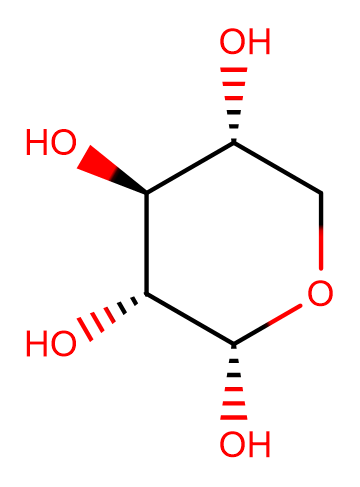
DL-Xylose
CAS No. 25990-60-7
DL-Xylose( Xylose )
Catalog No. M13786 CAS No. 25990-60-7
Xylose is a sugar first isolated from wood. Xylose is classified as a monosaccharide of the aldopentose type.
Purity : >98% (HPLC)
 COA
Datasheet
HNMR
HPLC
MSDS
Handing Instructions
COA
Datasheet
HNMR
HPLC
MSDS
Handing Instructions
| Size | Price / USD | Stock | Quantity |
| 1 mL x 10 mM in DMSO | 48 | In Stock |


|
| 50MG | 31 | In Stock |
|
| 100MG | Get Quote | In Stock |
|
| 200MG | Get Quote | In Stock |
|
| 500MG | Get Quote | In Stock |
|
| 1G | Get Quote | In Stock |
|
Biological Information
-
Product NameDL-Xylose
-
NoteResearch use only, not for human use.
-
Brief DescriptionXylose is a sugar first isolated from wood. Xylose is classified as a monosaccharide of the aldopentose type.
-
DescriptionXylose is a sugar first isolated from wood. Xylose is classified as a monosaccharide of the aldopentose type.
-
In Vitro——
-
In Vivo——
-
SynonymsXylose
-
PathwayOthers
-
TargetOther Targets
-
RecptorOthers
-
Research AreaOther Indications
-
Indication——
Chemical Information
-
CAS Number25990-60-7
-
Formula Weight150.13
-
Molecular FormulaC5H10O5
-
Purity>98% (HPLC)
-
SolubilityWater: 30 mg/mL (199.82 mM); DMSO: 30 mg/mL (199.82 mM)
-
SMILESO1[C@@H]([C@H](O)[C@H]([C@@H](C1)O)O)O
-
Chemical NameXylose
Shipping & Storage Information
-
Storage(-20℃)
-
ShippingWith Ice Pack
-
Stability≥ 2 years
Reference
1.Buskas T, et al. Glycobiology. 2006 Aug;16(8):113R-136R.
molnova catalog



related products
-
(+)-Balanophonin
(+)-Balanophonin exhibits marginal inhibition on the proliferation of OPM2 and RPMI-8226 cells.
-
N-BENZYLFORMAMIDE
N-BENZYLFORMAMIDE is a natural product from Lepidium meyenii Walp.
-
Antifreeze Polypepti...
Antifreeze Polypeptide 6 (winter flounder) is the component 6 of the winter flounder's antifreeze polypeptides. Antifreeze Polypeptide 6 (winter flounder) lowers the plasma freezing point by arresting the growth of ice nuclei.
