


 Cart
Cart
 sales@molnova.com


 Home -
Products -
Immunology/Inflammation -
ROS -
4-Methoxy-2-oxo-1,2-dihydro-pyridine-3-carbonitrile
Home -
Products -
Immunology/Inflammation -
ROS -
4-Methoxy-2-oxo-1,2-dihydro-pyridine-3-carbonitrile
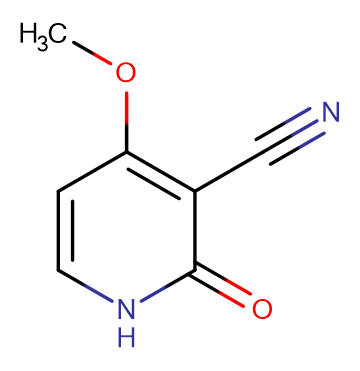
4-Methoxy-2-oxo-1,2-dihydro-pyridine-3-carbonitrile
CAS No. 21642-98-8
4-Methoxy-2-oxo-1,2-dihydro-pyridine-3-carbonitrile( —— )
Catalog No. M13453 CAS No. 21642-98-8
1,2-Dihydro-4-methoxy-2-oxo-3-pyridinecarbonitrile was reported as xanthine oxidase inhibitor.
Purity : >98% (HPLC)
 COA
Datasheet
HNMR
HPLC
MSDS
Handing Instructions
COA
Datasheet
HNMR
HPLC
MSDS
Handing Instructions
| Size | Price / USD | Stock | Quantity |
| 1 mL x 10 mM in DMSO | 28 | In Stock |


|
| 100MG | 27 | In Stock |
|
| 200MG | Get Quote | In Stock |
|
| 500MG | Get Quote | In Stock |
|
| 1G | Get Quote | In Stock |
|
Biological Information
-
Product Name4-Methoxy-2-oxo-1,2-dihydro-pyridine-3-carbonitrile
-
NoteResearch use only, not for human use.
-
Brief Description1,2-Dihydro-4-methoxy-2-oxo-3-pyridinecarbonitrile was reported as xanthine oxidase inhibitor.
-
Description1,2-Dihydro-4-methoxy-2-oxo-3-pyridinecarbonitrile was reported as xanthine oxidase inhibitor.
-
In Vitro——
-
In Vivo——
-
Synonyms——
-
PathwayImmunology/Inflammation
-
TargetROS
-
RecptorXO
-
Research Area——
-
Indication——
Chemical Information
-
CAS Number21642-98-8
-
Formula Weight150.13
-
Molecular FormulaC7H6N2O2
-
Purity>98% (HPLC)
-
SolubilityLimited solubility
-
SMILESCOC1=C(C#N)C(=O)NC=C1
-
Chemical Name——
Shipping & Storage Information
-
Storage(-20℃)
-
ShippingWith Ice Pack
-
Stability≥ 2 years
Reference
1. Makar AB, et al. Biochem Med. 1975 Jun;13(2):117-26.
molnova catalog



related products
-
Ophiopogonin D(b)
Ophiopogonin D(OPD) significantly inhibited the in vitro and in vivo growth of prostate cells via RIPK1 OPD may be developed as a potential anti-prostate cancer agent.
-
Gypenoside L
Gypenoside L inhibits autophagic flux and induces cell death in human esophageal cancer cells through endoplasm reticulum stress-mediated Ca2+ release.
-
(E/Z)-Squalene
(E/Z)-Squalene ((E/Z)-AddaVax) regulates intracellular reactive oxidant species (ROS) production, induces apoptosis and necrosis in a concentration- and time-dependent manner, accumulates in the liver, and lowers hepatic cholesterol and triglycerides.
