


 Cart
Cart
 sales@molnova.com



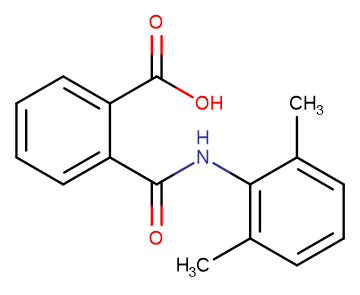
Ftaxilide
CAS No. 19368-18-4
Ftaxilide( —— )
Catalog No. M13038 CAS No. 19368-18-4
Ftaxilide has the property of antibacterial, used as antiseptic.
Purity : >98% (HPLC)
 COA
Datasheet
HNMR
HPLC
MSDS
Handing Instructions
COA
Datasheet
HNMR
HPLC
MSDS
Handing Instructions
| Size | Price / USD | Stock | Quantity |
| 1 mL x 10 mM in DMSO | 32 | In Stock |


|
| 25MG | 29 | In Stock |
|
| 50MG | 41 | In Stock |
|
| 100MG | 68 | In Stock |
|
| 200MG | Get Quote | In Stock |
|
| 500MG | 164 | In Stock |
|
| 1G | Get Quote | In Stock |
|
Biological Information
-
Product NameFtaxilide
-
NoteResearch use only, not for human use.
-
Brief DescriptionFtaxilide has the property of antibacterial, used as antiseptic.
-
DescriptionFtaxilide has the property of antibacterial, used as antiseptic.
-
In Vitro——
-
In Vivo——
-
Synonyms——
-
PathwayOthers
-
TargetOther Targets
-
RecptorOthers
-
Research AreaInfection
-
Indication——
Chemical Information
-
CAS Number19368-18-4
-
Formula Weight269.3
-
Molecular FormulaC16H15NO3
-
Purity>98% (HPLC)
-
SolubilityDMSO: 40mg/mL
-
SMILESCC1=CC=CC(C)=C1NC(=O)C1=CC=CC=C1C(O)=O
-
Chemical Name——
Shipping & Storage Information
-
Storage(-20℃)
-
ShippingWith Ice Pack
-
Stability≥ 2 years
Reference
molnova catalog



related products
-
S-38093
S-38093 is a brain-penetrant antagonist of the H3 receptor (Ki: 8.8/1.44/1.2 μM, for rat/mouse/human).
-
10-hydroxyoleuropein
10-Hydroxyoleuropein (compound 11) is isolated from the rhizome of Cyperus rotundus. 10-Hydroxyoleuropein inhibits the respiratory burst of macrophages (IC50: 693 μM).
-
Testolone
RAD140 is an investigational selective androgen receptor modulator (SARM) for the treatment of conditions such as muscle wasting and breast cancer.
