


 Cart
Cart
 sales@molnova.com



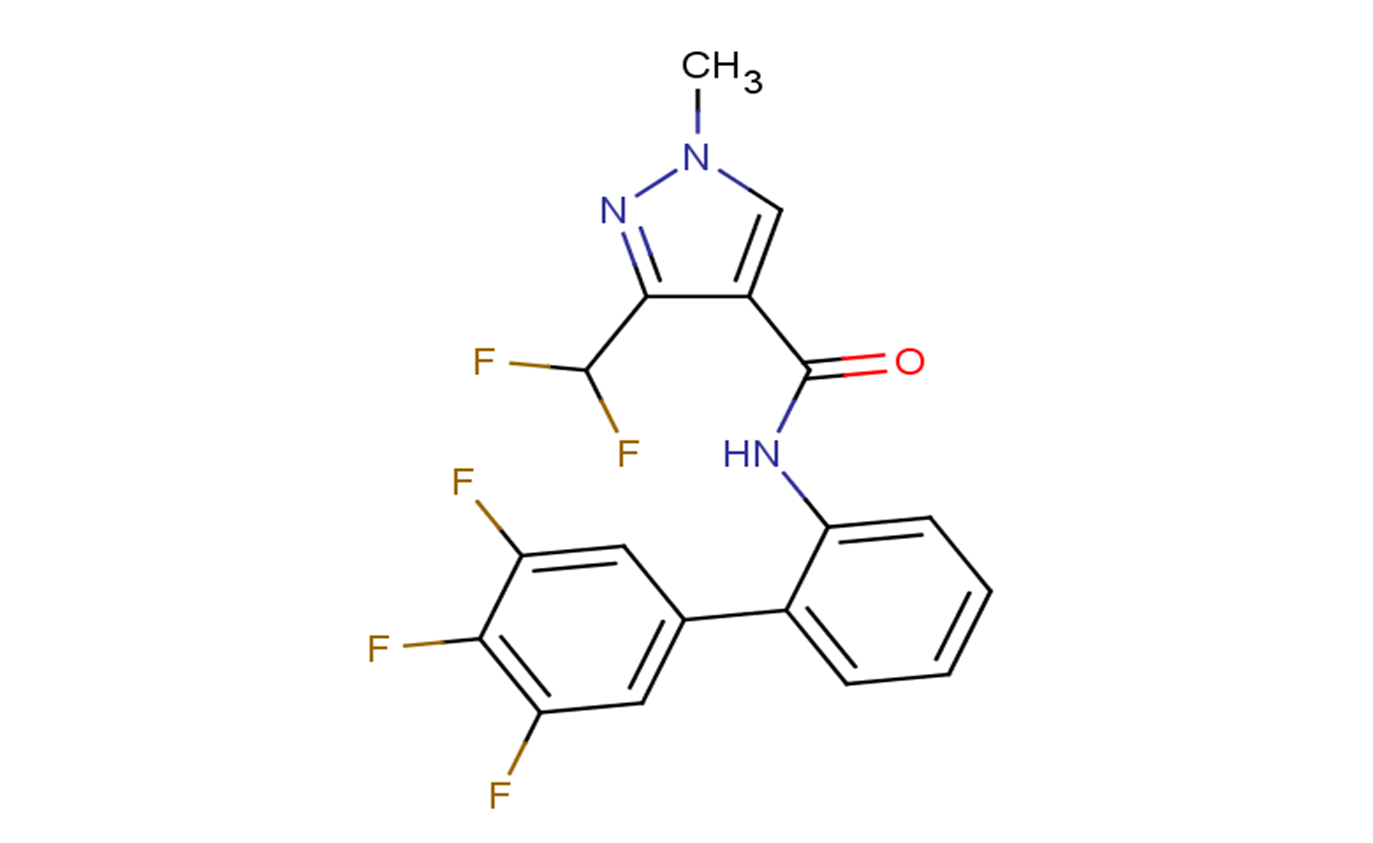
Fluxapyroxad
CAS No. 907204-31-3
Fluxapyroxad( —— )
Catalog No. M24945 CAS No. 907204-31-3
Fluxapyroxad is a broad-spectrum fungicide that inhibits the succinate dehydrogenase (SQR) enzyme.
Purity : >98% (HPLC)
 COA
Datasheet
HNMR
HPLC
MSDS
Handing Instructions
COA
Datasheet
HNMR
HPLC
MSDS
Handing Instructions
| Size | Price / USD | Stock | Quantity |
| 50MG | 38 | In Stock |


|
| 100MG | Get Quote | In Stock |
|
| 200MG | Get Quote | In Stock |
|
| 500MG | Get Quote | In Stock |
|
| 1G | Get Quote | In Stock |
|
Biological Information
-
Product NameFluxapyroxad
-
NoteResearch use only, not for human use.
-
Brief DescriptionFluxapyroxad is a broad-spectrum fungicide that inhibits the succinate dehydrogenase (SQR) enzyme.
-
DescriptionFluxapyroxad is a broad-spectrum fungicide that inhibits the succinate dehydrogenase (SQR) enzyme.
-
In Vitro——
-
In Vivo——
-
Synonyms——
-
PathwayMicrobiology/Virology
-
TargetAntifungal
-
Recptorantifungal
-
Research Area——
-
Indication——
Chemical Information
-
CAS Number907204-31-3
-
Formula Weight381.31
-
Molecular FormulaC18H12F5N3O
-
Purity>98% (HPLC)
-
SolubilityDMSO:Soluble
-
SMILESCN1C=C(C(=N1)C(F)F)C(=O)NC2=CC=CC=C2C3=CC(=C(C(=C3)F)F)F
-
Chemical Name——
Shipping & Storage Information
-
Storage(-20℃)
-
ShippingWith Ice Pack
-
Stability≥ 2 years
Reference
1.Ceballos-Alcantarilla E, López-Puertollano D, Agulló C, Abad-Fuentes A, Abad-Somovilla A, Mercader JV. Combined heterologies for monoclonal antibody-based immunoanalysis of fluxapyroxad. Analyst. 2018 Nov 19;143(23):5718-5727. doi: 10.1039/c8an01771a. PubMed PMID: 30378598.
molnova catalog



related products
-
Dihydrocapsaicin
Dihydrocapsaicin is isolated from Capsicum fruit. Capsaicin is the primary active component of the heat and pain-eliciting lipid soluble fraction of the Capsicum pepper.
-
Potassium acetate
Potassium acetate with antibacterial and antifungal properties.
-
Triadimenol
Triadimenol (UK 199) is a triazole fungicide that is cardiotoxic, promotes reactive oxygen species (ROS) production and apoptosis in zebrafish, and induces morphologic changes in zebrafish eyes and body length, as well as yolk sac and cardiac edema.
