


 Cart
Cart
 sales@molnova.com



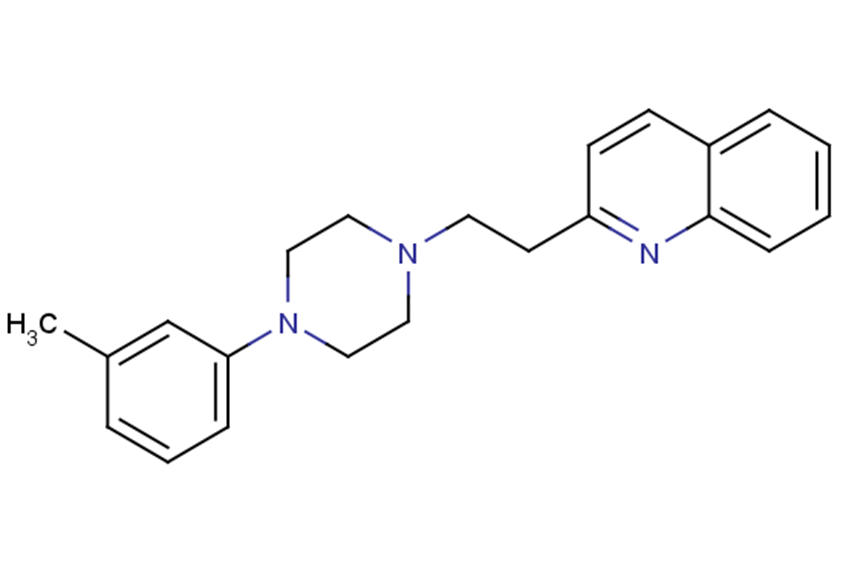
Centhaquine
CAS No. 57961-90-7
Centhaquine( Centhaquine,PMZ-2010 )
Catalog No. M22037 CAS No. 57961-90-7
Centhaquine is an adrenergic receptor potentially for the treatment of postoperative pain and for the resuscitation of hypovolemic shock.
Purity : >98% (HPLC)
 COA
Datasheet
HNMR
HPLC
MSDS
Handing Instructions
COA
Datasheet
HNMR
HPLC
MSDS
Handing Instructions
| Size | Price / USD | Stock | Quantity |
| 5MG | 60 | In Stock |


|
| 10MG | 113 | In Stock |
|
| 25MG | 233 | In Stock |
|
| 50MG | 393 | In Stock |
|
| 100MG | 581 | In Stock |
|
| 200MG | Get Quote | In Stock |
|
| 500MG | Get Quote | In Stock |
|
| 1G | Get Quote | In Stock |
|
Biological Information
-
Product NameCenthaquine
-
NoteResearch use only, not for human use.
-
Brief DescriptionCenthaquine is an adrenergic receptor potentially for the treatment of postoperative pain and for the resuscitation of hypovolemic shock.
-
DescriptionCenthaquine is an adrenergic receptor potentially for the treatment of postoperative pain and for the resuscitation of hypovolemic shock.(In Vivo):Centhaquine (Centhaquin) (intravenous injection, 0.01-1.0 mg/kg; intraduodenal administration 1.0-2.5 mg/kg) lowers the blood pressure and reduced the heart rate of anaesthetized and unanaesthetized (decerebrate) cat in a dose-dependent manner.Centhaquine (Centhaquin) (intravertebral arterial injection; 5-10 μg) or by topical application to the exposed ventral surface of medulla or floor of the fourth ventricle causes hypotension and bradycardia as well as reduced the excitability of the vasomotor loci.Centhaquine (Centhaquin;PMZ-2010) (intravenous administration; 0.015mg/kg) can attenuate the deleterious effects of catecholamines, improving both the macro- and microcirculation during CPR.
-
In Vitro——
-
In Vivo——
-
SynonymsCenthaquine,PMZ-2010
-
PathwayOthers
-
TargetOther Targets
-
RecptorOthers
-
Research AreaOthers
-
IndicationHypovolemic Shock
Chemical Information
-
CAS Number57961-90-7
-
Formula Weight331.45
-
Molecular FormulaC22H25N3
-
Purity>98% (HPLC)
-
SolubilityDMSO:60 mg/mL (181.02 mM; Need ultrasonic)
-
SMILESCC1=CC(=CC=C1)N1CCN(CCC2=NC3=CC=CC=C3C=C2)CC1
-
Chemical Name——
Shipping & Storage Information
-
Storage(-20℃)
-
ShippingWith Ice Pack
-
Stability≥ 2 years
Reference
1. Papalexopoulou K, et al. Centhaquin Effects in a Swine Model of Ventricular Fibrillation: Centhaquin and Cardiac Arrest.Heart Lung Circ. 2017 Aug;26(8):856-863.
molnova catalog



related products
-
Murlentamab
Murlentamab (GM102) is a humanized anti-AMhRII antibody.
-
Iopromide
Iopromide is a molecule used as a contrast medium. It is marketed under the name Ultravist which is produced by Bayer Healthcare.
-
L-(?)-3-Phenyllactic...
L-3-Phenyllactic acid (or PLA) is a chiral aromatic compound involved in phenylalanine metabolism. It is likely produced from phenylpyruvate via the action of lactate dehydrogenase.
