


 Cart
Cart
 sales@molnova.com



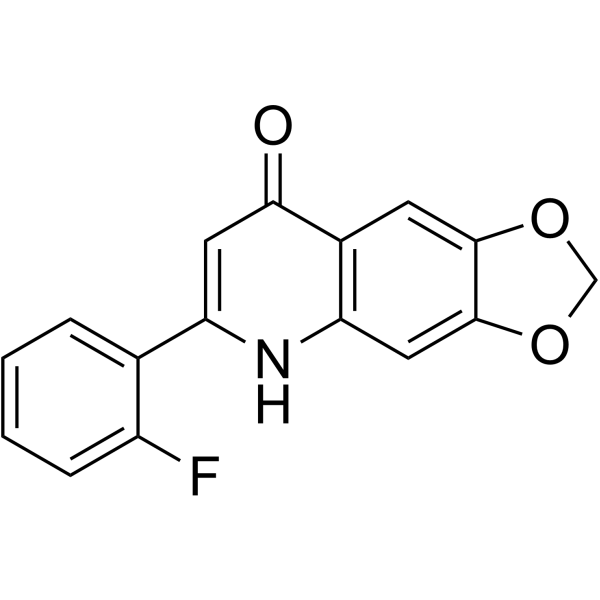
CHM-1
CAS No. 154554-41-3
CHM-1( NSC656158 )
Catalog No. M27612 CAS No. 154554-41-3
CHM-1 is an inducer of apoptosis, and displays potent antitumor ability in human hepatocellular carcinoma by activation of Cdc2 kinase activity. CHM-1 inhibits tubulin polymerization in vitro and in vivo.
Purity : >98% (HPLC)
 COA
Datasheet
HNMR
HPLC
MSDS
Handing Instructions
COA
Datasheet
HNMR
HPLC
MSDS
Handing Instructions
| Size | Price / USD | Stock | Quantity |
| 2MG | 73 | Get Quote |


|
| 5MG | 120 | Get Quote |
|
| 10MG | 200 | Get Quote |
|
| 25MG | 430 | Get Quote |
|
| 50MG | 617 | Get Quote |
|
| 100MG | 897 | Get Quote |
|
| 500MG | 1791 | Get Quote |
|
| 1G | Get Quote | Get Quote |
|
Biological Information
-
Product NameCHM-1
-
NoteResearch use only, not for human use.
-
Brief DescriptionCHM-1 is an inducer of apoptosis, and displays potent antitumor ability in human hepatocellular carcinoma by activation of Cdc2 kinase activity. CHM-1 inhibits tubulin polymerization in vitro and in vivo.
-
DescriptionCHM-1 is an inducer of apoptosis, and displays potent antitumor ability in human hepatocellular carcinoma by activation of Cdc2 kinase activity. CHM-1 inhibits tubulin polymerization in vitro and in vivo.(In Vitro):CHM-1 (0-10 μM; 24 hours) significantly increased the binding of cyclin B1 to Cdc2 and induced change in expressed and phosphorylated status of G2-M regulators in HA22T cells. CHM-1 (0-100μM; 24 hours) induced significant concentration-dependent growth inhibition in HA22T, Hep3B, and HepG2 cells, with the most potent effects observed in HA22T cells with an IC50 of 0.75 μM).(In Vivo):In male severe combined immunodeficient mice, CHM-1 (10 mg/kg; i.p.) induced inhibition of HA22T tumor growth in a dose-dependent manner.
-
In VitroCHM-1 (0-100μM; 24 hours) induces significant concentration-dependent growth inhibition in HA22T, Hep3B, and HepG2 cells, with the most potent effects observed in HA22T cells (IC50 = 0.75 μM).CHM-1 (0-10 μM; 24 hours) significantly increases the binding of cyclin B1 to Cdc2 in HA22T cells. Cell Viability Assay Cell Line:HA22T, Hep3B, and HepG2 cells Concentration:0-100 μM Incubation Time:24 hours Result:Induced G2-M arrest of the cell cycle followed by apoptosis.Western Blot Analysis Cell Line:HA22T cells Concentration:0-10 μM Incubation Time:24 hours Result:Induced change in expressed and phosphorylated status of G2-M regulators in human hepatocellular carcinoma cells.
-
In VivoCHM-1 (10 mg/kg; I.p.) induces a dose-dependent inhibition of HA22T tumor growth. Animal Model:Male severe combined immunodeficient mice (HA22T)Dosage:10 mg/kg Administration:I.p.Result:Induced a dose-dependent inhibition of HA22T tumor growth.
-
SynonymsNSC656158
-
PathwayApoptosis
-
TargetApoptosis
-
RecptorAntibiotic|P-glycoprotein
-
Research Area——
-
Indication——
Chemical Information
-
CAS Number154554-41-3
-
Formula Weight283.258
-
Molecular FormulaC16H10FNO3
-
Purity>98% (HPLC)
-
SolubilityIn Vitro:?DMSO : 5 mg/mL (17.65 mM)
-
SMILESFc1ccccc1-c1cc(=O)c2cc3OCOc3cc2[nH]1
-
Chemical Name——
Shipping & Storage Information
-
Storage(-20℃)
-
ShippingWith Ice Pack
-
Stability≥ 2 years
Reference



-
Beta-mangostin
Beta-Mangostin (β-Mangostin) is a xanthone compound with antibacterial and antimalarial activities.
-
Methyl-4-oxoretinoat...
Methyl-4-oxoretinoate is a synthetic retinoid compound with anticancer compounds that can induce differentiation and apoptosis in cancer cells.Methyl-4-oxoretinoate is used in the treatment of acne, psoriasis, and other skin disorders.Methyl-4-oxoretinoate has the potential to be used in the treatment of a variety of ocular disorders such as age-related macular degeneration. related macular degeneration).
-
Ecdysone
Ecdysone is a major steroid hormone in insects and herbs. Ecdysone triggers mineralocorticoid receptor activation and induces cellular apoptosis. Ecdysone signaling through Ecdysone receptor isoform B1 is required cell autonomously for the muscle death.
