


 Cart
Cart
 sales@molnova.com


 Home -
Products -
Nuclear Receptor/Transcription Factor -
Keap1-Nrf2 -
2-tert-Butyl-1,4-benzoquinone
Home -
Products -
Nuclear Receptor/Transcription Factor -
Keap1-Nrf2 -
2-tert-Butyl-1,4-benzoquinone
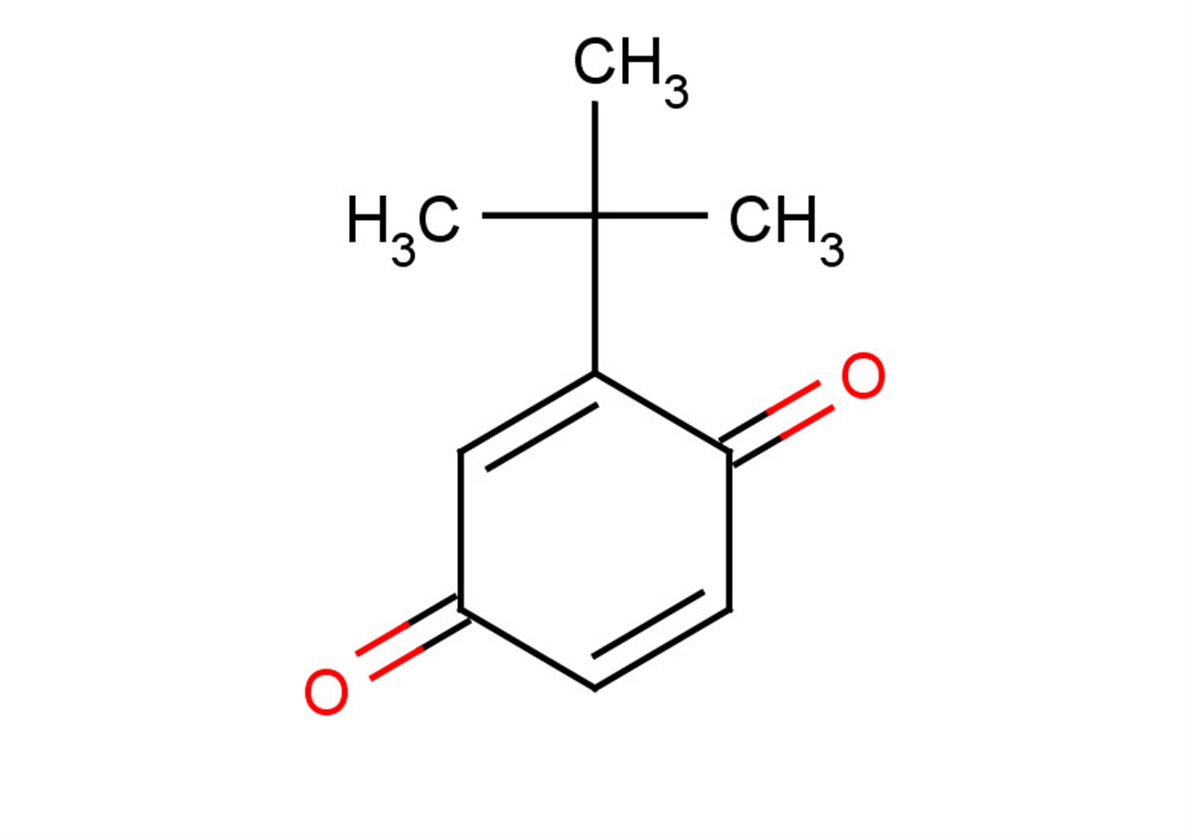
2-tert-Butyl-1,4-benzoquinone
CAS No. 3602-55-9
2-tert-Butyl-1,4-benzoquinone( —— )
Catalog No. M24318 CAS No. 3602-55-9
2-tert-Butyl-1,4-benzoquinone (TBQ), an electrophilic metabolite of butylated hydroxyanisole (BHA), causes activation of Nrf2 together with S-arylation of its negative regulator Keap1 in RAW264.7 cells.
Purity : >98% (HPLC)
 COA
Datasheet
HNMR
HPLC
MSDS
Handing Instructions
COA
Datasheet
HNMR
HPLC
MSDS
Handing Instructions
| Size | Price / USD | Stock | Quantity |
| 1G | 26 | In Stock |


|
Biological Information
-
Product Name2-tert-Butyl-1,4-benzoquinone
-
NoteResearch use only, not for human use.
-
Brief Description2-tert-Butyl-1,4-benzoquinone (TBQ), an electrophilic metabolite of butylated hydroxyanisole (BHA), causes activation of Nrf2 together with S-arylation of its negative regulator Keap1 in RAW264.7 cells.
-
Description2-tert-Butyl-1,4-benzoquinone (TBQ), an electrophilic metabolite of butylated hydroxyanisole (BHA), causes activation of Nrf2 together with S-arylation of its negative regulator Keap1 in RAW264.7 cells.
-
In Vitro——
-
In Vivo——
-
Synonyms——
-
PathwayNuclear Receptor/Transcription Factor
-
TargetKeap1-Nrf2
-
RecptorNrf2
-
Research Area——
-
Indication——
Chemical Information
-
CAS Number3602-55-9
-
Formula Weight164.2
-
Molecular FormulaC10H12O2
-
Purity>98% (HPLC)
-
Solubility——
-
SMILESCC(C)(C)C(C(C=C1)=O)=CC1=O
-
Chemical Name——
Shipping & Storage Information
-
Storage(-20℃)
-
ShippingWith Ice Pack
-
Stability≥ 2 years
Reference
1.Abiko Y, Kumagai Y. Interaction of Keap1 modified by 2-tert-butyl-1,4-benzoquinone with GSH: evidence for S-transarylation. Chem Res Toxicol. 2013 Jul 15;26(7):1080-7.
molnova catalog



related products
-
toralactone
Toralactone is a natural product isolated from Cassia obtusifolia, mediates hepatoprotection via an Nrf2-dependent anti-oxidative mechanism
-
Dimethyl fumarate
Dimethyl fumarate (DMF;BG-12) exerts anti-inflammatory and pro-metabolic effects in a variety of cell types.
-
Tigloylgomisin H
Tigloylgomisin H significantly induces quinone reductase (QR) activity in Hepa1c1c7 mouse hepatocarcinoma cells.
