


 Cart
Cart
 sales@molnova.com



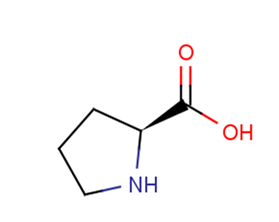
proline
CAS No. 147-85-3
proline( Proline | CB 1707 | FEMA No. 3319 | HSDB 1210 )
Catalog No. M18044 CAS No. 147-85-3
Proline and its derivatives are often used as asymmetric catalysts in organic reactions, as the CBS reduction and proline catalysed aldol condensation.
Purity : >98% (HPLC)
 COA
Datasheet
HNMR
HPLC
MSDS
Handing Instructions
COA
Datasheet
HNMR
HPLC
MSDS
Handing Instructions
| Size | Price / USD | Stock | Quantity |
| 500MG | 38 | In Stock |


|
| 1G | Get Quote | In Stock |
|
Biological Information
-
Product Nameproline
-
NoteResearch use only, not for human use.
-
Brief DescriptionProline and its derivatives are often used as asymmetric catalysts in organic reactions, as the CBS reduction and proline catalysed aldol condensation.
-
DescriptionProline is a non-essential amino acid that is synthesized from GLUTAMIC ACID. It is an essential component of COLLAGEN and is important for proper functioning of joints and tendons.
-
In Vitro——
-
In Vivo——
-
SynonymsProline | CB 1707 | FEMA No. 3319 | HSDB 1210
-
PathwayOthers
-
TargetOther Targets
-
RecptorOthers
-
Research Area——
-
Indication——
Chemical Information
-
CAS Number147-85-3
-
Formula Weight115.13
-
Molecular FormulaC5H9NO2
-
Purity>98% (HPLC)
-
SolubilityH2O : 50 mg/mL 434.29 mM;
-
SMILESC1CC(NC1)C(=O)O
-
Chemical NameL-proline
Shipping & Storage Information
-
Storage(-20℃)
-
ShippingWith Ice Pack
-
Stability≥ 2 years
Reference
molnova catalog



related products
-
HATU
HATU is a reagent used in peptide coupling chemistry to generate an active ester from a carboxylic acid.
-
Cetylpyridinium chlo...
Cetylpyridinium chloride (CPC) is a cationic quaternary ammonium compound used in some types of mouthwashes, toothpastes, lozenges, throat sprays, breath sprays, and nasal sprays.
-
Buquinolate
Buquinolate is an anticoccidial agent used in poultry, and the medicated chickens can produce higher levels of egg production and gain weight. Buquinolate does not interfere with the formation of immunity against coccidia.
