


 Cart
Cart
 sales@molnova.com



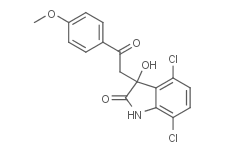
YK-4-279
CAS No. 1037184-44-3
YK-4-279( YK-4-279 | YK4-279 | YK 4-279 | YK 4279 )
Catalog No. M17770 CAS No. 1037184-44-3
YK 4-279, an inhibitor of RNA Helicase A (RHA), binds to the oncogenic transciption factor EWS-FLI1.
Purity : >98% (HPLC)
 COA
Datasheet
HNMR
HPLC
MSDS
Handing Instructions
COA
Datasheet
HNMR
HPLC
MSDS
Handing Instructions
| Size | Price / USD | Stock | Quantity |
| 5MG | 49 | In Stock |


|
| 10MG | 71 | In Stock |
|
| 25MG | 133 | In Stock |
|
| 50MG | 249 | In Stock |
|
| 100MG | 442 | In Stock |
|
| 200MG | 676 | In Stock |
|
| 500MG | Get Quote | In Stock |
|
| 1G | Get Quote | In Stock |
|
Biological Information
-
Product NameYK-4-279
-
NoteResearch use only, not for human use.
-
Brief DescriptionYK 4-279, an inhibitor of RNA Helicase A (RHA), binds to the oncogenic transciption factor EWS-FLI1.
-
DescriptionYK-4-279 is a ETV1 inhibitor, which inhibitor protein-protein interactions between ES-FLI1 and RHA.YK-4-279 effectively antagonizes EWS-FLI1 induced leukemia in a transgenic mouse model. YK-4-279 demonstrates specificity in targeting the oncogene EWS-FLI1. YK-4-279, prevents prostate cancer growth and metastasis in a mouse xenograft model.(In Vitro):YK-4-279 (3-30 μM; overight) dissociates EWS-FLI1 from RHA in Ewing’s sarcoma family tumor (ESFT) cells.YK-4-279 (3-30 μM; 14 h) nearly eliminates cyclin D1 in TC32 cells.YK-4-279 (3-30 μM; 72 h) potently and specifically inhibits ESFTs.YK-4-279 (50 μM; 6 h) induces substantial apoptosis of ESFT cells.YK-4-279 (0.1-30 μM; 72 h) inhibits the growth of ESFT, prostate, breast and pancreatic cancer cells.(In Vivo):YK-4-279 (1.5 mg; i.p. once) inhibited ESFT tumor growth.
-
In VitroCell Viability Assay Cell Line:TC32, ES925, GUES1, TC71, A673, A4573, CHP100, PANC1, ASP1, MCF-7, MDA-MB-231, PC-3, HFK and HEC cell lines Concentration:3-30 μM Incubation Time:72 h Result:Inhibited cell growth with IC50s of 900 nM, 1 μM and 8 μM for TC32, ES925 and GUES1 cells, respectively.Apoptosis Analysis Cell Line:TC32, HEK, HEC and HFK cell lines Concentration:50 μM Incubation Time:6 h Result:Induced apoptosis of ESFT cells and increased caspase-3 activity.Cell Viability Assay Cell Line:TC32, TC71, RDES, SKES, MMH-ES-1, STA-ET 7.2, A4573, PC3, MCF7, MDA-MB-231, PANC1 and ASPC1 cell lines Concentration:0.1-30 μM Incubation Time:72 h Result:Inhibited cell growth with IC50s of 0.94, 1.83, 1.03, 0.33, 0.94, 0.60, 1.46, 4.95, 22.82, 0.82, 1.514 and 14.28 μM for TC32, TC71, RDES, SKES, MMH-ES-1, STA-ET 7.2, A4573, PC3, MCF7, MDA-MB-231, PANC1 and ASPC1 cells, respectively.
-
In VivoAnimal Model:Beige mice with orthotopic ESFT and ESFT xenografts Dosage:1.5 mg Administration:Intraperitoneal injection; 1.5 mg once Result:Effectively redeced tumor volume of CHP100 and ESFT xenografts (TC71 and CHP100).
-
SynonymsYK-4-279 | YK4-279 | YK 4-279 | YK 4279
-
PathwayOthers
-
TargetOther Targets
-
RecptorRNA helicase A
-
Research AreaCancer
-
Indication——
Chemical Information
-
CAS Number1037184-44-3
-
Formula Weight366.2
-
Molecular FormulaC17H13Cl2NO4
-
Purity>98% (HPLC)
-
SolubilityDMSO : 25 mg/mL. 68.27 mM;
-
SMILESCOC1=CC=C(C=C1)C(=O)CC1(O)C(=O)NC2=C(Cl)C=CC(Cl)=C12
-
Chemical Name4,7-dichloro-1,3-dihydro-3-hydroxy-3-[2-(4-methoxyphenyl)-2-oxoethyl]-2H-indole-2-one
Shipping & Storage Information
-
Storage(-20℃)
-
ShippingWith Ice Pack
-
Stability≥ 2 years
Reference
1. Erkizan HV, et al. Nat Med. 2009, 15(7), 750-756.2. Rahim S, et al. PLoS One. 2011, 6(4), e19343.
molnova catalog



related products
-
2-Tridecanone
2-Tridecanone is a nonalkaloid insecticide isolated from the wild tomato Lycopersicon hirsutum f. glabratum. 2-Tridecanone is a volatile organic compound.
-
Brr2 Inhibitor C9
Brr2 inhibitor C9 is an allosteric inhibitor of the spliceosomal RNA helicase Brr2. Brr2 is implicated in autosomal-dominant retinitis pigmentosa (a group of progressive retinal degenerative disorders).
-
MSBN
MSBN is a highly selective fluorescent probe for mercaptans that can selectively image mercaptans in living cells and specifically label protein mercaptans by switching on the signal to identify various reversible protein mercaptans modifications.
