


 Cart
Cart
 sales@molnova.com



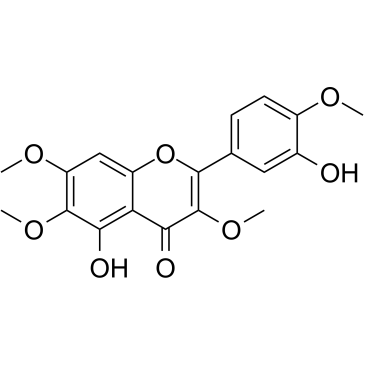
Vitexicarpin
CAS No. 479-91-4
Vitexicarpin( Vitexicarpin )
Catalog No. M18605 CAS No. 479-91-4
Vitexicarpin can significantly reduce vascular inflammation, through inhibition of ROS-NF-κB pathway in vascular endothelial cells.
Purity : >98% (HPLC)
 COA
Datasheet
HNMR
HPLC
MSDS
Handing Instructions
COA
Datasheet
HNMR
HPLC
MSDS
Handing Instructions
| Size | Price / USD | Stock | Quantity |
| 5MG | 65 | In Stock |


|
| 10MG | 106 | In Stock |
|
| 25MG | 205 | In Stock |
|
| 50MG | 335 | In Stock |
|
| 100MG | 494 | In Stock |
|
| 200MG | Get Quote | In Stock |
|
| 500MG | Get Quote | In Stock |
|
| 1G | Get Quote | In Stock |
|
Biological Information
-
Product NameVitexicarpin
-
NoteResearch use only, not for human use.
-
Brief DescriptionVitexicarpin can significantly reduce vascular inflammation, through inhibition of ROS-NF-κB pathway in vascular endothelial cells.
-
DescriptionVitexicarpin can significantly reduce vascular inflammation, through inhibition of ROS-NF-κB pathway in vascular endothelial cells. Vitexicarpin may become a potential leading drug in the therapy of prostate carcinoma.(In Vitro):Casticin (0.2-1.0 μM) dose-dependently inhibits the proliferation of KB cells, with an IC50 of 0.23 μM on day 3, while shows no significant inhibition on 3T3 Swiss Albino and TIG-103 cells. Casticin (0.6 μM) alters spindle morphology with partial mitotic spindle breakdown or with disordered spindles. Casticin (0-40 μM) dose-dependently inhibits the proliferation of LX2 cells. Casticin (40 μM) suppresses L02 cells proliferation and induces apoptosis. Casticin inhibits fibrotic effects of TGF-β1 on ECM deposition in LX2 cells by evaluating the mRNA levels of TGF-β, collagen α1(I), MMP-2, MMP-9, TIMP-1 and TIMP-2. Casticin (0-8 μM) reduces the viability of 786-O, YD-8, and HN-9 cells, but shows no significant effect on that of the normal HEL 299 cells. Casticin (5 μM) increases cleavage caspase-3 and PPAR, diminishes the levels of B-cell lymphoma-extra large (Bcl-xl), Bcl-2, IAP-1/-2, vascular endothelial growth factor (VEGF), matrix metallopeptidase 9 (MMP-9), and cyclooxygenase 2 (COX-2) proteins in 786-O, YD-8, and HN-9 cells. Casticin (5 μM) also promotes apoptotic cell death, inhibits constitutively active STAT3 in tumor cells, modulates STAT3 activation by altering the activity of upstream STAT3 regulators, and abrogates IL-6-induced STAT3 activation. In addition, Casticin (2.5 μM) enhances the effect of ionizing radiation in 786-O cells and potentiates the therapeutic effect of radiotherapy.(In Vivo):Casticin (20 mg/kg, p.o.) has toxic effect on the liver in mice with CCl4-and BDL-induced hepatic injury. Casticin attenuates liver fibrosis induced by CCl4 or BDL in vivo. Casticin inhibits HSC activation and collagen matrix expression by blocking TGF-β/Smad signaling in vivo.
-
In VitroCasticin (0.2-1.0 μM) dose-dependently inhibits the proliferation of KB cells, with an IC50 of 0.23 μM on day 3, while shows no significant inhibition on 3T3 Swiss Albino and TIG-103 cells. Casticin (0.6 μM) alters spindle morphology with partial mitotic spindle breakdown or with disordered spindles. Casticin (0-40 μM) dose-dependently inhibits the proliferation of LX2 cells. Casticin (40 μM) suppresses L02 cells proliferation and induces apoptosis. Casticin inhibits fibrotic effects of TGF-β1 on ECM deposition in LX2 cells by evaluating the mRNA levels of TGF-β, collagen α1(I), MMP-2, MMP-9, TIMP-1 and TIMP-2. Casticin (0-8 μM) reduces the viability of 786-O, YD-8, and HN-9 cells, but shows no significant effect on that of the normal HEL 299 cells. Casticin (5 μM) increases cleavage caspase-3 and PPAR, diminishes the levels of B-cell lymphoma-extra large (Bcl-xl), Bcl-2, IAP-1/-2, vascular endothelial growth factor (VEGF), matrix metallopeptidase 9 (MMP-9), and cyclooxygenase 2 (COX-2) proteins in 786-O, YD-8, and HN-9 cells. Casticin (5 μM) also promotes apoptotic cell death, inhibits constitutively active STAT3 in tumor cells, modulates STAT3 activation by altering the activity of upstream STAT3 regulators, and abrogates IL-6-induced STAT3 activation. In addition, Casticin (2.5 μM) enhances the effect of ionizing radiation in 786-O cells and potentiates the therapeutic effect of radiotherapy.
-
In VivoCasticin (20 mg/kg, p.o.) has toxic effect on the liver in mice with CCl4-and BDL-induced hepatic injury. Casticin attenuates liver fibrosis induced by CCl4 or BDL in vivo. Casticin inhibits HSC activation and collagen matrix expression by blocking TGF-β/Smad signaling in vivo.
-
SynonymsVitexicarpin
-
PathwayCytoskeleton/Cell Adhesion Molecules
-
TargetGlucokinase
-
RecptorOthers
-
Research AreaOthers-Field
-
Indication——
Chemical Information
-
CAS Number479-91-4
-
Formula Weight374.34
-
Molecular FormulaC19H18O8
-
Purity>98% (HPLC)
-
SolubilityIn Vitro:?DMSO : 100 mg/mL (267.14 mM)
-
SMILESCOC1=C(C=C(C=C1)C2=C(C(=O)C3=C(C(=C(C=C3O2)OC)OC)O)OC)O
-
Chemical Name——
Shipping & Storage Information
-
Storage(-20℃)
-
ShippingWith Ice Pack
-
Stability≥ 2 years
Reference
molnova catalog



related products
-
Methylprednisolone s...
Methylprednisolone succinate is a synthetic glucocorticoid and is widely used as an anti-inflammatory agent.
-
AMG-1694
AMG-1694, a potent disruptor of the glucokinase–glucokinase regulatory protein (GK-GKRP) complex, operates by promoting the dissociation of this complex, thereby indirectly enhancing GK enzymatic activity with an IC50 of 7 nM.
-
Butyl isobutyl phtha...
Butyl isobutyl phthalate is a non-competitive α-glucosidase inhibitor(IC50 :38 μM)it shows a hypoglycemic effect.
