


 Cart
Cart
 sales@molnova.com



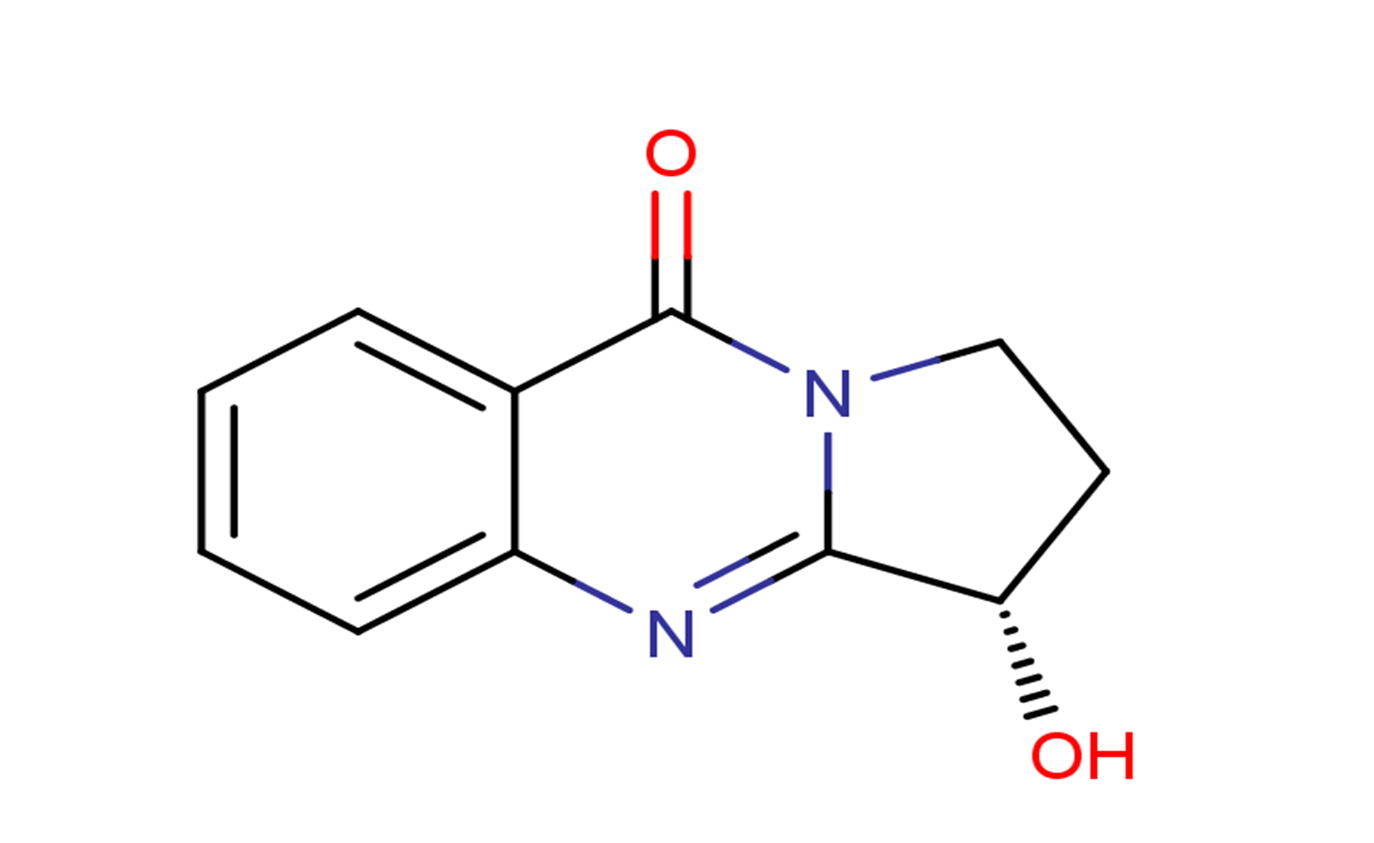
Vasicinone
CAS No. 486-64-6
Vasicinone( —— )
Catalog No. M24440 CAS No. 486-64-6
Vasicinone may act as a hepatoprotective agent. (±)-Vasicinone has significant antitussive, expectorant, and bronchodilating activities.
Purity : >98% (HPLC)
 COA
Datasheet
HNMR
HPLC
MSDS
Handing Instructions
COA
Datasheet
HNMR
HPLC
MSDS
Handing Instructions
| Size | Price / USD | Stock | Quantity |
| 5MG | 290 | In Stock |


|
| 10MG | 430 | In Stock |
|
| 25MG | 695 | In Stock |
|
| 50MG | 945 | In Stock |
|
| 100MG | Get Quote | In Stock |
|
| 200MG | Get Quote | In Stock |
|
| 500MG | Get Quote | In Stock |
|
| 1G | Get Quote | In Stock |
|
Biological Information
-
Product NameVasicinone
-
NoteResearch use only, not for human use.
-
Brief DescriptionVasicinone may act as a hepatoprotective agent. (±)-Vasicinone has significant antitussive, expectorant, and bronchodilating activities.
-
DescriptionVasicinone may act as a hepatoprotective agent. (±)-Vasicinone has significant antitussive, expectorant, and bronchodilating activities, which can be used to treat respiratory disease.(S)-Vasicinone exhibits antiproliferative activity against human gastric cancer cells MCG-803.
-
In VitroVasicinone (1~30 μM; 24 hours; SH-SY5Y cells) significantly reverses the paraquat-induced reduction in cell viability.Vasicinone (10 and 15 μM; 24 hours; SH-SY5Y cells) abates the paraquat-induced injury of SH-SY5Y cells by suppressing the MAPK signaling pathway, dose-dependently reduces the percentage of apoptotic cells and is capable of rescuing paraquat-induced apoptotic death.Vasicinone (10 and 15 μM; SH-SY5Y cells) attenuates the paraquat-induced accumulation of reactive oxygen species (ROS) and attenuates the paraquat-induced expression of apoptotic proteins.Cell Viability Assay Cell Line:SH-SY5Y cells Concentration:1~30 μM Incubation Time:24 hours Result:Significantly reversed the paraquat-induced reduction in cell viability.Western Blot Analysis Cell Line:SH-SY5Y cells Concentration:10 and 15 μM Incubation Time:24 hours Result:Abated the paraquat-induced injury of SH-SY5Y cells by suppressing the MAPK signaling pathway.Apoptosis Analysis Cell Line:SH-SY5Y cells Concentration:10 and 15 μM Incubation Time:24 hours Result:Dose-dependently reduced the percentage of apoptotic cells.
-
In Vivo——
-
Synonyms——
-
PathwayOthers
-
TargetOther Targets
-
RecptorOthers
-
Research Area——
-
Indication——
Chemical Information
-
CAS Number486-64-6
-
Formula Weight202.21
-
Molecular FormulaC11H10N2O2
-
Purity>98% (HPLC)
-
SolubilityDMSO:10 mM
-
SMILESC1CN2C(=NC3=CC=CC=C3C2=O)[C@H]1O
-
Chemical Name——
Shipping & Storage Information
-
Storage(-20℃)
-
ShippingWith Ice Pack
-
Stability≥ 2 years
Reference
1.Antitussive, expectorant, and bronchodilating effects of quinazoline alkaloids (±)-vasicine, deoxyvasicine, and (±)-vasicinone from aerial parts of Peganum harmala L. Phytomedicine. 2015 Nov 15;22(12):1088-95.
molnova catalog



related products
-
Marrubiin
Marrubiin is a natural product.
-
BC-1471
STAMBP-IN-1 is a small-molecule inhibitor of STAMBP deubiquitinase, and interrupts STAMBP-Ub-NALP7 interaction. STAMBP-IN-1 decreases protein level of its inflammasome substrate NALP7 and suppresses IL-1b release after Toll-like receptor (TLR) agonism. STAMBP-IN-1 inhibits the activity of STAMBP to cleave recombinant di-Ub with an IC50 value of 0.33 mM
-
5,6-Epoxyergosterol
5,6-Epoxyergosterol is derived from the endophytic fungus Phyllosticta capitalensis.
