


 Cart
Cart
 sales@molnova.com



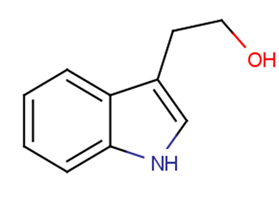
Tryptophol
CAS No. 526-55-6
Tryptophol( Indole-3-ethanol | 3-(2-Hydroxyethyl)indole )
Catalog No. M19617 CAS No. 526-55-6
Tryptophol is a metabolite formed in the liver after disulfiram treatment that induces sleep in humans. It is also a secondary product of alcoholic fermentation.
Purity : >98% (HPLC)
 COA
Datasheet
HNMR
HPLC
MSDS
Handing Instructions
COA
Datasheet
HNMR
HPLC
MSDS
Handing Instructions
| Size | Price / USD | Stock | Quantity |
| 100MG | 38 | In Stock |


|
| 200MG | Get Quote | In Stock |
|
| 500MG | Get Quote | In Stock |
|
| 1G | Get Quote | In Stock |
|
Biological Information
-
Product NameTryptophol
-
NoteResearch use only, not for human use.
-
Brief DescriptionTryptophol is a metabolite formed in the liver after disulfiram treatment that induces sleep in humans. It is also a secondary product of alcoholic fermentation.
-
DescriptionTryptophol is a metabolite formed in the liver after disulfiram treatment that induces sleep in humans. It is also a secondary product of alcoholic fermentation.
-
In Vitro——
-
In Vivo——
-
SynonymsIndole-3-ethanol | 3-(2-Hydroxyethyl)indole
-
PathwayOthers
-
TargetOther Targets
-
RecptorOthers
-
Research Area——
-
Indication——
Chemical Information
-
CAS Number526-55-6
-
Formula Weight161.2
-
Molecular FormulaC10H11NO
-
Purity>98% (HPLC)
-
SolubilityDMSO: 20 mg/mL;Methanol: 100 mg/mL
-
SMILESOCCc1c[nH]c2ccccc12
-
Chemical Name——
Shipping & Storage Information
-
Storage(-20℃)
-
ShippingWith Ice Pack
-
Stability≥ 2 years
Reference
1.Cornford EM Rapid distribution of tryptophol (3-indole ethanol) to the brain and other tissues. J Clin Invest. 1979 Jun;63(6):1241-8.
molnova catalog



related products
-
2-O-(α-D-Glucopyrano...
2-O-(α-D-Glucopyranosyl)glycerol (2-alphaGG) is present in certain bacteria and plants that thrive in harsh environments and may extend the lifespan of budding yeast and erythrosporidium by enhancing their osmotic response.
-
GBR 12783 dihydrochl...
GBR 12783 dihydrochloride can improve memory performance and increase hippocampal acetylcholine release in rats.
-
TRAM-34
TRAM-34(Kd=20 nM), an effective and specific inhibitor of the intermediate-conductance Ca2+-activated K+ channel (IKCa1, KCa3.1), does not block cytochrome P450.
