


 Cart
Cart
 sales@molnova.com



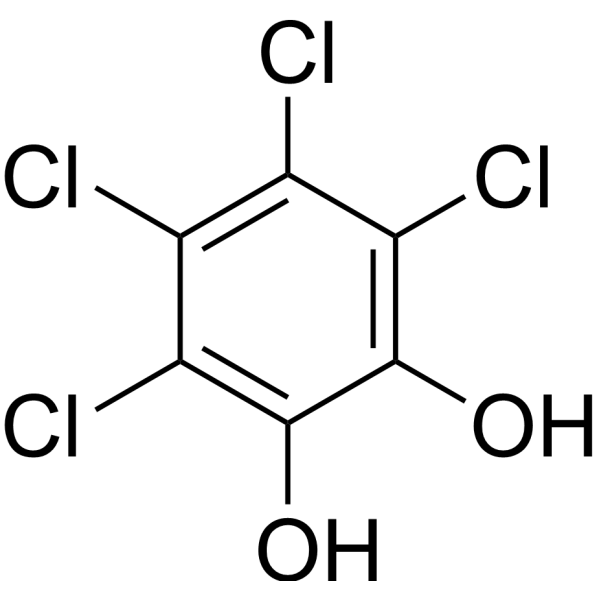
Tetrachlorocatechol
CAS No. 1198-55-6
Tetrachlorocatechol( —— )
Catalog No. M28190 CAS No. 1198-55-6
Tetrachlorocatechol is a metabolite of pentachlorophenol. Tetrachlorocatechol is one of the most toxic chlorinated catechol produced by the chlorobleaching of pulp and frequently found in the kraft pulp mill effluents.
Purity : >98% (HPLC)
 COA
Datasheet
HNMR
HPLC
MSDS
Handing Instructions
COA
Datasheet
HNMR
HPLC
MSDS
Handing Instructions
| Size | Price / USD | Stock | Quantity |
| 200MG | 26 | In Stock |


|
| 500MG | Get Quote | In Stock |
|
| 1G | Get Quote | In Stock |
|
Biological Information
-
Product NameTetrachlorocatechol
-
NoteResearch use only, not for human use.
-
Brief DescriptionTetrachlorocatechol is a metabolite of pentachlorophenol. Tetrachlorocatechol is one of the most toxic chlorinated catechol produced by the chlorobleaching of pulp and frequently found in the kraft pulp mill effluents.
-
DescriptionTetrachlorocatechol is a metabolite of pentachlorophenol. Tetrachlorocatechol is one of the most toxic chlorinated catechol produced by the chlorobleaching of pulp and frequently found in the kraft pulp mill effluents.
-
In Vitro——
-
In Vivo——
-
Synonyms——
-
PathwayOthers
-
TargetOther Targets
-
RecptorWnt/β-catenin
-
Research Area——
-
Indication——
Chemical Information
-
CAS Number1198-55-6
-
Formula Weight247.88
-
Molecular FormulaC6H2Cl4O2
-
Purity>98% (HPLC)
-
SolubilityIn Vitro:?DMSO : 100 mg/mL (403.40 mM)
-
SMILESOc1c(O)c(Cl)c(Cl)c(Cl)c1Cl
-
Chemical Name——
Shipping & Storage Information
-
Storage(-20℃)
-
ShippingWith Ice Pack
-
Stability≥ 2 years
Reference



-
Pyrantel tartrate
Pyrantel tartrate is an antinematodal thiophene; and can elicit spastic muscle paralysis in parasitic worms due to prolonged activation of the excitatory nicotinic acetylcholine (nACh) receptors on body wall muscle.
-
VIP (1 - 12), human,...
VIP (1-12), human, porcine, rat, ovine is a vasoactive intestinal peptide (VIP) fragment. VIP (1-12), human, porcine, rat, ovine is a ligand for the CD4 (T4)/human immunodeficiency virus receptor.
-
Syk Inhibitor II hyd...
The impact of spleen tyrosine kinase (Syk) signaling might be prominent in lupus because (i) Syk is a shared downstream signaling molecule among circulating immune complex, LPS, and (1→3)-β-D-glucan (BG), and (ii) all of these factors are detectable in the serum of Fc gamma receptor IIb-deficient (FcgRIIb-/-) mice with sepsis. Syk inhibition downregulated several inflammatory pathways in FcgRIIb-/- macrophages activated with BG + LPS suggesting the potential anti-inflammatory impact of Syk inhibitors in lupus.
