


 Cart
Cart
 sales@molnova.com



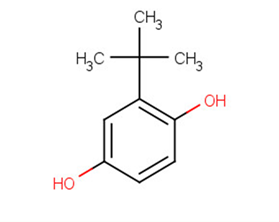
TBHQ
CAS No. 1948-33-0
TBHQ( tert-Butylhydroquinone )
Catalog No. M20116 CAS No. 1948-33-0
Tert-butylhydroquinone (tBHQ) is an antioxidant that induces an antioxidant response through the redox-sensitive transcription factor Nrf2.
Purity : >98% (HPLC)
 COA
Datasheet
HNMR
HPLC
MSDS
Handing Instructions
COA
Datasheet
HNMR
HPLC
MSDS
Handing Instructions
| Size | Price / USD | Stock | Quantity |
| 500MG | 37 | In Stock |


|
| 1G | 43 | In Stock |
|
Biological Information
-
Product NameTBHQ
-
NoteResearch use only, not for human use.
-
Brief DescriptionTert-butylhydroquinone (tBHQ) is an antioxidant that induces an antioxidant response through the redox-sensitive transcription factor Nrf2.
-
DescriptionTert-butylhydroquinone (tBHQ) is an antioxidant that induces an antioxidant response through the redox-sensitive transcription factor Nrf2.(In Vitro):TBHQ (t-butylhydroquinone; tBHQ; 0-100 μM; 48 hours; H9c2 cells) alone does not affect H9c2 cells viability. Pre-incubation of the H9c2 cells with various concentrations of tBHQ for 24 hours enhances cell viability which is decreased due to exposure to ethanol in a dose-dependent manner. Treatment with tBHQ markedly enhances the viability of H9c2 cardiomyocytes exposed to ethanol.TBHQ (5 μM; 15 min; H9c2 cells) treatment significantly reduces the amount of apoptotic cells exposed to ethanol.TBHQ (5 μM; H9c2 cells) pre-treatment markedly inhibites the ethanol-induced increase in caspase-3 and Bax expression, and enhances Bcl-2 expression.(In Vivo):TBHQ treatment (50 mg/kg; Intraperitoneal injection; three injections at intervals of 8 h that began 1-h post ICH; CD-1 mice) augments the DNA-Binding activity of Nrf2, attenuates oxidative brain damage and acute neurological deficits afterintracerebral hemorrhage (ICH), attenuates microglial activation with concomitant reduction in the release of proinflammatory cytokine interleukin-1β (IL-1β). TBHQ has the efficacy of post-injury administration in attenuating acute neurological injury after ICH.
-
In VitroTBHQ (t-butylhydroquinone; tBHQ; 0-100 μM; 48 hours; H9c2 cells) alone does not affect H9c2 cells viability. Pre-incubation of the H9c2 cells with various concentrations of tBHQ for 24 hours enhances cell viability which is decreased due to exposure to ethanol in a dose-dependent manner. Treatment with tBHQ markedly enhances the viability of H9c2 cardiomyocytes exposed to ethanol.TBHQ (5 μM; 15 min; H9c2 cells) treatment significantly reduces the amount of apoptotic cells exposed to ethanol.TBHQ (5 μM; H9c2 cells) pre-treatment markedly inhibites the ethanol-induced increase in caspase-3 and Bax expression, and enhances Bcl-2 expression. Cell Viability Assay Cell Line:H9c2 cells Concentration:0 μM, 0.625 μM, 1.25 μM, 2.5 μM, 5 μM, 10 μM, 20 μM, 50 μM and 100 μM Incubation Time:48 hours Result:Enhanced the viability of H9c2 cardiomyocytes exposed to ethanol.Apoptosis Analysis Cell Line:H9c2 cells Concentration:5 μM Incubation Time:Result:Lowered the amount of apoptotic cells exposed to ethanol.Western Blot Analysis Cell Line:H9c2 cells Concentration:5 μM Incubation Time:Result:Inhibited the ethanol-induced increase in caspase-3 and Bax expression, and enhanced Bcl-2 expression.
-
In VivoTBHQ treatment (50 mg/kg; Intraperitoneal injection; three injections at intervals of 8 h that began 1-h post ICH; CD-1 mice) augments the DNA-Binding activity of Nrf2, attenuates oxidative brain damage and acute neurological deficits afterintracerebral hemorrhage (ICH), attenuates microglial activation with concomitant reduction in the release of proinflammatory cytokine interleukin-1β (IL-1β). TBHQ has the efficacy of post-injury administration in attenuating acute neurological injury after ICH. Animal Model:Male CD-1 mice (8-10 weeks old)Dosage:50 mg/kg Administration:Intraperitoneal injection; three injections at intervals of 8 hours that began 1h post ICH.Result:The treatment augmented the DNA-binding activity of Nrf2, attenuated brain oxidative damage, attenuated the microglial activation and the expression of IL-1β.
-
Synonymstert-Butylhydroquinone
-
PathwayNuclear Receptor/Transcription Factor
-
TargetKeap1-Nrf2
-
RecptorNrf2
-
Research Area——
-
Indication——
Chemical Information
-
CAS Number1948-33-0
-
Formula Weight166.22
-
Molecular FormulaC10H14O2
-
Purity>98% (HPLC)
-
SolubilityDMSO: 30 mg/mL (180.48 mM)
-
SMILESCC(C)(C)c1cc(O)ccc1O
-
Chemical Name2-(tert-butyl)benzene-14-diol
Shipping & Storage Information
-
Storage(-20℃)
-
ShippingWith Ice Pack
-
Stability≥ 2 years
Reference
1.Imhoff BR et al. Tert-butylhydroquinone induces mitochondrial oxidative stress causing Nrf2 activation. Cell Biol Toxicol. 2010 Dec;26(6):541-51.
molnova catalog



related products
-
L-Cystine dihydrochl...
L-Cystine dihydrochloride is an Nrf2 inducer with whitening and anti-dark spot effects.L-Cystine dihydrochloride has cytoprotective effects in cells, and is often added to various fungal cultures as a carbon source.
-
Tigloylgomisin H
Tigloylgomisin H significantly induces quinone reductase (QR) activity in Hepa1c1c7 mouse hepatocarcinoma cells.
-
CDDO-EA
CDDO-EA is an activator of the Nrf2/antioxidant response element.
