


 Cart
Cart
 sales@molnova.com



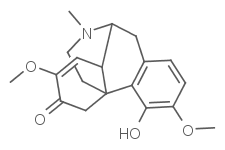
Sinomenine
CAS No. 115-53-7
Sinomenine( Sinomenine | Coculine | Cucoline | Kukoline )
Catalog No. M17841 CAS No. 115-53-7
Sinomenine is a pure alkaloid isolated from the Sinomenium acutum, is utilized in the treatment of rheumatism and arthritis.
Purity : >98% (HPLC)
 COA
Datasheet
HNMR
HPLC
MSDS
Handing Instructions
COA
Datasheet
HNMR
HPLC
MSDS
Handing Instructions
| Size | Price / USD | Stock | Quantity |
| 100MG | 45 | Get Quote |


|
| 200MG | Get Quote | Get Quote |
|
| 500MG | Get Quote | Get Quote |
|
| 1G | Get Quote | Get Quote |
|
Biological Information
-
Product NameSinomenine
-
NoteResearch use only, not for human use.
-
Brief DescriptionSinomenine is a pure alkaloid isolated from the Sinomenium acutum, is utilized in the treatment of rheumatism and arthritis.
-
DescriptionSinomenine is an alkaloid originally isolated from the root of the plant Sinomenium acutum. It is used in traditional medicine in China to treat rheumatic arthritis. Sinomenine has a wide spectrum analgesic effect in rodent models of nociceptive, inflammatory and neuropathic pain.
-
In VitroCell viability gradually decreased with increasing Sinomenine concentration. The migration ability of MDA-MB-231 cells is significantly weakened by 0.25, 0.5, and 1 mM of Sinomenine treatment. The wound-healing assay reveals that 0.25 and 0.5 mM Sinomenine significantly suppress the healing of the wound. When the MDA-MB-231 cells are treated with 0.5 mM Sinomenine, the healing progress is about 50%, but in the group treated with 0.25 mM Sinomenine and the untreated control, the healing is about 80% and nearly 95%, respectively. The IB assay following inhibitor of NF-κB (IκB) antibody IP shows that the binding of NF-κB to IκB is inhibited by Sinomenine treatment in a dose-dependent manne.
-
In VivoSinomenine (i.p.) produces antinociception in the hot plate and tail flick tests in male rats at 40 mg/kg, but not at lower doses (10 or 20 mg/kg). At 10 to 40 mg/kg Sinomenine does not produce any observable side effect such as sedation, allergy or motor impairments. Antinociception is also seen mice at 60 min following 80 mg/kg i.p. Sinomenine, but not at lower doses (20 or 40 mg/kg), in the tail flick test. Sinomenine at 80 mg/kg i.p. does not produce any observable side effects in mice. I.p or p.o. Sinomenine at 40 or 80 mg/kg dose-dependently reduces mechanical hypersensitivity in nerve injured mice. I.p. Sinomenine at 40 mg/kg, but not lower doses or vehicle, significantly decreases mechanical and cold allodynia for up to 240 min without producing motor deficits or sedation. At doses of 10 to 40 mg/kg, Sinomenine dose-dependently increases the paw withdrawal threshold.In non-chronic constriction injury (CCI) healthy rats, Sinomenine at the dose range of 10 to 40 mg/kg does not change the immobility behavior in the forced swimming test.
-
SynonymsSinomenine | Coculine | Cucoline | Kukoline
-
PathwayAngiogenesis
-
TargetVEGFR
-
RecptorOthers
-
Research AreaOthers-Field
-
Indication——
Chemical Information
-
CAS Number115-53-7
-
Formula Weight329.4
-
Molecular FormulaC19H23NO4
-
Purity>98% (HPLC)
-
SolubilityIn Vitro:?DMSO : 50 mg/mL (151.80 mM)
-
SMILESCN1CC[C@@]23CC(=O)C(=C[C@@H]2[C@@H]1Cc1c3c(c(cc1)OC)O)OC
-
Chemical Name(9alpha,13alpha,14alpha)-7,8-Didehydro-4-hydroxy-3,7-dimethoxy-17-methylmorphinan-6-one
Shipping & Storage Information
-
Storage(-20℃)
-
ShippingWith Ice Pack
-
Stability≥ 2 years
Reference
1. Liu L, et al. Int J Immunopharmacol, 1996, 18(10), 529-543.
molnova catalog



related products
-
SU14813 maleate
A broad-spectrum RTKs inhibitor with IC50 ranging from 2 to 50 nM for VEGFR-1, VEGFR-2, PDGFRs, KIT, FLT3, and CSF1R/FMS.
-
Oglufanide
Oglufanide is a naturally occurring thymic immunomodulatorand inhibits vascular endothelial growth factor (VEGF).
-
Telatinib
An orally active, small molecule inhibitor of VEGFR-2 (IC50=6 nM), VEGFR-3 (IC50=4 nM), PDEGFRα (IC50=15 nM) and c-Kit (IC50=1 nM) in biochemical assays.
