


 Cart
Cart
 sales@molnova.com



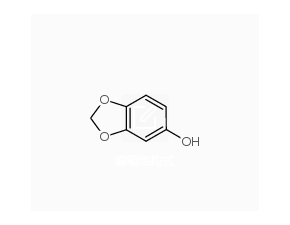
Sesamol
CAS No. 533-31-3
Sesamol( —— )
Catalog No. M18752 CAS No. 533-31-3
Sesamol could decrease lung inflammation and lipopolysaccharide (LPS)-induced lung injury in rats.
Purity : >98% (HPLC)
 COA
Datasheet
HNMR
HPLC
MSDS
Handing Instructions
COA
Datasheet
HNMR
HPLC
MSDS
Handing Instructions
| Size | Price / USD | Stock | Quantity |
| 500MG | 26 | In Stock |


|
| 1G | Get Quote | In Stock |
|
Biological Information
-
Product NameSesamol
-
NoteResearch use only, not for human use.
-
Brief DescriptionSesamol could decrease lung inflammation and lipopolysaccharide (LPS)-induced lung injury in rats.
-
DescriptionSesamol could decrease lung inflammation and lipopolysaccharide (LPS)-induced lung injury in rats. Sesamol ameliorates inflammatory and oxidative damage by upregulating AMPK activation and Nrf2 signaling and blocking the NF-κB and MAPK signaling pathways and inhibits melanin biosynthesis by down-regulating tyrosinase activity and melanin production via regulation of gene expression of melanogenesis-related proteins through modulation of MITF activity, which promotes phosphorylation of p38 and JNK in melan-a cells.
-
In VitroSesamol has also been shown to be a classical inhibitor of lipid peroxidation. Sesamol (0-1 mM) efficiently induces the apoptosis of human liver hepatocellular carcinoma (HepG2) cells. Sesamol suppresses cell proliferation and induces intrinsic and extrinsic apoptosis in HepG2 cells. Sesamol treatment elicites mitochondrial dysfunction by inducing a loss of mitochondrial membrane potential. Sesamol inhibits mitophagy and autophagy through impeding the PI3K Class III/Belin-1 pathway. Sesamol decreases the expression of anti-apoptotic protein Bcl-2, but shows no effect on the expression of apoptotic signal Bax. Sesamol improves the protein expression of Fas/FasL, and activates tBid and caspase-8 which are all involved in the extrinsic apoptosis pathway.
-
In VivoSesamol treatment for 35 days does not significantly impact body weight, although the tumor volume is dramatically inhibited (40.56% size inhibitory rate with Sesamol at 200?mg/kg compared to the control group). However, a lower dose (100?mg/kg Sesamol) only has significant anti-tumor growth effect up to 27 days after the first treatment. The Bcl-2/Bax ratio in tumor tissues is also decreased. Moreover, in the Sesamol treatment group, levels of the cell proliferation marker Ki76 are down-regulated, and levels of the cell apoptosis marker cleaved-caspase 3 are increased when compared to control. The expression of LC3 protein is remarkably decreased by Sesamol in a dose-dependent manner.
-
Synonyms——
-
PathwayOthers
-
TargetOther Targets
-
RecptorAMPK
-
Research AreaInflammation/Immunology
-
Indication——
Chemical Information
-
CAS Number533-31-3
-
Formula Weight138.12
-
Molecular FormulaC7H6O3
-
Purity>98% (HPLC)
-
SolubilityIn Vitro:?DMSO : ≥ 100 mg/mL (724.01 mM)
-
SMILESC1Oc2c(O1)cc(cc2)O
-
Chemical Name——
Shipping & Storage Information
-
Storage(-20℃)
-
ShippingWith Ice Pack
-
Stability≥ 2 years
Reference



-
Sodium taurodeoxycho...
Sodium taurodeoxycholate hydrate has been used in a study to assess the effect of submicellar concentrations of bile salts on the lipid bilayer membrane.
-
CALP1
Cell-permeable calmodulin (CaM) agonist that binds to the EF-hand/Ca2+-binding site; produces CaM-dependent activation of phosphodiesterase. Also binds to cytoplasmic sites on other Ca2+ channels, including NMDA and HIV-1 gp120-activated channels, inhibiting Ca2+-mediated cytotoxicity and apoptosis (IC50 = 52 μM). Shown to protect pancreatic acinar cells from gossypol induced necrosis. Inhibits VLA-5-mediated adhesion of mast cells to fibronectin in vitro and attenuates inflammatory cell influx in guinea pig lung in vivo.
-
16beta-Methyl-16alph...
16beta-Methyl-16alpha,17alpha-epoxypregnenolone
