


 Cart
Cart
 sales@molnova.com



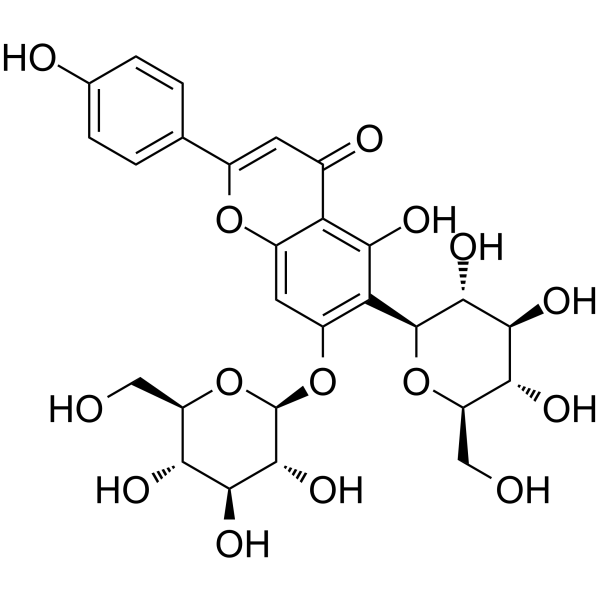
Saponarin
CAS No. 20310-89-8
Saponarin( —— )
Catalog No. M31027 CAS No. 20310-89-8
Saponarin shows in vitro and in vivo hepatoprotective and antioxidant activity against CCl4-induced liver damage.
Purity : >98% (HPLC)
 COA
Datasheet
HNMR
HPLC
MSDS
Handing Instructions
COA
Datasheet
HNMR
HPLC
MSDS
Handing Instructions
| Size | Price / USD | Stock | Quantity |
| 5MG | 177 | In Stock |


|
| 50MG | Get Quote | In Stock |
|
| 100MG | Get Quote | In Stock |
|
Biological Information
-
Product NameSaponarin
-
NoteResearch use only, not for human use.
-
Brief DescriptionSaponarin shows in vitro and in vivo hepatoprotective and antioxidant activity against CCl4-induced liver damage.
-
DescriptionSaponarin shows in vitro and in vivo hepatoprotective and antioxidant activity against CCl4-induced liver damage.
-
In Vitro——
-
In Vivo——
-
Synonyms——
-
PathwayOthers
-
TargetOther Targets
-
Recptor——
-
Research Area——
-
Indication——
Chemical Information
-
CAS Number20310-89-8
-
Formula Weight594.52
-
Molecular FormulaC27H30O15
-
Purity>98% (HPLC)
-
SolubilityIn Vitro:?DMSO : 100 mg/mL (168.20 mM)
-
SMILES——
-
Chemical Name——
Shipping & Storage Information
-
Storage(-20℃)
-
ShippingWith Ice Pack
-
Stability≥ 2 years
Reference
molnova catalog



related products
-
6,7,4'-Trihydroxyfla...
6,7,4'-Trihydroxyflavanone possesses various pharmacological activities, including anti-rheumatic, anti-ischemic, anti-inflammatory, anti-osteoclastogenic, and protective effects against METH-induced deactivation of T cells. 6,7,4'-Trihydroxyflavanone can be used for studies about the treatment of METH-addicts suffering from neurodegenerative diseases.
-
alpha-[4-[(1E)-2-Car...
The herbs of Origanum dictamnus.
-
GJ071 oxalate
GJ071 oxalate is a Nonsense suppressor. Nonsense suppressors (NonSups) induce “readthrough”, i.e., the selection of near cognate tRNAs at premature termination codons and insertion of the corresponding amino acid into nascent polypeptide.
