


 Cart
Cart
 sales@molnova.com



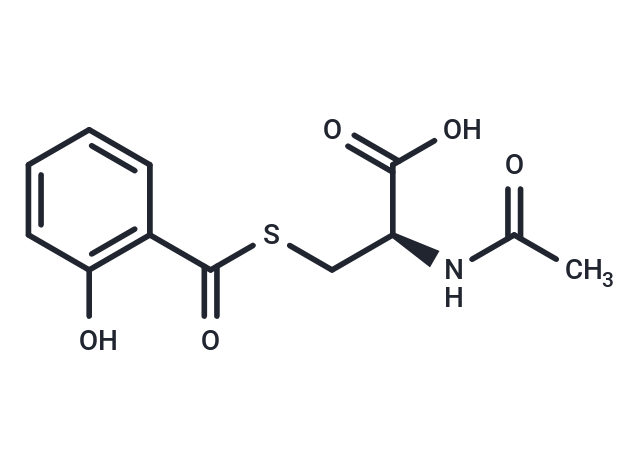
Salnacedin
CAS No. 87573-01-1
Salnacedin( —— )
Catalog No. M34023 CAS No. 87573-01-1
Salnacedin (G-201) is a small molecule compound used in the treatment of immune system disorders, skin and musculoskeletal disorders, and can be used in studies of acne vulgaris, dermatitis and psoriasis.
Purity : >98% (HPLC)
 COA
Datasheet
HNMR
HPLC
MSDS
Handing Instructions
COA
Datasheet
HNMR
HPLC
MSDS
Handing Instructions
| Size | Price / USD | Stock | Quantity |
| 2MG | 114 | Get Quote |


|
| 5MG | 170 | Get Quote |
|
| 10MG | 257 | Get Quote |
|
| 25MG | 466 | Get Quote |
|
| 50MG | 626 | Get Quote |
|
| 100MG | 891 | Get Quote |
|
| 500MG | 1782 | Get Quote |
|
| 1G | Get Quote | Get Quote |
|
Biological Information
-
Product NameSalnacedin
-
NoteResearch use only, not for human use.
-
Brief DescriptionSalnacedin (G-201) is a small molecule compound used in the treatment of immune system disorders, skin and musculoskeletal disorders, and can be used in studies of acne vulgaris, dermatitis and psoriasis.
-
DescriptionSalnacedin (G-201) is a small molecule compound used in the treatment of immune system disorders, skin and musculoskeletal disorders, and can be used in studies of acne vulgaris, dermatitis and psoriasis.
-
In Vitro——
-
In Vivo——
-
Synonyms——
-
PathwayOthers
-
TargetOther Targets
-
RecptorOthers
-
Research Area——
-
Indication——
Chemical Information
-
CAS Number87573-01-1
-
Formula Weight283.3
-
Molecular FormulaC12H13NO5S
-
Purity>98% (HPLC)
-
Solubility——
-
SMILESC(SC[C@H](NC(C)=O)C(O)=O)(=O)C1=C(O)C=CC=C1
-
Chemical Name——
Shipping & Storage Information
-
Storage(-20℃)
-
ShippingWith Ice Pack
-
Stability≥ 2 years
Reference
molnova catalog



related products
-
Phenol Red
Red dye, pH indicator, and diagnostic aid for determination of renal function. It is used also for studies of the gastrointestinal and other systems.
-
Cassiaside B
Cassiaside is a naphthyl ketone glycoside that inhibits BACE1 (IC50= 4.45 μM; Ki=9.85 μM).Cassiaside exhibits significant hepatoprotective effects against galactosamine injury and has potential anti-Alzheimer's disease (AD) activity.
-
Amido Black 10B
Amido Black 10B (Naphthol Blue Black) is a highly toxic azo dye used for staining proteins on polyacrylamide gels and agarose gels.
