


 Cart
Cart
 sales@molnova.com



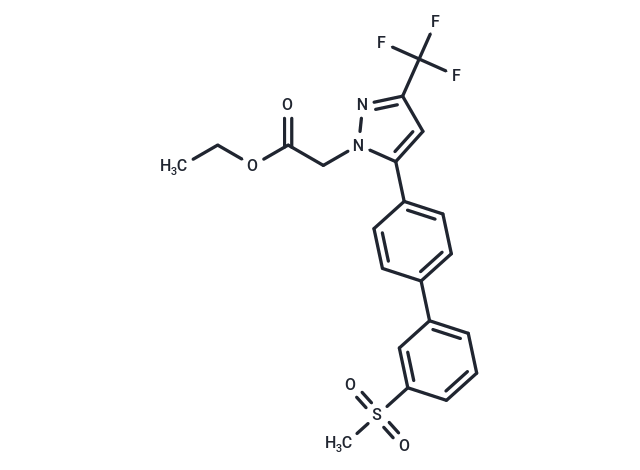
Rovazolac
CAS No. 1454288-88-0
Rovazolac( —— )
Catalog No. M33485 CAS No. 1454288-88-0
Rovazolac (ALX-101) is a liver x receptor (LXR) modulator used in the study of immune system disorders and atopic dermatitis.
Purity : >98% (HPLC)
 COA
Datasheet
HNMR
HPLC
MSDS
Handing Instructions
COA
Datasheet
HNMR
HPLC
MSDS
Handing Instructions
| Size | Price / USD | Stock | Quantity |
| 2MG | 112 | Get Quote |


|
| 5MG | 170 | Get Quote |
|
| 10MG | 275 | Get Quote |
|
| 25MG | 533 | Get Quote |
|
| 50MG | 821 | Get Quote |
|
| 100MG | 1224 | Get Quote |
|
| 500MG | 2457 | Get Quote |
|
| 1G | Get Quote | Get Quote |
|
Biological Information
-
Product NameRovazolac
-
NoteResearch use only, not for human use.
-
Brief DescriptionRovazolac (ALX-101) is a liver x receptor (LXR) modulator used in the study of immune system disorders and atopic dermatitis.
-
DescriptionRovazolac is a liver x receptor (LXR) modulator extracted from patent WO2013130892A1.
-
In Vitro——
-
In Vivo——
-
Synonyms——
-
PathwayOthers
-
TargetOther Targets
-
RecptorLiver X Receptor
-
Research Area——
-
Indication——
Chemical Information
-
CAS Number1454288-88-0
-
Formula Weight452.45
-
Molecular FormulaC21H19F3N2O4S
-
Purity>98% (HPLC)
-
SolubilityIn Vitro:?Ethanol : 10 mg/mL (22.10 mM; Ultrasonic)
-
SMILESCCOC(=O)Cn1nc(cc1-c1ccc(cc1)-c1cccc(c1)S(C)(=O)=O)C(F)(F)F
-
Chemical Name——
Shipping & Storage Information
-
Storage(-20℃)
-
ShippingWith Ice Pack
-
Stability≥ 2 years
Reference
1. Mohan R. Preparation of substituted pyrazoles as liver X receptor (LXR) modulators useful for the treatment of dermal diseases, disorders and conditions. WO2013130892A1
molnova catalog



related products
-
Heneicosanoic acid
Heneicosanoic acid (HEA) is a fatty acid found in human milk fat. HEA is also a part of the phospholipids of the articular cartilage boundary lubricant. HEA is a constituent of red blood cell fatty acids.
-
Erythro-1,2-dihydrox...
The seeds of Daucus carota.
-
[Sar1, Ile8]-Angiote...
[Sar1, Ile8]-Angiotensin II is a peptide that has multiple effects on vascular smooth muscle, including contraction of normal arteries and hypertrophy or hyperplasia of cultured cells or diseased vessels. The biological activities of angiotensin II antagonists upon basal and angiotensin II-stimulated aldosterone production were evaluated in an isolated canine glomerulosa cell preparation.
