


 Cart
Cart
 sales@molnova.com



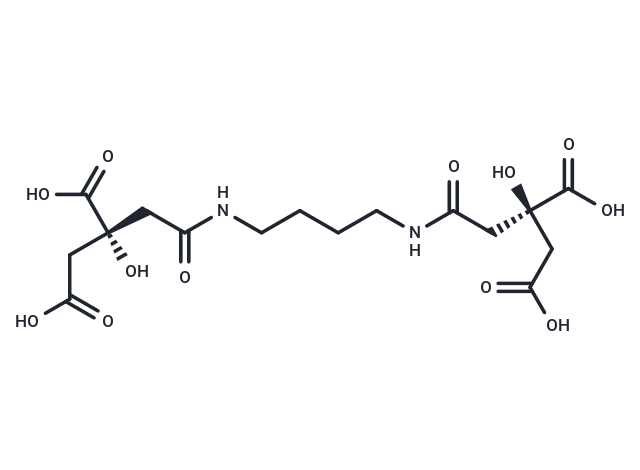
Rhizoferrin
CAS No. 138846-62-5
Rhizoferrin( —— )
Catalog No. M34695 CAS No. 138846-62-5
Rhizoferrin is a novel iron carrier from the fungus Rhizopus microsporus var. rhizopodiformis for the study of iron-deficiency-induced chlorosis in plants.
Purity : >98% (HPLC)
 COA
Datasheet
HNMR
HPLC
MSDS
Handing Instructions
COA
Datasheet
HNMR
HPLC
MSDS
Handing Instructions
| Size | Price / USD | Stock | Quantity |
| 2MG | 445 | Get Quote |


|
| 5MG | 686 | Get Quote |
|
| 10MG | 938 | Get Quote |
|
| 25MG | 1398 | Get Quote |
|
| 50MG | 1822 | Get Quote |
|
| 500MG | Get Quote | Get Quote |
|
| 1G | Get Quote | Get Quote |
|
Biological Information
-
Product NameRhizoferrin
-
NoteResearch use only, not for human use.
-
Brief DescriptionRhizoferrin is a novel iron carrier from the fungus Rhizopus microsporus var. rhizopodiformis for the study of iron-deficiency-induced chlorosis in plants.
-
DescriptionRhizoferrin is a novel iron carrier from the fungus Rhizopus microsporus var. rhizopodiformis for the study of iron-deficiency-induced chlorosis in plants.
-
In Vitro——
-
In Vivo——
-
Synonyms——
-
PathwayOthers
-
TargetOther Targets
-
RecptorOthers
-
Research Area——
-
Indication——
Chemical Information
-
CAS Number138846-62-5
-
Formula Weight436.37
-
Molecular FormulaC16H24N2O12
-
Purity>98% (HPLC)
-
Solubility——
-
SMILES[C@@](CC(NCCCCNC(C[C@@](CC(O)=O)(C(O)=O)O)=O)=O)(CC(O)=O)(C(O)=O)O
-
Chemical Name——
Shipping & Storage Information
-
Storage(-20℃)
-
ShippingWith Ice Pack
-
Stability≥ 2 years
Reference
molnova catalog



related products
-
3-Hydroxypropionic A...
3-Hydroxypropionic Acid sodium salt can be used to synthesize some degradable plastics and produce a series of C3 compounds.
-
Pterodonoic acid
Pterodonoic acid is a natural product for research related to life sciences.
-
6-Hydroxyflavanone
6-Hydroxyflavanone, a compound extracted from the leaves of Acorus calamus, exhibits anti-inflammatory and anti-neuropathic pain activity by targeting cyclooxygenase-2 (COX-2), 5-lipoxygenase (5-LOX), as well as opioid and GABA-A receptors.
