


 Cart
Cart
 sales@molnova.com



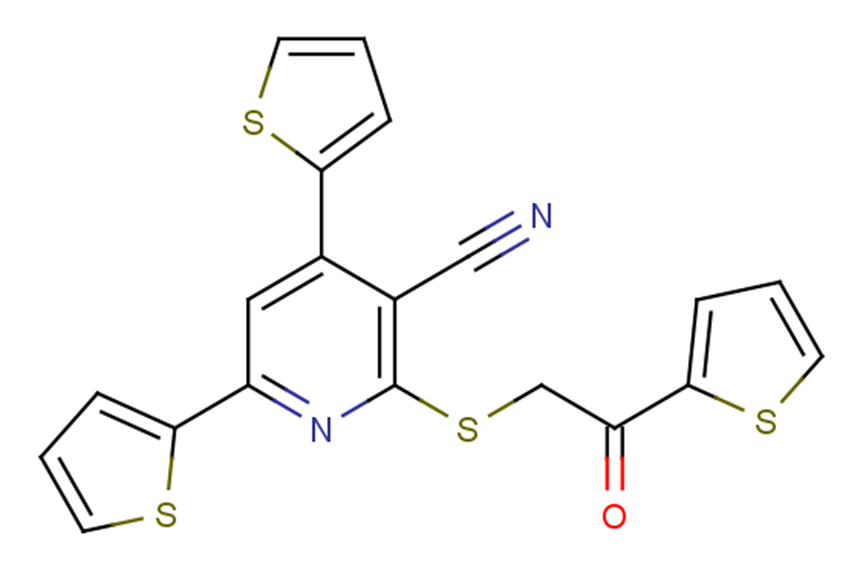
RCM-1
CAS No. 339163-65-4
RCM-1( —— )
Catalog No. M22465 CAS No. 339163-65-4
RCM-1 is an inhibitor of FOXM1. RCM-1 inhibits cellular proliferation via the increasing duration of cell cycle and mitosis in human and mouse cancer cell lines in vitro. RCM-1 inhibits colony formation of cancer cells in vitro in a dose-dependent manner. RCM-1 inhibits the migration of cancer cells in vitro in a dose-dependent manner.
Purity : >98% (HPLC)
 COA
Datasheet
HNMR
HPLC
MSDS
Handing Instructions
COA
Datasheet
HNMR
HPLC
MSDS
Handing Instructions
| Size | Price / USD | Stock | Quantity |
| 5MG | 74 | In Stock |


|
| 10MG | 127 | In Stock |
|
| 25MG | 267 | In Stock |
|
| 50MG | 442 | In Stock |
|
| 100MG | 644 | In Stock |
|
| 200MG | Get Quote | In Stock |
|
| 500MG | Get Quote | In Stock |
|
| 1G | Get Quote | In Stock |
|
Biological Information
-
Product NameRCM-1
-
NoteResearch use only, not for human use.
-
Brief DescriptionRCM-1 is an inhibitor of FOXM1. RCM-1 inhibits cellular proliferation via the increasing duration of cell cycle and mitosis in human and mouse cancer cell lines in vitro. RCM-1 inhibits colony formation of cancer cells in vitro in a dose-dependent manner. RCM-1 inhibits the migration of cancer cells in vitro in a dose-dependent manner.
-
DescriptionRCM-1 is an inhibitor of FOXM1. RCM-1 inhibits cellular proliferation via the increasing duration of cell cycle and mitosis in human and mouse cancer cell lines in vitro. RCM-1 inhibits colony formation of cancer cells in vitro in a dose-dependent manner. RCM-1 inhibits the migration of cancer cells in vitro in a dose-dependent manner. RCM-1 inhibits the initiation as well as the growth of cancer cell colonies in vitro. Treatment with RCM-1 increases the duration of mitosis and cell cycle in the cancer cell lines.RCM-1 decreases the B 16-FlO tumor growth as compared to the Vehicle -treated group. RCM-1 treatment decreases tumor cell proliferation and increased apoptosis in B16-FlO melanoma tumors. RCM-1 treatment reduces the growth of the human H2122 lung adenocarcinoma in mice. RCM-1 treatment reduces tumor cell proliferation and increases apoptosis in Rd76-9 rhabdomyosarcoma tumors. RCM-1 treatment decreases the growth of Rd76-9 rhabdomyosarcomas in mice. The RCM-1-treated Rd76-9 tumors display reduced FOXM1 staining and decreased expression of proliferation-specific markers Ki67 and PH3. Cleaved caspase staining is increased in the RCM-1 treated tumors, indicating an increase in apoptosis. RCM-1 treatment reduces the growth of B16-FlO melanoma tumors in mice.
-
In VitroRCM-1 blocks the nuclear localization and increased the proteasomal degradation of FOXM1, a transcription factor critical for the differentiation of goblet cells from airway progenitor cells. In cultured airway epithelial cells, RCM-1 reduces IL-13 and STAT6 signaling and prevented the expression of the STAT6 target genes Spdef and Foxa3, which are key transcriptional regulators of goblet cell differentiation.
-
In VivoRCM-1 reduces airway resistance, increased lung compliance, and decreased proinflammatory cytokine production in mice exposed to the house dust mite and interleukin-13 (IL-13), which triggers goblet cell metaplasia. In mice, RCM-1 reduces IL-13 and STAT6 signaling and prevented the expression of the STAT6 target genes Spdef and Foxa3.
-
Synonyms——
-
PathwayOthers
-
TargetOther Targets
-
RecptorFOXM1
-
Research Area——
-
Indication——
Chemical Information
-
CAS Number339163-65-4
-
Formula Weight424.58
-
Molecular FormulaC20H12N2OS4
-
Purity>98% (HPLC)
-
SolubilityDMSO:16.67 mg/mL (39.26 mM; Need ultrasonic)
-
SMILESO=C(CSc1nc(cc(-c2cccs2)c1C#N)-c1cccs1)c1cccs1
-
Chemical Name——
Shipping & Storage Information
-
Storage(-20℃)
-
ShippingWith Ice Pack
-
Stability≥ 2 years
Reference
1. ARYL SULFONOHYDRAZIDES.WO2018057550A1.
molnova catalog



related products
-
Methacrylic anhydrid...
Methacrylic anhydride is a polymerizable 1,6-diolefin compound that can be radical-initiated to form soluble cyclohexane polymers.Methacrylic anhydride can spontaneously polymerize via vinyl groups, which is inhibited by 2-6-di-tert-butyl 4-methylphenol.
-
Phospholipase A2 Act...
Phospholipase A2 Activating Peptide
-
5-TAMRA chloride(918...
5-TAMRA can produce bright, pH insensitive orange fluorescence (Ex/ Em= 546 / 579nm), and has good photostability
