


 Cart
Cart
 sales@molnova.com



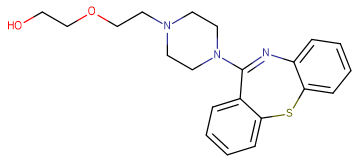
Quetiapin
CAS No. 111974-69-7
Quetiapin( —— )
Catalog No. M10429 CAS No. 111974-69-7
Quetiapine is indicated for the treatment of schizophrenia as well as for the treatment of acute manic episodes associated with bipolar I disorder.
Purity : >98% (HPLC)
 COA
Datasheet
HNMR
HPLC
MSDS
Handing Instructions
COA
Datasheet
HNMR
HPLC
MSDS
Handing Instructions
| Size | Price / USD | Stock | Quantity |
| 10MG | 45 | In Stock |


|
| 50MG | 81 | In Stock |
|
| 100MG | 105 | In Stock |
|
| 200MG | Get Quote | In Stock |
|
| 500MG | Get Quote | In Stock |
|
| 1G | Get Quote | In Stock |
|
Biological Information
-
Product NameQuetiapin
-
NoteResearch use only, not for human use.
-
Brief DescriptionQuetiapine is indicated for the treatment of schizophrenia as well as for the treatment of acute manic episodes associated with bipolar I disorder.
-
DescriptionQuetiapine is indicated for the treatment of schizophrenia as well as for the treatment of acute manic episodes associated with bipolar I disorder. The antipsychotic effect of quetiapine is thought by some to be mediated through antagonist activity at dopamine and serotonin receptors. Specifically the D1 and D2 dopamine, the alpha 1 adrenoreceptor and alpha 2 adrenoreceptor, and 5-HT1A and 5-HT2 serotonin receptor subtypes are antagonized. Quetiapine also has an antagonistic effect on the histamine H1 receptor. (In Vitro):Quetiapine (<100?μM; 24?hours) has no significant effect on cell viabilities.Quetiapine (10?μM) inhibits NO release, which increased by LPS (0.1-100 ng/mL) in concentration-dependent manner.Quetiapine (10?μM) also inhibits TNF-α synthesis.(In Vivo):Quetiapine (10?mg/kg/day; ingested) can alleviate the recruitment and activation of microglia and promote myelin repair in Cuprizone (CPZ)-induced chronic mouse model of demyelination.
-
In Vitro——
-
In VivoAnimal Model:C57BL/6 mice Dosage:10?mg/kg/day Administration:Ingested Result:Significantly increased in optical density of myelin basic protein (MBP) staining compared to Veh group.
-
Synonyms——
-
PathwayEndocrinology/Hormones
-
Target5-HT Receptor
-
Recptor5-HT| mAChR| Adrenergic Receptor| Dopamine| H1 receptor
-
Research AreaNeurological Disease
-
Indication——
Chemical Information
-
CAS Number111974-69-7
-
Formula Weight383.51
-
Molecular FormulaC21H25N3O2S
-
Purity>98% (HPLC)
-
SolubilityDMSO: 36 mg/mL;Water: <1 mg/mL
-
SMILESOCCOCCN1CCN(CC1)C1=NC2=CC=CC=C2SC2=CC=CC=C12
-
Chemical Name——
Shipping & Storage Information
-
Storage(-20℃)
-
ShippingWith Ice Pack
-
Stability≥ 2 years
Reference
1.Nasrallah HA. Mol Psychiatry. 2008 Jan;13(1):27-35.
molnova catalog



related products
-
Incensole
Incensole has a protective or stimulating effect on β-cells of the rat pancreas, it also can increase the insulin secretion, which evidenced by a significant increase both in body weight and in liver glycogen.
-
RG2833
RG2833 (RGFP109), a brain-penetrant HDAC inhibitor, is with IC50 of 60 nM and 50 nM for HDAC1 and HDAC3, respectively.
-
5-HT7 agonist 1
5-HT7 agonist 1 is a selective agonist of 5-HT7 (IC50 = 222.93 nM).
