


 Cart
Cart
 sales@molnova.com



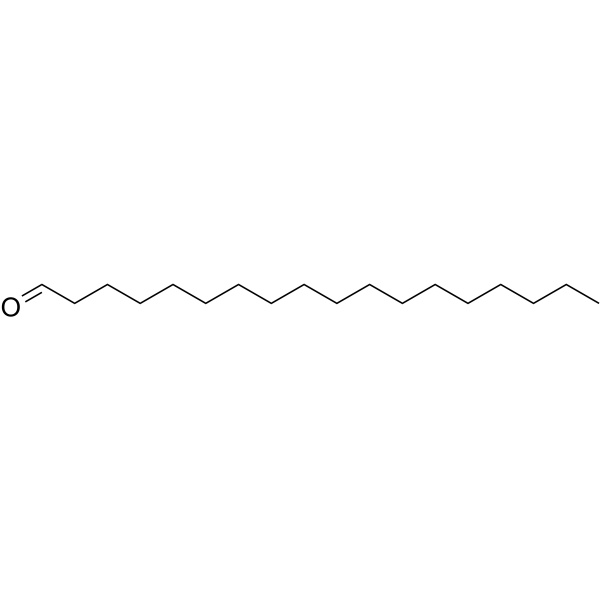
Octadecanal
CAS No. 638-66-4
Octadecanal( stearaldehyde )
Catalog No. M27098 CAS No. 638-66-4
Octadecanal is present in the thigh and chest muscles.
Purity : >98% (HPLC)
 COA
Datasheet
HNMR
HPLC
MSDS
Handing Instructions
COA
Datasheet
HNMR
HPLC
MSDS
Handing Instructions
| Size | Price / USD | Stock | Quantity |
| 50MG | 45 | In Stock |


|
| 100MG | Get Quote | In Stock |
|
| 200MG | Get Quote | In Stock |
|
| 500MG | Get Quote | In Stock |
|
| 1G | Get Quote | In Stock |
|
Biological Information
-
Product NameOctadecanal
-
NoteResearch use only, not for human use.
-
Brief DescriptionOctadecanal is present in the thigh and chest muscles.
-
DescriptionOctadecanal is present in the thigh and chest muscles.(In Vivo):Supplementing octadecanal on the wings of octadecanal-rich H. melpomene males led to an increase in the time until mating.
-
In Vitro——
-
In Vivo——
-
Synonymsstearaldehyde
-
PathwayProteasome/Ubiquitin
-
TargetEndogenous Metabolite
-
Recptorprogestogen
-
Research Area——
-
Indication——
Chemical Information
-
CAS Number638-66-4
-
Formula Weight268.485
-
Molecular FormulaC18H36O
-
Purity>98% (HPLC)
-
SolubilityIn Vitro:?DMSO : < 1 mg/mL (insoluble o)
-
SMILESCCCCCCCCCCCCCCCCCC=O
-
Chemical Name——
Shipping & Storage Information
-
Storage(-20℃)
-
ShippingWith Ice Pack
-
Stability≥ 2 years
Reference
1.Kesserü-Koós E, et al. Fertility control with norethindrone enanthate, a long-acting parenteral progestogen. Acta Eur Fertil. 1973 Dec;4(4):203-21.
molnova catalog



related products
-
Guanylin (human)
Endogenous peptide activator of intestinal guanylyl cyclase; secreted mainly by the gastrointestinal mucosa. Regulates water and electrolyte transport in intestinal and renal epithelia.
-
5α-Cholestane
5α-Cholestane belongs to the class of organic compounds known as cholestane steroids.
-
Ternidazole hydrochl...
Ternidazole hydrochloride (Ternidazole HCl) is a 5-nitroimidazole antibiotic with antimicrobial antioxidant and antiprotozoal activity.
