


 Cart
Cart
 sales@molnova.com



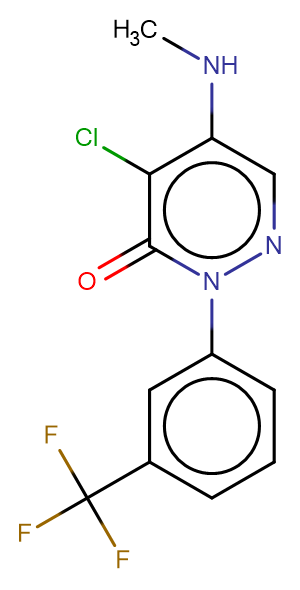
Norflurazon
CAS No. 27314-13-2
Norflurazon( —— )
Catalog No. M21580 CAS No. 27314-13-2
Norflurazon is an excellent weed controlling agent being practiced in the agricultural lands.
Purity : >98% (HPLC)
 COA
Datasheet
HNMR
HPLC
MSDS
Handing Instructions
COA
Datasheet
HNMR
HPLC
MSDS
Handing Instructions
| Size | Price / USD | Stock | Quantity |
| 5MG | 45 | Get Quote |


|
| 10MG | 77 | Get Quote |
|
| 100MG | Get Quote | Get Quote |
|
| 200MG | Get Quote | Get Quote |
|
| 500MG | Get Quote | Get Quote |
|
| 1G | Get Quote | Get Quote |
|
Biological Information
-
Product NameNorflurazon
-
NoteResearch use only, not for human use.
-
Brief DescriptionNorflurazon is an excellent weed controlling agent being practiced in the agricultural lands.
-
DescriptionNorflurazon is an excellent weed controlling agent being practiced in the agricultural lands.
-
In Vitro——
-
In Vivo——
-
Synonyms——
-
PathwayOthers
-
TargetOther Targets
-
RecptorOthers
-
Research Area——
-
Indication——
Chemical Information
-
CAS Number27314-13-2
-
Formula Weight303.67
-
Molecular FormulaC12H9ClF3N3O
-
Purity>98% (HPLC)
-
SolubilityIn Vitro:?DMSO : 125 mg/mL (411.63 mM)
-
SMILESCNc1cnn(-c2cccc(c2)C(F)(F)F)c(=O)c1Cl
-
Chemical Name4-chloro-5-(methylamino)-2-(3-(trifluoromethyl)phenyl)pyridazin-3(2H)-one
Shipping & Storage Information
-
Storage(-20℃)
-
ShippingWith Ice Pack
-
Stability≥ 2 years
Reference
1.P Chris Wilson Hai Lu Youjian Linet al.Norflurazon and Simazine Removal From Surface Water Using a Constructed Wetland.Bull Environ Contam Toxicol. 2011 Oct;87(4):426-30.?
molnova catalog



related products
-
Cinnamtannin A2
Cinnamtannin A2, a tetrameric procyanidin, enhances GLP-1 and insulin secretion in mice while also upregulating the expression of corticotrophin releasing hormone.
-
Oxyimperatorin
Oxyimperatorin is a natural product from Angelica dahurica.
-
TPE-MI
TPE-MI (Tetraphenylethene maleimide) is an aggregation-induced luminescent agent that stains living cells, can be used to capture cysteines in exposed unfolded proteins, and detects protein damage after dihydroartemisinin studies of malaria parasites.
