


 Cart
Cart
 sales@molnova.com



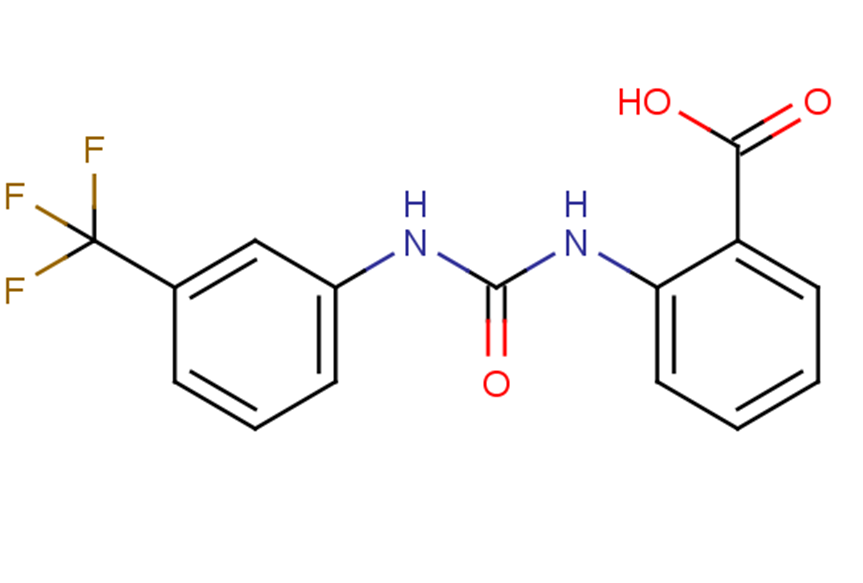
NS1652
CAS No. 1566-81-0
NS1652( —— )
Catalog No. M22621 CAS No. 1566-81-0
NS1652 is an anion conductance inhibitor. NS1652 blocks chloride channel has an IC50 of 1.6 μM in human and mouse red blood cells.NS1652 (20 μM) fully and reversibly inhibits the red cell Cl-conductance. NS1652 effectively inhibits the chloride conductance (IC50, 1.6 μM) in human and mouse red blood cells, but only weakly inhibits VRAC (IC50, 125 μM) in HEK293 cells. NS1652 markedly blocks the NO production (IC50: 3.1 μM in BV2 cells).
Purity : >98% (HPLC)
 COA
Datasheet
HNMR
HPLC
MSDS
Handing Instructions
COA
Datasheet
HNMR
HPLC
MSDS
Handing Instructions
| Size | Price / USD | Stock | Quantity |
| 5MG | 160 | In Stock |


|
| 10MG | 259 | In Stock |
|
| 25MG | 485 | In Stock |
|
| 50MG | 700 | In Stock |
|
| 100MG | 954 | In Stock |
|
| 500MG | 1908 | In Stock |
|
| 1G | Get Quote | In Stock |
|
Biological Information
-
Product NameNS1652
-
NoteResearch use only, not for human use.
-
Brief DescriptionNS1652 is an anion conductance inhibitor. NS1652 blocks chloride channel has an IC50 of 1.6 μM in human and mouse red blood cells.NS1652 (20 μM) fully and reversibly inhibits the red cell Cl-conductance. NS1652 effectively inhibits the chloride conductance (IC50, 1.6 μM) in human and mouse red blood cells, but only weakly inhibits VRAC (IC50, 125 μM) in HEK293 cells. NS1652 markedly blocks the NO production (IC50: 3.1 μM in BV2 cells).
-
DescriptionNS1652 is an anion conductance inhibitor. NS1652 blocks chloride channel has an IC50 of 1.6 μM in human and mouse red blood cells.NS1652 (20 μM) fully and reversibly inhibits the red cell Cl-conductance. NS1652 effectively inhibits the chloride conductance (IC50, 1.6 μM) in human and mouse red blood cells, but only weakly inhibits VRAC (IC50, 125 μM) in HEK293 cells. NS1652 markedly blocks the NO production (IC50: 3.1 μM in BV2 cells). NS1652 also down-regulates iNOS expression at 3 μM and fully abolishes at 10 μM in BV2 cells. NS1652 (0, 1.0, 3.3, 10, and 20 μM) induces increasing hyperpolarization due to inhibition of the chloride conductance in normal erythrocytes. NS1652 lowers the net KCl loss from deoxygenated sickle cells from about 12 mM cells/h to about 4 mM cells/h. In mice, NS1652 (50 mg/kg, i.v.) blocks murine erythrocyte Cl- conductance by >90%.
-
In VitroNS1652 potently inhibits the chloride conductance (IC50, 1.6 μM) in human and mouse red blood cells, but only weakly inhibits VRAC (IC50, 125 μM) in HEK293 cells. NS1652 markedly blocks the NO production with an IC50 of 3.1 μM in BV2 cells. NS1652 also down-regulates iNOS expression at 3 μM, and completely abolishes at 10 μM in BV2 cells. NS1652 (0, 1.0, 3.3, 10, and 20 μM) causes increasing hyperpolarization due to inhibition of the chloride conductance in normal erythrocytes. NS1652 lowers the net KCl loss from deoxygenated sickle cells from about 12 mM cells/h to about 4 mM cells/h. NS1652 (20 μM) completely and reversiblely inhibits the red cell Cl-conductance.
-
In VivoNS1652 (50 mg/kg, i.v.) blocks murine erythrocyte Cl- conductance by >90% in mice.
-
Synonyms——
-
PathwayMembrane Transporter/Ion Channel
-
TargetChloride Channel
-
Recptorchloride channel
-
Research Area——
-
Indication——
Chemical Information
-
CAS Number1566-81-0
-
Formula Weight324.25
-
Molecular FormulaC15H11F3N2O3
-
Purity>98% (HPLC)
-
SolubilityDMSO:4.9 mg/mL (15.11 mM; Need ultrasonic)
-
SMILESOC(=O)c1ccccc1NC(=O)Nc1cccc(c1)C(F)(F)F
-
Chemical Name——
Shipping & Storage Information
-
Storage(-20℃)
-
ShippingWith Ice Pack
-
Stability≥ 2 years
Reference
1. Kjaer K, et al. Chloride channel blockers inhibit iNOS expression and NO production in IFNgamma-stimulated microglial BV2 cells. Brain Res. 2009 Jul 24;1281:15-24.
molnova catalog



related products
-
DCPIB
DCPIB, a known specific and potent inhibitor of volume-regulated anion channels (VRAC),DCPIB displayed superior selectivity toward TRESK with an IC50 of 0.14 μM, demonstrating at least 100-fold higher affinity over TREK1/TRAAK channels.?DCPIB, a known specific and potent inhibitor of volume-regulated anion channels (VRAC), has been reported to activate TREK1 and TREK2 in astrocytes and in vitro recently.?
-
Brucine sulfate hept...
Brucine is an alkaloid that acts as an antagonist at glycine receptors and paralyzes inhibitory neurons.
-
ZINC00881524
ZINC00881524 is an effective and specific ROCK inhibitor.
