


 Cart
Cart
 sales@molnova.com



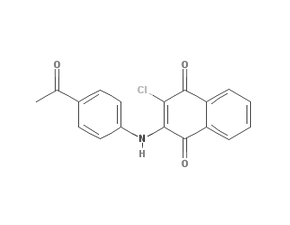
NQ301
CAS No. 130089-98-4
NQ301( NQ-301 | NQ 301 | NQ301 )
Catalog No. M17241 CAS No. 130089-98-4
NQ301, an antithrombotic agent, inhibits collagen-challenged rabbit platelet aggregation (IC50: 10 mg/mL).
Purity : >98% (HPLC)
 COA
Datasheet
HNMR
HPLC
MSDS
Handing Instructions
COA
Datasheet
HNMR
HPLC
MSDS
Handing Instructions
| Size | Price / USD | Stock | Quantity |
| 5MG | 48 | In Stock |


|
| 10MG | 69 | In Stock |
|
| 25MG | 113 | In Stock |
|
| 50MG | 186 | In Stock |
|
| 100MG | 332 | In Stock |
|
| 200MG | Get Quote | In Stock |
|
| 500MG | Get Quote | In Stock |
|
| 1G | Get Quote | In Stock |
|
Biological Information
-
Product NameNQ301
-
NoteResearch use only, not for human use.
-
Brief DescriptionNQ301, an antithrombotic agent, inhibits collagen-challenged rabbit platelet aggregation (IC50: 10 mg/mL).
-
DescriptionNQ-301 is a Selective CD45 inhibitor with Antiplatelet and antithrombotic activities (IC50 = 200 nM). NQ301 inhibits thromboxane A2 receptor and synthase activity in rabbit platelets. The antiplatelet activity of NQ301 may be mediated by inhibition of cytosolic Ca2+ mobilization, enhancement of cAMP production and inhibition of ATP secretion in activated platelets.
-
In VitroNQ301 concentration-dependently inhibits collagen (10 mg/mL)-, U46619 (1 mg/mL)- and arachidonic acid (100 mg/mL)-challenged rabbit platelet aggregation, with IC50values of 0.60±0.02, 0.58±0.04 and 0.78±0.04 μM, respectively. NQ301 potently suppresses thromboxane B2 formation by platelets that are exposed to arachidonic acid in a concentration-dependent manner, but had no effect on the production of prostaglandin D2, indicating an inhibitory effect on thromboxane A2 synthase. NQ301 has a potential to inhibit thromboxane A2 synthase activity with thromboxane A2/prostaglandin H2 receptor blockade, and modulate arachidonic acid liberation as well as 12-hydroxy-5,8,10,14-eicosatetraenoic acid formation in platelets. NQ301 inhibits platelet aggregation by suppression of the intracellular pathway, rather than by direct inhibition of fibrinogen-GPIIb/IIIa complex binding. NQ301 significantly inhibits the increase of cytosolic Ca2+ concentration and ATP secretion, and also significantly increases platelet cAMP levels in the activated platelets. The antiplatelet activity of NQ301 may be mediated by inhibition of cytosolic Ca2+ mobilization, enhancement of cAMP production and inhibition of ATP secretion in activated platelets.
-
In Vivo——
-
SynonymsNQ-301 | NQ 301 | NQ301
-
PathwayAngiogenesis
-
Targetc-Met/HGFR
-
Recptorarachidonic acid-challenged rabbit platelet aggregation| collagen-challenged rabbit platelet aggregation| U46619-challenged rabbit platelet aggregation
-
Research AreaCardiovascular Disease|Infection
-
Indication——
Chemical Information
-
CAS Number130089-98-4
-
Formula Weight325.75
-
Molecular FormulaC18H12ClNO3
-
Purity>98% (HPLC)
-
SolubilityDMSO : ≥ 29 mg/mL. 89.03 mM
-
SMILESCC(=O)c1ccc(cc1)NC1=C(C(=O)c2ccccc2C1=O)Cl
-
Chemical Name2-[(4-Acetylphenyl)amino]-3-chloro-1,4-naphthalenedione
Shipping & Storage Information
-
Storage(-20℃)
-
ShippingWith Ice Pack
-
Stability≥ 2 years
Reference
1. Jin YR, et al. An antithrombotic agent, NQ301, inhibits thromboxane A2 receptor and synthase activity in rabbit platelets. Basic Clin Pharmacol Toxicol. 2005 Sep;97(3):162-7.
molnova catalog



related products
-
LMTK3-IN-1
Lmtk3-in-1 is a potent ATP-competitive lemur tyrosine kinase 3 (LMTK3) (Kd=2.5 μM) inhibitor that degrades LMTK3 through the ubiquitin proteasome pathway.
-
Foretinib
Foretinib (XL880, GSK1363089, GSK089, EXEL-2880) is a potent, multikinase inhibitor that inhibits c-Met and VEGFR, also KIT, Flt-3, PDGFRβ, and Tie-2.
-
c-Met inhibitor 1
c-Met inhibitor 1 is a c-Met receptor signaling pathway inhibitor, used for the treatment of cancer including glioblastoma, gastric, and pancreatic cancer.
