


 Cart
Cart
 sales@molnova.com



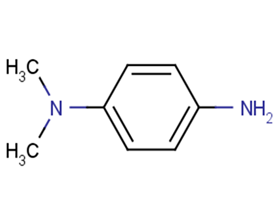
NN-Dimethyl-p-phenylenediamine
CAS No. 99-98-9
NN-Dimethyl-p-phenylenediamine( DMPPDA )
Catalog No. M19730 CAS No. 99-98-9
NN-Dimethyl-p-phenylenediamine (DPD DMPD) is an aromatic amine mainly used as an intermediate to produce dyes.
Purity : >98% (HPLC)
 COA
Datasheet
HNMR
HPLC
MSDS
Handing Instructions
COA
Datasheet
HNMR
HPLC
MSDS
Handing Instructions
| Size | Price / USD | Stock | Quantity |
| 5MG | 45 | Get Quote |


|
| 10MG | 68 | Get Quote |
|
| 25MG | 115 | Get Quote |
|
| 50MG | 173 | Get Quote |
|
| 100MG | 258 | Get Quote |
|
| 200MG | 388 | Get Quote |
|
| 500MG | 642 | Get Quote |
|
| 1G | Get Quote | Get Quote |
|
Biological Information
-
Product NameNN-Dimethyl-p-phenylenediamine
-
NoteResearch use only, not for human use.
-
Brief DescriptionNN-Dimethyl-p-phenylenediamine (DPD DMPD) is an aromatic amine mainly used as an intermediate to produce dyes.
-
DescriptionNN-Dimethyl-p-phenylenediamine (DPD DMPD) is an aromatic amine mainly used as an intermediate to produce dyes.
-
In Vitro——
-
In Vivo——
-
SynonymsDMPPDA
-
PathwayOthers
-
TargetOther Targets
-
RecptorOthers
-
Research Area——
-
Indication——
Chemical Information
-
CAS Number99-98-9
-
Formula Weight136.19
-
Molecular FormulaC8H12N2
-
Purity>98% (HPLC)
-
SolubilityDMSO:10 mM
-
SMILESCN(C)c1ccc(N)cc1
-
Chemical Name——
Shipping & Storage Information
-
Storage(-20℃)
-
ShippingWith Ice Pack
-
Stability≥ 2 years
Reference
1.Tumen I. Senol F. & Orhan I. (2011). Inhibitory potential of the leaves and berries ofMyrtus communisL. (myrtle) against enzymes linked to neurodegenerative diseases and their antioxidant actions.?International Journal Of Food Sciences And Nutrition?63(4) 387-392. doi: 10.3109/09637486.2011.629178
molnova catalog



related products
-
Pancreatic Polypepti...
Pancreatic Polypeptide (31-36) (free acid) (human)
-
25R-Spirostan-4-ene-...
(25R)-Spirost-4-ene-3,6,12-trione is a natural product, that can be isolated from T. terrestris L.
-
(-)-Syringaresinol
(-)-Syringaresinol is derived from the stems of Annona Montana. (-)-Syringaresinol inhibits the proliferation of human promyelocytic HL-60 cells through G1 arrest and induction of apoptosis and possesses anti-cancer activity.
