


 Cart
Cart
 sales@molnova.com



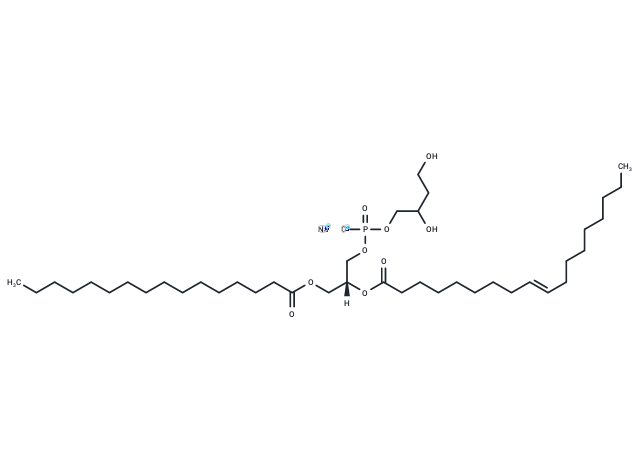
Egg PG
CAS No. 383907-64-0
Egg PG( —— )
Catalog No. M37852 CAS No. 383907-64-0
Egg PG(Phosphatidylglycerols(egg)) is one of the major phosphatidylglycerols of food and biological tissues, often found in the membranes of bacterial and animal cells, and serves as an anionic phospholipid substrate in the sPMCA, reaction.
Purity : >98% (HPLC)
 COA
Datasheet
HNMR
HPLC
MSDS
Handing Instructions
COA
Datasheet
HNMR
HPLC
MSDS
Handing Instructions
| Size | Price / USD | Stock | Quantity |
| 10MG | 31 | In Stock |


|
| 25MG | 49 | In Stock |
|
| 50MG | 83 | In Stock |
|
| 100MG | 137 | In Stock |
|
| 200MG | Get Quote | In Stock |
|
| 500MG | Get Quote | In Stock |
|
| 1G | Get Quote | In Stock |
|
Biological Information
-
Product NameEgg PG
-
NoteResearch use only, not for human use.
-
Brief DescriptionEgg PG(Phosphatidylglycerols(egg)) is one of the major phosphatidylglycerols of food and biological tissues, often found in the membranes of bacterial and animal cells, and serves as an anionic phospholipid substrate in the sPMCA, reaction.
-
DescriptionPhosphatidylglycerol is a naturally occurring anionic phospholipid that is a component of plant, animal and bacterial cell membranes. It is present in prokaryotes and eukaryotes less than phosphatidylethanolamine, and in eukaryotes less than phosphatidylcholine. It is formed by the reaction between CDP-diglyceride and L-α-glycerol 3-phosphate followed by dephosphorylation and is the metabolic precursor of cardiolipin. Phosphatidylglycerols containing polyunsaturated and monounsaturated fatty acyl chains inhibit and promote the proliferation of murine keratinocytes, respectively. Phosphatidylglycerol is the second-largest lipid component of mammalian lung surfactant, accounting for 10% of lipids, and has reduced levels of pulmonary surfactant in infants with respiratory distress syndrome. Phosphatidylglycerol (egg) is a mixture of phosphatidylglycerols isolated from eggs with various fatty acyl groups at the sn-1 and sn-2 positions. References: . Ohtsuka, T., Nishijima, M., and Akamatsu, Y. Phosphatidylglycerol phosphate synthase-deficient somatic mutants with impaired phosphatidylglycerol and cardiolipin biosynthesis J. Biol. Chemical. 268(30), 22908-22913 (1993).. Furse, S. Are phosphatidylglycerols essential for terrestrial life J. Chemistry. biology. 10(1), 1-9 (2016).. Xie, D., Seremwe, M., Edwards, JG, et al. Different effects of different phosphatidylglycerols on the proliferation of mouse keratinocytes PLoS One 9(9), e107119 (2014).
-
In Vitro——
-
In Vivo——
-
Synonyms——
-
PathwayOthers
-
TargetOther Targets
-
RecptorOthers
-
Research Area——
-
Indication——
Chemical Information
-
CAS Number383907-64-0
-
Formula Weight785.02
-
Molecular FormulaC41H78NaO10P
-
Purity>98% (HPLC)
-
SolubilityIn Vitro:?DMSO : 10 mg/mL (Ultrasonic (<60°C)
-
SMILESCCCCCCCCCCCCCCCC(OC[C@](OC(CCCCCCC/C=C/CCCCCCCC)=O)([H])COP(OCC(O)CCO)([O-])=O)=O.[Na+]
-
Chemical Name——
Shipping & Storage Information
-
Storage(-20℃)
-
ShippingWith Ice Pack
-
Stability≥ 2 years
Reference
1. Furse S. Is phosphatidylglycerol essential for terrestrial life?[J]. Journal of chemical biology, 2017, 10(1): 1-9.
molnova catalog



related products
-
Kadsuric acid
Kadsuric acid is a Triterpenoids product that can be isolated from the fruits of Schisandra sphenanthera.
-
Pelretin
Pelretin is a synthetic retinoid.
-
Octadecane
Octadecane is a natural product.
