


 Cart
Cart
 sales@molnova.com



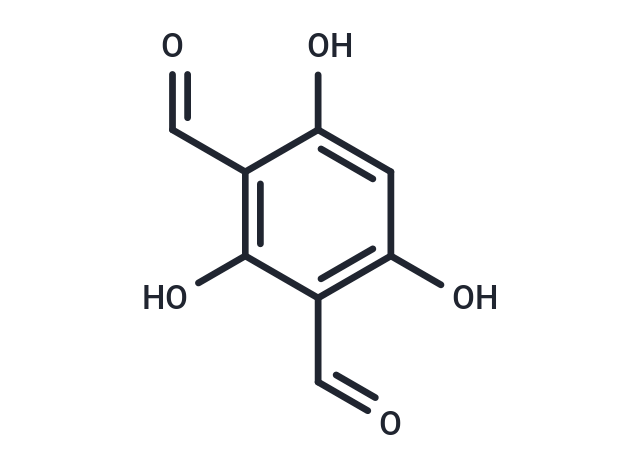
Diformylphloroglucinol
CAS No. 4396-13-8
Diformylphloroglucinol( —— )
Catalog No. M37832 CAS No. 4396-13-8
Diformylphloroglucinol (2,4,6-Trihydroxyisophthalaldehyde) is an acyl resorcinol isolated from the leaves of the Eucalyptus nigra tree and is a raw material for the synthesis of resorcinol compounds with antioxidant and antiulcer activity.
Purity : >98% (HPLC)
 COA
Datasheet
HNMR
HPLC
MSDS
Handing Instructions
COA
Datasheet
HNMR
HPLC
MSDS
Handing Instructions
| Size | Price / USD | Stock | Quantity |
| 25MG | 28 | In Stock |


|
| 100MG | Get Quote | In Stock |
|
| 200MG | Get Quote | In Stock |
|
| 500MG | Get Quote | In Stock |
|
| 1G | Get Quote | In Stock |
|
Biological Information
-
Product NameDiformylphloroglucinol
-
NoteResearch use only, not for human use.
-
Brief DescriptionDiformylphloroglucinol (2,4,6-Trihydroxyisophthalaldehyde) is an acyl resorcinol isolated from the leaves of the Eucalyptus nigra tree and is a raw material for the synthesis of resorcinol compounds with antioxidant and antiulcer activity.
-
DescriptionDiformylphloroglucinol (2,4,6-Trihydroxyisophthalaldehyde) is an acyl resorcinol isolated from the leaves of the Eucalyptus nigra tree and is a raw material for the synthesis of resorcinol compounds with antioxidant and antiulcer activity.
-
In Vitro——
-
In Vivo——
-
Synonyms——
-
PathwayOthers
-
TargetAntioxidant
-
RecptorAntioxidant
-
Research Area——
-
Indication——
Chemical Information
-
CAS Number4396-13-8
-
Formula Weight182.13
-
Molecular FormulaC8H6O5
-
Purity>98% (HPLC)
-
Solubility——
-
SMILESOc1cc(O)c(C=O)c(O)c1C=O
-
Chemical Name——
Shipping & Storage Information
-
Storage(-20℃)
-
ShippingWith Ice Pack
-
Stability≥ 2 years
Reference
molnova catalog



related products
-
Sinigrin
Sinigrin, a glucosinolate, is used as a systrate to identify, differentiate and characterize myrosinase(s)/thioglucoside glucohydrolase(s)/thioglucosidase(s).
-
Scopoletin acetate
Scopoletin acetate (7-Acetoxy-6-methoxycoumari) is a coumarin analog derived from Artemisia granatensis with antioxidant, antimicrobial, cardioprotective and anticancer activities.
-
Valencene
Valencene (NSC-148969) is a sesquiterpenoid isolated from Cyperus rotundus and is an aroma component of citrus fruits and citrus-derived odors.ValenceneValencene has anti-allergic, anti-inflammatory, anti-melanogenic, and antioxidant activities.
