


 Cart
Cart
 sales@molnova.com



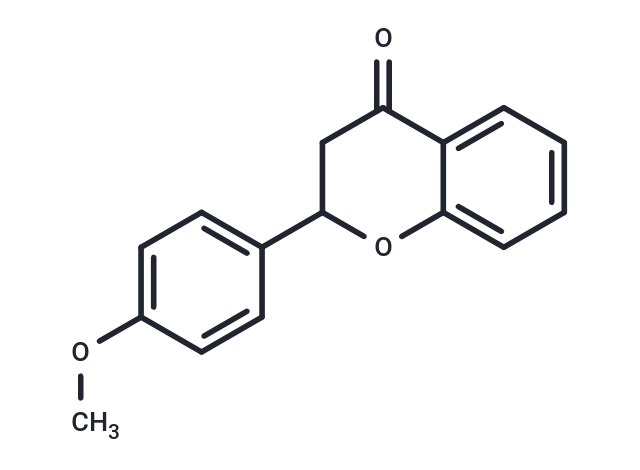
4-Methoxyflavanone
CAS No. 97005-76-0
4-Methoxyflavanone( —— )
Catalog No. M37756 CAS No. 97005-76-0
4'-Methoxyflavanone is a flavonoid isolated from natural Isaria fumosorosea KCH J2, which is used in the study of metabolic and cardiovascular diseases.
Purity : >98% (HPLC)
 COA
Datasheet
HNMR
HPLC
MSDS
Handing Instructions
COA
Datasheet
HNMR
HPLC
MSDS
Handing Instructions
| Size | Price / USD | Stock | Quantity |
| 1 mL x 10 mM in DMSO | 42 | In Stock |


|
| 5MG | 38 | In Stock |
|
| 10MG | 61 | In Stock |
|
| 25MG | 101 | In Stock |
|
| 50MG | 144 | In Stock |
|
| 100MG | 212 | In Stock |
|
| 200MG | 318 | In Stock |
|
| 500MG | Get Quote | In Stock |
|
| 1G | Get Quote | In Stock |
|
Biological Information
-
Product Name4-Methoxyflavanone
-
NoteResearch use only, not for human use.
-
Brief Description4'-Methoxyflavanone is a flavonoid isolated from natural Isaria fumosorosea KCH J2, which is used in the study of metabolic and cardiovascular diseases.
-
Description4'-Methoxyflavanone is a flavonoid compound.4'-Methoxyflavanone is isolated from the natural Isaria fumosoroseaKCH J2. 4'-Methoxyflavanone regulates metabolic disorders, prevents cardiovascular disease and protects neurons.
-
In Vitro——
-
In Vivo——
-
Synonyms——
-
PathwayOthers
-
TargetOther Targets
-
RecptorOthers
-
Research Area——
-
Indication——
Chemical Information
-
CAS Number97005-76-0
-
Formula Weight254.28
-
Molecular FormulaC16H14O3
-
Purity>98% (HPLC)
-
Solubility——
-
SMILESCOc1ccc(cc1)C1CC(=O)c2ccccc2O1
-
Chemical Name——
Shipping & Storage Information
-
Storage(-20℃)
-
ShippingWith Ice Pack
-
Stability≥ 2 years
Reference
1. Dymarska M, Janeczko T, Kostrzewa-Sus?ow E. Glycosylation of Methoxylated Flavonoids in the Cultures of Isaria fumosorosea KCH J2. Molecules. 2018 Oct 9;23(10):2578.?
molnova catalog



related products
-
Amantanium bromide
Amantanium bromide is a quaternary ammonium compound used as an antiseptic/disinfectant for therapeutic function.
-
InsB 9-23
InsB (9-23) is an insulin B-chain peptide that binds to a class II histocompatibility complex (MHC) allele called I-Ag7.
-
Vomicine
Vomicine is a natural product from Strychnos nux-vomica, the S. nux-vomica extracts show antihyperglycemic activity in experimental animals.
