


 Cart
Cart
 sales@molnova.com



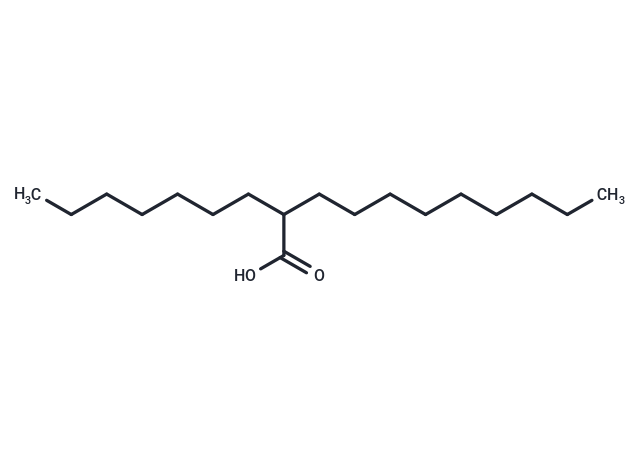
2-heptylundecanoic acid
CAS No. 22890-21-7
2-heptylundecanoic acid( —— )
Catalog No. M37481 CAS No. 22890-21-7
2-heptylundecanoic acid can be used as a fuel lubricity additive and is commonly used in the pharmaceutical and chemical industries.
Purity : >98% (HPLC)
 COA
Datasheet
HNMR
HPLC
MSDS
Handing Instructions
COA
Datasheet
HNMR
HPLC
MSDS
Handing Instructions
| Size | Price / USD | Stock | Quantity |
| 5MG | 276 | In Stock |


|
| 10MG | 394 | In Stock |
|
| 25MG | 616 | In Stock |
|
| 50MG | 830 | In Stock |
|
| 100MG | 1097 | In Stock |
|
| 200MG | Get Quote | In Stock |
|
| 500MG | Get Quote | In Stock |
|
| 1G | Get Quote | In Stock |
|
Biological Information
-
Product Name2-heptylundecanoic acid
-
NoteResearch use only, not for human use.
-
Brief Description2-heptylundecanoic acid can be used as a fuel lubricity additive and is commonly used in the pharmaceutical and chemical industries.
-
Description2-heptylundecanoic acid can be used as a fuel lubricity additive and is commonly used in the pharmaceutical and chemical industries.
-
In Vitro——
-
In Vivo——
-
Synonyms——
-
PathwayOthers
-
TargetOther Targets
-
RecptorOthers
-
Research Area——
-
Indication——
Chemical Information
-
CAS Number22890-21-7
-
Formula Weight284.48
-
Molecular FormulaC18H36O2
-
Purity>98% (HPLC)
-
Solubility——
-
SMILESO=C(O)C(CCCCCCC)CCCCCCCCC
-
Chemical Name——
Shipping & Storage Information
-
Storage(-20℃)
-
ShippingWith Ice Pack
-
Stability≥ 2 years
Reference
molnova catalog



related products
-
Compound V007-6018
Compound V007-6018 is a pharmaceutical compound used for drug screening.
-
Mitoridine
Mitoridine is an indole alkaloid compound isolated from the stem bark of Rauwolfia cumminsii Stapf.
-
RS 67333 hydrochlori...
potent and highly selective 5-HT4 partial agonist.
