


 Cart
Cart
 sales@molnova.com



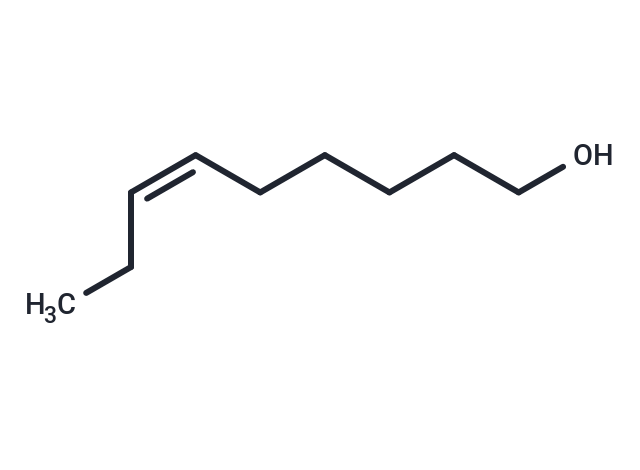
(Z)-non-6-en-1-ol
CAS No. 35854-86-5
(Z)-non-6-en-1-ol( —— )
Catalog No. M37383 CAS No. 35854-86-5
(Z)-non-6-en-1-ol (cis-6-Nonen-1-ol) is a volatile substance contained in melons and can be used to detect the freshness of melons and fruits.
Purity : >98% (HPLC)
 COA
Datasheet
HNMR
HPLC
MSDS
Handing Instructions
COA
Datasheet
HNMR
HPLC
MSDS
Handing Instructions
| Size | Price / USD | Stock | Quantity |
| 100MG | Get Quote | Get Quote |


|
| 200MG | Get Quote | Get Quote |
|
| 500MG | Get Quote | Get Quote |
|
| 1G | 26 | Get Quote |
|
Biological Information
-
Product Name(Z)-non-6-en-1-ol
-
NoteResearch use only, not for human use.
-
Brief Description(Z)-non-6-en-1-ol (cis-6-Nonen-1-ol) is a volatile substance contained in melons and can be used to detect the freshness of melons and fruits.
-
Description(Z)-Non-6-en-1-ol is a biochemical reagent that can be used as a biological material or organic compound for life science related research.
-
In Vitro——
-
In Vivo——
-
Synonyms——
-
PathwayOthers
-
TargetOther Targets
-
RecptorOthers
-
Research Area——
-
Indication——
Chemical Information
-
CAS Number35854-86-5
-
Formula Weight142.24
-
Molecular FormulaC9H18O
-
Purity>98% (HPLC)
-
Solubility——
-
SMILESC(CCCCO)/C=C\CC
-
Chemical Name——
Shipping & Storage Information
-
Storage(-20℃)
-
ShippingWith Ice Pack
-
Stability≥ 2 years
Reference
molnova catalog



related products
-
NSC 55655
NSC 55655 (5-[(2-Nitrophenyl)methylene]-2,4-thiazolidinedione) possesses antimicrobial and antioxidant activities and inhibits the proliferation of B. subtilis, S. aureus, K. pneumonia, E. coli, S. typhi , A. niger and C. albicans. A. niger and C. albicans, and can be used in diabetes mellitus.
-
[Trp11]-Neurotensin
[Trp11]-Neurotensin
-
KYP-2047
KYP-2047 is a very potent, selective Prolyl oligopeptidase (POP) inhibitor.In cell lines, oxidative stress induced a robust aggregation of α-synuclein,and low concentrations of KYP-2047 significantly reduced the number of cells with α-synuclein inclusions while abolishing the colocalization of α-synuclein and PREP.
