


 Cart
 sales@molnova.com




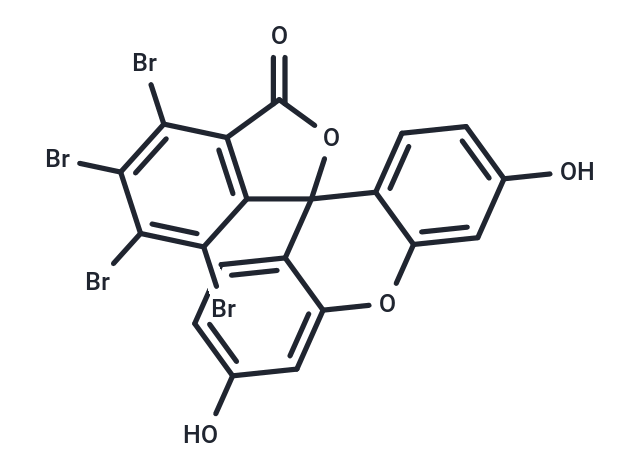
NSC 122393
CAS No. 73654-97-4
NSC 122393( —— )
Catalog No. M37335 CAS No. 73654-97-4
NSC 122393 is a fluorescent dye that inhibits the interaction between Bax and Bcl-X and induces apoptosis in Bcl-X overexpressing breast cancer cells.
Purity : >98% (HPLC)
 COA
Datasheet
HNMR
HPLC
MSDS
Handing Instructions
| Size | Price / USD | Stock | Quantity |
| 5MG | 459 | Get Quote |


|
| 100MG | Get Quote | Get Quote |
|
| 200MG | Get Quote | Get Quote |
|
| 500MG | Get Quote | Get Quote |
|
| 1G | Get Quote | Get Quote |
|
Biological Information
-
Product NameNSC 122393
-
NoteResearch use only, not for human use.
-
Brief DescriptionNSC 122393 is a fluorescent dye that inhibits the interaction between Bax and Bcl-X and induces apoptosis in Bcl-X overexpressing breast cancer cells.
-
DescriptionNSC 122393 is a fluorescent dye that inhibits the interaction between Bax and Bcl-X and induces apoptosis in Bcl-X overexpressing breast cancer cells.
-
In Vitro——
-
In Vivo——
-
Synonyms——
-
PathwayOthers
-
TargetOther Targets
-
RecptorOthers
-
Research Area——
-
Indication——
Chemical Information
-
CAS Number73654-97-4
-
Formula Weight647.89
-
Molecular FormulaC20H8Br4O5
-
Purity>98% (HPLC)
-
Solubility——
-
SMILESO=C1OC2(C3=CC=C(O)C=C3OC4=CC(O)=CC=C42)C=5C(Br)=C(Br)C(Br)=C(Br)C15
-
Chemical Name——
Shipping & Storage Information
-
Storage(-20℃)
-
ShippingWith Ice Pack
-
Stability≥ 2 years
Reference
molnova catalog



related products
-
Angiotensin 1 Human
Angiotensin 1 (Human) is the precursor to the vasoconstrictor peptide angiotensin II, cleaved by the angiotensin-converting enzyme (ACE).Angiotensin is a peptide hormone that causes vasoconstriction and an increase in blood pressure.
-
2,2-Di(4-tert-octylp...
2,2-Di(4-tert-octylphenyl)-1-picrylhydrazyl free radical
-
Endo-1,4-β-xylanase
Endo-1,4-β-xylanase (Xylanase), a glycoside hydrolase enzyme that degrades arabinoxylan (AX), is commonly utilized in biochemical research. It specifically hydrolyzes the β-xylosidic bonds linking two d-xylopyranosyl residues in a β-(1,4) configuration .
