


 Cart
Cart
 sales@molnova.com



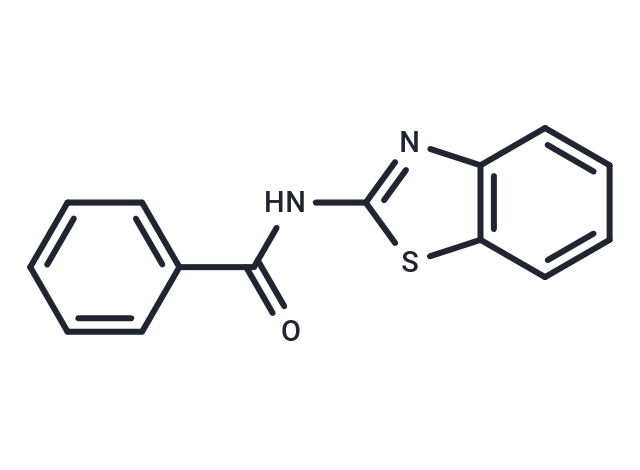
Quorum Sensing-IN-3
CAS No. 5005-14-1
Quorum Sensing-IN-3( —— )
Catalog No. M37214 CAS No. 5005-14-1
Quorum Sensing-IN-3 (QS-IN-1) is a compound with inhibitory effects on bacterial community sensing, which inhibits the exchange of information between bacteria and inhibits biofilm formation.
Purity : >98% (HPLC)
 COA
Datasheet
HNMR
HPLC
MSDS
Handing Instructions
COA
Datasheet
HNMR
HPLC
MSDS
Handing Instructions
| Size | Price / USD | Stock | Quantity |
| 5MG | 645 | In Stock |


|
| 10MG | 798 | In Stock |
|
| 25MG | 1055 | In Stock |
|
| 100MG | Get Quote | In Stock |
|
| 200MG | Get Quote | In Stock |
|
| 500MG | Get Quote | In Stock |
|
| 1G | Get Quote | In Stock |
|
Biological Information
-
Product NameQuorum Sensing-IN-3
-
NoteResearch use only, not for human use.
-
Brief DescriptionQuorum Sensing-IN-3 (QS-IN-1) is a compound with inhibitory effects on bacterial community sensing, which inhibits the exchange of information between bacteria and inhibits biofilm formation.
-
DescriptionQS-IN-1 (Compound 3a) is a quorum sensing inhibitor against pseudomonas aeruginosa. QS-IN-1 inhibits biofilm formation.
-
In Vitro——
-
In Vivo——
-
Synonyms——
-
PathwayGPCR/G Protein
-
TargetAntibacterial
-
RecptorAntibacterial
-
Research Area——
-
Indication——
Chemical Information
-
CAS Number5005-14-1
-
Formula Weight254.31
-
Molecular FormulaC14H10N2OS
-
Purity>98% (HPLC)
-
Solubility——
-
SMILESO=C(NC1=NC=2C=CC=CC2S1)C=3C=CC=CC3
-
Chemical Name——
Shipping & Storage Information
-
Storage(-20℃)
-
ShippingWith Ice Pack
-
Stability≥ 2 years
Reference
1. Sharma N, et al. Synthesis, in Silico Study and Biological Evaluation of N-(Benzothiazol/Thiazol-2-yl)benzamide Derivatives as Quorum Sensing Inhibitors against Pseudomonas aeruginosa. Chem Biodivers. 2023 Aug 21:e202300647.?
molnova catalog



related products
-
Cefazolin sodium sal...
Cefazolin sodium is a first-generation cephalosporin antibiotic, useful for the treatment of a number of bacterial infections.
-
AgrA inhibitor F19
AgrA inhibitor F19 is a small-molecule AgrA inhibitor that act as antivirulence agent against Gram-positive pathogens.
-
Clarithromycin
An antibiotic by acting as a protein synthesis inhibitor.
