


 Cart
Cart
 sales@molnova.com



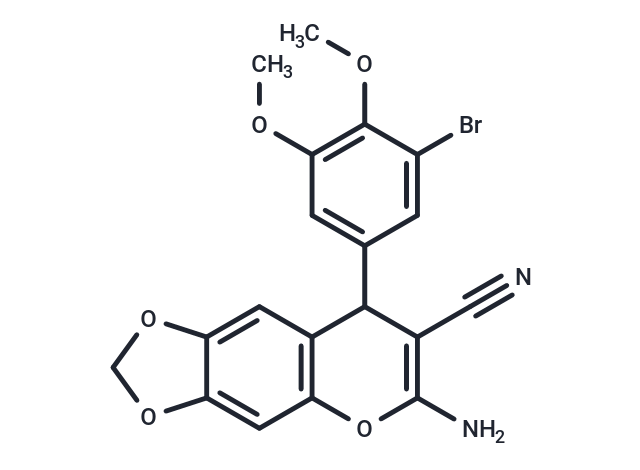
Wnt pathway inhibitor 4
CAS No. 663214-57-1
Wnt pathway inhibitor 4( —— )
Catalog No. M37077 CAS No. 663214-57-1
Wnt pathway inhibitor 4 is a small molecule antimicrobial agent with antibacterial and antiproliferative activity against cancer cells.
Purity : >98% (HPLC)
 COA
Datasheet
HNMR
HPLC
MSDS
Handing Instructions
COA
Datasheet
HNMR
HPLC
MSDS
Handing Instructions
| Size | Price / USD | Stock | Quantity |
| 25MG | 28 | In Stock |


|
| 50MG | 39 | In Stock |
|
| 100MG | Get Quote | In Stock |
|
| 200MG | Get Quote | In Stock |
|
| 500MG | Get Quote | In Stock |
|
| 1G | Get Quote | In Stock |
|
Biological Information
-
Product NameWnt pathway inhibitor 4
-
NoteResearch use only, not for human use.
-
Brief DescriptionWnt pathway inhibitor 4 is a small molecule antimicrobial agent with antibacterial and antiproliferative activity against cancer cells.
-
DescriptionWnt pathway inhibitor 4 (compound 16D) is an anticancer agent that has anti-proliferative activity.
-
In Vitro——
-
In Vivo——
-
Synonyms——
-
PathwayGPCR/G Protein
-
TargetAntibacterial
-
RecptorAntibacterial
-
Research Area——
-
Indication——
Chemical Information
-
CAS Number663214-57-1
-
Formula Weight431.24
-
Molecular FormulaC19H15BrN2O5
-
Purity>98% (HPLC)
-
Solubility——
-
SMILESC(#N)C=1C(C2=C(C=C3C(=C2)OCO3)OC1N)C4=CC(OC)=C(OC)C(Br)=C4
-
Chemical Name——
Shipping & Storage Information
-
Storage(-20℃)
-
ShippingWith Ice Pack
-
Stability≥ 2 years
Reference
1. Zhang H, et al. Design, synthesis and characterization of potent microtubule inhibitors with dual anti-proliferative and anti-angiogenic activities. Eur J Med Chem. 2018 Sep 5;157:380-396.?
molnova catalog



related products
-
BM-635
BM-635 is a small molecule anti-mycobacterial compound acting by inhibiting the mycobacterial membrane protein Large 3 (MmpL3).
-
1-Dodecylimidazole
1-Dodecylimidazole (N-Dodecylimidazole) is a lysosomotropic detergent and a cytotoxic agent. 1-Dodecylimidazole causes cell death by its acid-dependent accumulation in lysosomes, disruption of the lysosomal membrane, and releaseof cysteine proteases into the cytoplasm.
-
Polyoxyethylene stea...
Polyoxyethylene stearate is an agent of non-ionic emulsifying.
