


 Cart
Cart
 sales@molnova.com



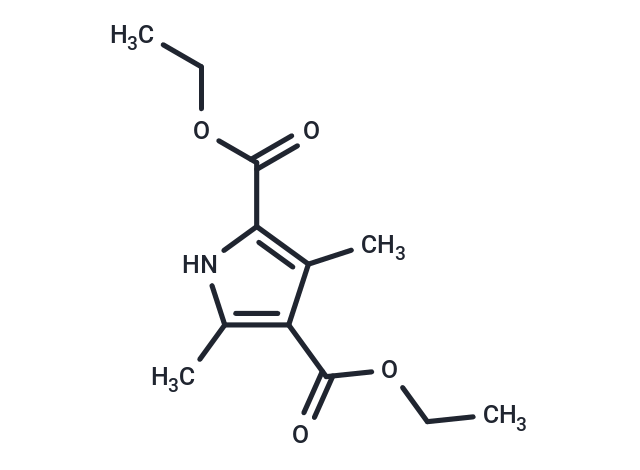
Diethyl 2,4-dimethylpyrrole-3,5-dicarboxylate
CAS No. 2436-79-5
Diethyl 2,4-dimethylpyrrole-3,5-dicarboxylate( —— )
Catalog No. M37068 CAS No. 2436-79-5
Diethyl 2,4-dimethylpyrrole-3,5-dicarboxylate is a biochemical reagent that can be used in biochemical reactions.
Purity : >98% (HPLC)
 COA
Datasheet
HNMR
HPLC
MSDS
Handing Instructions
COA
Datasheet
HNMR
HPLC
MSDS
Handing Instructions
| Size | Price / USD | Stock | Quantity |
| 100MG | Get Quote | In Stock |


|
| 200MG | Get Quote | In Stock |
|
| 500MG | 27 | In Stock |
|
| 1G | Get Quote | In Stock |
|
Biological Information
-
Product NameDiethyl 2,4-dimethylpyrrole-3,5-dicarboxylate
-
NoteResearch use only, not for human use.
-
Brief DescriptionDiethyl 2,4-dimethylpyrrole-3,5-dicarboxylate is a biochemical reagent that can be used in biochemical reactions.
-
DescriptionDiethyl 2,4-dimethylpyrrole-3,5-dicarboxylate is a biochemical reagent that can be used in biochemical reactions.
-
In Vitro——
-
In Vivo——
-
Synonyms——
-
PathwayOthers
-
TargetOther Targets
-
RecptorOthers
-
Research Area——
-
Indication——
Chemical Information
-
CAS Number2436-79-5
-
Formula Weight239.27
-
Molecular FormulaC12H17NO4
-
Purity>98% (HPLC)
-
Solubility——
-
SMILESCCOC(=O)C1=C(C)C(C(=O)OCC)=C(C)N1
-
Chemical Name——
Shipping & Storage Information
-
Storage(-20℃)
-
ShippingWith Ice Pack
-
Stability≥ 2 years
Reference
molnova catalog



related products
-
Noopept
Omberacetam is a synthetic dipeptide that has been shown to produce positive nootropic and cognitive effects in animal models by a mechanism similar to other related racetam compounds.
-
2-Methoxyfuranoguaia...
2-Methoxyfuranoguaia-9-ene-8-one is a natural product for research related to life sciences.
-
BAW2881
BAW2881 is a potent and selective VEGFR inhibitor (vascular endothelial growth factor receptor tyrosine kinase inhibitor) with activity to inhibit chronic and acute skin inflammation.
