


 Cart
 sales@molnova.com




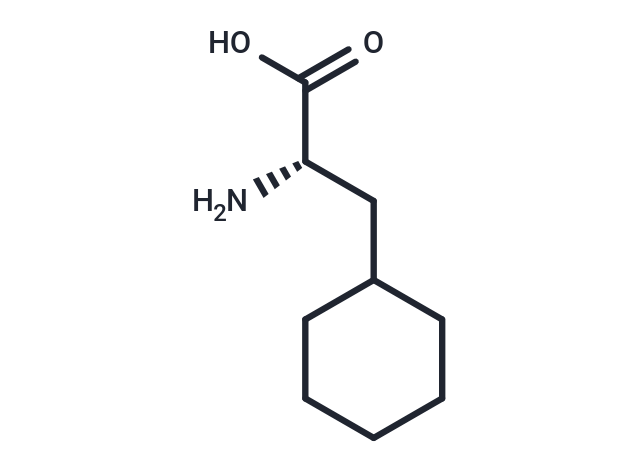
L-Cyclohexylalanine
CAS No. 27527-05-5
L-Cyclohexylalanine( —— )
Catalog No. M37054 CAS No. 27527-05-5
L-Cyclohexylalanine (L-3-Cyclohexylalanine) is an amino acid analog that binds to the heavy enzyme thioester of the short peptide S synthase.=
Purity : >98% (HPLC)
 COA
Datasheet
HNMR
HPLC
MSDS
Handing Instructions
| Size | Price / USD | Stock | Quantity |
| 100MG | 27 | In Stock |


|
| 200MG | Get Quote | In Stock |
|
| 500MG | Get Quote | In Stock |
|
| 1G | Get Quote | In Stock |
|
Biological Information
-
Product NameL-Cyclohexylalanine
-
NoteResearch use only, not for human use.
-
Brief DescriptionL-Cyclohexylalanine (L-3-Cyclohexylalanine) is an amino acid analog that binds to the heavy enzyme thioester of the short peptide S synthase.=
-
DescriptionL-Cyclohexylalanine (L-3-Cyclohexylalanine) is an amino acid analog that binds to the heavy enzyme thioester of the short peptide S synthase.L-Cyclohexylalanine can be used to synthesize anticoagulant decapeptides.
-
In Vitro——
-
In Vivo——
-
Synonyms——
-
PathwayOthers
-
TargetOther Targets
-
RecptorOthers
-
Research Area——
-
Indication——
Chemical Information
-
CAS Number27527-05-5
-
Formula Weight171.24
-
Molecular FormulaC9H17NO2
-
Purity>98% (HPLC)
-
Solubility——
-
SMILESN[C@@H](CC1CCCCC1)C(O)=O
-
Chemical Name——
Shipping & Storage Information
-
Storage(-20℃)
-
ShippingWith Ice Pack
-
Stability≥ 2 years
Reference
molnova catalog



related products
-
Ellagic acid 3-O-α-L...
Ellagic acid 3-O-α-L-rhamnopyranoside is a natural product found in the tuberous roots of [Potentilla anserina].
-
DMG-PEG2000
DMG-PEG2000 is a lipid excipient that has been used in combination with other lipids in the formation of lipid nanoparticles.
-
MID-1
MID-1 is an inhibitor of MG53-IRS-1 (Mitsugumin 53-Insulin Receptor Substrate-1) interaction.?It disrupts molecular association of MG53 with IRS-1 and abolishes MG53-induced IRS-1 ubiquitination and degradation in skeletal muscle, leading to elevated IRS-1 expression level and increased insulin signaling and glucose uptake.
