


 Cart
Cart
 sales@molnova.com



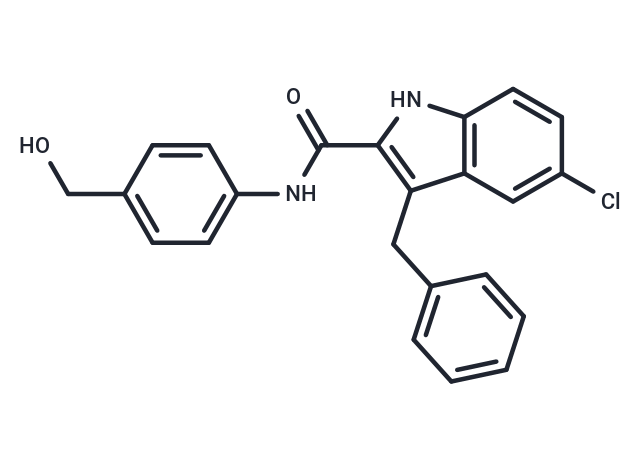
RS5517
CAS No. 2227017-46-9
RS5517( —— )
Catalog No. M37024 CAS No. 2227017-46-9
RS5517 is a novel PDZ1 structural domain ligand for the study of colorectal cancer.
Purity : >98% (HPLC)
 COA
Datasheet
HNMR
HPLC
MSDS
Handing Instructions
COA
Datasheet
HNMR
HPLC
MSDS
Handing Instructions
| Size | Price / USD | Stock | Quantity |
| 5MG | 150 | In Stock |


|
| 10MG | 221 | In Stock |
|
| 25MG | 372 | In Stock |
|
| 50MG | 538 | In Stock |
|
| 100MG | 787 | In Stock |
|
| 200MG | Get Quote | In Stock |
|
| 500MG | 2437 | In Stock |
|
| 1G | Get Quote | In Stock |
|
Biological Information
-
Product NameRS5517
-
NoteResearch use only, not for human use.
-
Brief DescriptionRS5517 is a novel PDZ1 structural domain ligand for the study of colorectal cancer.
-
DescriptionRS5517 is a specific PDZ1-domain antagonist of NHERF1 that prevented its ectopic nuclear entry. RS5517 can be used for the research of colorectal cancer.
-
In Vitro——
-
In Vivo——
-
Synonyms——
-
PathwayOthers
-
TargetOther Targets
-
RecptorOthers
-
Research Area——
-
Indication——
Chemical Information
-
CAS Number2227017-46-9
-
Formula Weight390.86
-
Molecular FormulaC23H19ClN2O2
-
Purity>98% (HPLC)
-
Solubility——
-
SMILESO=C(NC1=CC=C(C=C1)CO)C=2NC=3C=CC(Cl)=CC3C2CC=4C=CC=CC4
-
Chemical Name——
Shipping & Storage Information
-
Storage(-20℃)
-
ShippingWith Ice Pack
-
Stability≥ 2 years
Reference
1. Saponaro C, et al. β-catenin knockdown promotes NHERF1-mediated survival of colorectal cancer cells: implications for a double-targeted therapy. Oncogene. 2018 Jun;37(24):3301-3316. doi: 10.1038/s41388-018-0170-y. Epub 2018 Mar 19.
molnova catalog



related products
-
TAT 2-4
TAT 2-4 is a peptide derived from HIV-1 transactivator of transcription (Tat) protein.The HIV Tat-derived peptide is a small basic peptide that has been successfully shown to deliver a large variety of cargoes, from small particles to proteins, peptides and nucleic acids.
-
Ot-730
Ot-730(QLT 091568)is a novel selective beta-blocker prodrug for the study of ocular diseases.
-
Inebilizumab
Inebilizumab is a humanized anti-CD19 monoclonal antibody with enhanced antibody-dependent cell-mediated cytotoxicity against B cells.
