


 Cart
Cart
 sales@molnova.com



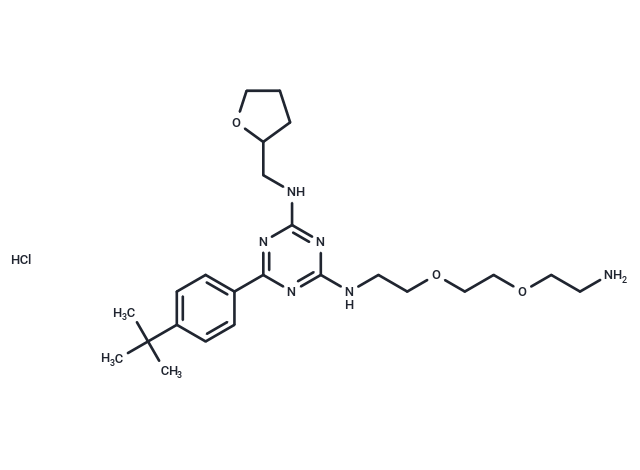
DATPT
CAS No. 2891582-75-3
DATPT( —— )
Catalog No. M36598 CAS No. 2891582-75-3
DATPT is a small molecule 12WLVSKF17 peptide mimetic molecule.DATPT inhibits SNX9-p47phox interactions and inhibits the production of reactive oxygen species and inflammatory cytokines.
Purity : >98% (HPLC)
 COA
Datasheet
HNMR
HPLC
MSDS
Handing Instructions
COA
Datasheet
HNMR
HPLC
MSDS
Handing Instructions
| Size | Price / USD | Stock | Quantity |
| 5MG | 242 | In Stock |


|
| 10MG | 392 | In Stock |
|
| 25MG | 787 | In Stock |
|
| 50MG | 1237 | In Stock |
|
| 100MG | 1972 | In Stock |
|
| 200MG | Get Quote | In Stock |
|
| 500MG | 3962 | In Stock |
|
| 1G | Get Quote | In Stock |
|
Biological Information
-
Product NameDATPT
-
NoteResearch use only, not for human use.
-
Brief DescriptionDATPT is a small molecule 12WLVSKF17 peptide mimetic molecule.DATPT inhibits SNX9-p47phox interactions and inhibits the production of reactive oxygen species and inflammatory cytokines.
-
DescriptionDATPT is a small molecule 12WLVSKF17 peptide mimetic molecule.DATPT inhibits SNX9-p47phox interactions and inhibits the production of reactive oxygen species and inflammatory cytokines.DATPT has anti-inflammatory and antimicrobial activity and acts by decreasing ATP production.DATPT is a potential compound for the treatment of sepsis.
-
In Vitro——
-
In Vivo——
-
Synonyms——
-
PathwayOthers
-
TargetOther Targets
-
RecptorReactive Oxygen Species | Antibacterial
-
Research Area——
-
Indication——
Chemical Information
-
CAS Number2891582-75-3
-
Formula Weight495.06
-
Molecular FormulaC24H39ClN6O3
-
Purity>98% (HPLC)
-
Solubility——
-
SMILESCl.N=1C(=NC(=NC1NCC2OCCC2)C=3C=CC(=CC3)C(C)(C)C)NCCOCCOCCN
-
Chemical Name——
Shipping & Storage Information
-
Storage(-20℃)
-
ShippingWith Ice Pack
-
Stability≥ 2 years
Reference
molnova catalog



related products
-
[Leu116]-Prepro-Neur...
[Leu116]-Prepro-Neuromedin U (104-136) (human)
-
NRX-1933
NRX-1933 is a molecular glue and enhances the interaction between an oncogenic transcription factor, β-Catenin, and its cognate E3 ligase, SCFβ-TrCP.
-
Methoxyamine HCl
Methoxyamine HCl covalently binds to apurinic/apyrimidinic (AP) DNA damage sites and inhibits base excision repair (BER), which may result in an increase in DNA strand breaks and apoptosis.
