


 Cart
Cart
 sales@molnova.com



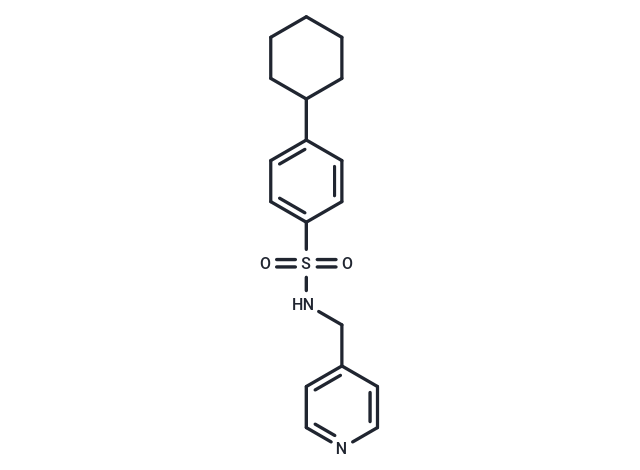
PU.1-IN-1
CAS No. 873588-27-3
PU.1-IN-1( —— )
Catalog No. M36548 CAS No. 873588-27-3
PU.1-IN-1 is a potent PU.1 inhibitor (IC50 : 2 nM) with anti-inflammatory activity.
Purity : >98% (HPLC)
 COA
Datasheet
HNMR
HPLC
MSDS
Handing Instructions
COA
Datasheet
HNMR
HPLC
MSDS
Handing Instructions
| Size | Price / USD | Stock | Quantity |
| 10MG | 40 | In Stock |


|
| 25MG | 74 | In Stock |
|
| 50MG | 115 | In Stock |
|
| 100MG | Get Quote | In Stock |
|
| 200MG | Get Quote | In Stock |
|
| 500MG | Get Quote | In Stock |
|
| 1G | Get Quote | In Stock |
|
Biological Information
-
Product NamePU.1-IN-1
-
NoteResearch use only, not for human use.
-
Brief DescriptionPU.1-IN-1 is a potent PU.1 inhibitor (IC50 : 2 nM) with anti-inflammatory activity.
-
DescriptionPU.1-IN-1 (compound A11) is a potent PU.1 inhibitor with an IC50 of 2 nM. PU.1-IN-1 has anti-inflammatory properties.
-
In Vitro——
-
In Vivo——
-
Synonyms——
-
PathwayOthers
-
TargetOther Targets
-
RecptorOthers
-
Research Area——
-
Indication——
Chemical Information
-
CAS Number873588-27-3
-
Formula Weight330.44
-
Molecular FormulaC18H22N2O2S
-
Purity>98% (HPLC)
-
SolubilityIn Vitro:?DMSO : 125 mg/mL (378.28 mM; Ultrasonic )
-
SMILESS(NCC=1C=CN=CC1)(=O)(=O)C2=CC=C(C=C2)C3CCCCC3
-
Chemical Name——
Shipping & Storage Information
-
Storage(-20℃)
-
ShippingWith Ice Pack
-
Stability≥ 2 years
Reference
1. Li-Huei Tsai, et al. Systems and assays for identifying pu.1 inhibitors. WO2021051016A1.
molnova catalog



related products
-
Ilexoside K
Ilexoside K is a natural product from Ilex pubescens.
-
(S)-Desmethyl-NNC112
(S)-Desmethyl-NNC112 ((+)-Desmethyl-NNC112) is a selective PET radioligand that binds to D-dopamine receptors.
-
3-methyl toxoflavin
3-methyltoxoflavin is an effective inhibitor of protein disulfide isomerase (PDI) and its IC50 value is 170 nM.
