


 Cart
Cart
 sales@molnova.com



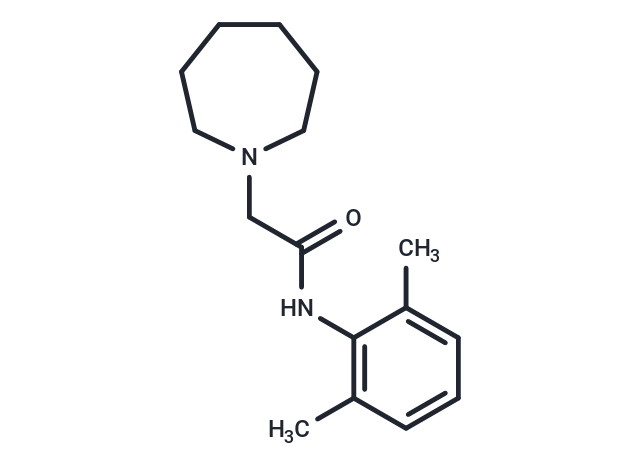
Pincainide
CAS No. 83471-41-4
Pincainide( —— )
Catalog No. M36382 CAS No. 83471-41-4
Pincainide is a novel beta-aminoaniline that inhibits, in a dose-dependent manner, diseases caused by abnormal norepinephrine vascular smooth muscle function.
Purity : >98% (HPLC)
 COA
Datasheet
HNMR
HPLC
MSDS
Handing Instructions
COA
Datasheet
HNMR
HPLC
MSDS
Handing Instructions
| Size | Price / USD | Stock | Quantity |
| 5MG | 411 | In Stock |


|
| 10MG | 562 | In Stock |
|
| 25MG | 866 | In Stock |
|
| 100MG | Get Quote | In Stock |
|
| 200MG | Get Quote | In Stock |
|
| 500MG | Get Quote | In Stock |
|
| 1G | Get Quote | In Stock |
|
Biological Information
-
Product NamePincainide
-
NoteResearch use only, not for human use.
-
Brief DescriptionPincainide is a novel beta-aminoaniline that inhibits, in a dose-dependent manner, diseases caused by abnormal norepinephrine vascular smooth muscle function.
-
DescriptionPincainide is a novel beta-aminoaniline that inhibits, in a dose-dependent manner, diseases caused by abnormal norepinephrine vascular smooth muscle function.
-
In Vitro——
-
In Vivo——
-
Synonyms——
-
PathwayOthers
-
TargetOther Targets
-
RecptorOthers
-
Research Area——
-
Indication——
Chemical Information
-
CAS Number83471-41-4
-
Formula Weight260.37
-
Molecular FormulaC16H24N2O
-
Purity>98% (HPLC)
-
Solubility——
-
SMILESCC1=CC=CC(C)=C1NC(=O)CN1CCCCCC1
-
Chemical Name——
Shipping & Storage Information
-
Storage(-20℃)
-
ShippingWith Ice Pack
-
Stability≥ 2 years
Reference
molnova catalog



related products
-
TCV-309 chloride
A highly potent and selective platelet activating factor (PAF) antagonist; inhibits PAF-induced aggregation of rabbit and human platelets with IC50s of 33 nM and 55 nM respectively.
-
Diphenylcyclopropeno...
Diphencyprone is a topical drug used to treat alopecia areata, alopecia totalis, and refractory warts.
-
Acetosyringone
Acetosyringone(AS) is a phenol secreted by wounded plant tissues.Acetosyringone is a phenolic natural product with analgesic antipyretic and anti-inflammatory actions.
