


 Cart
Cart
 sales@molnova.com



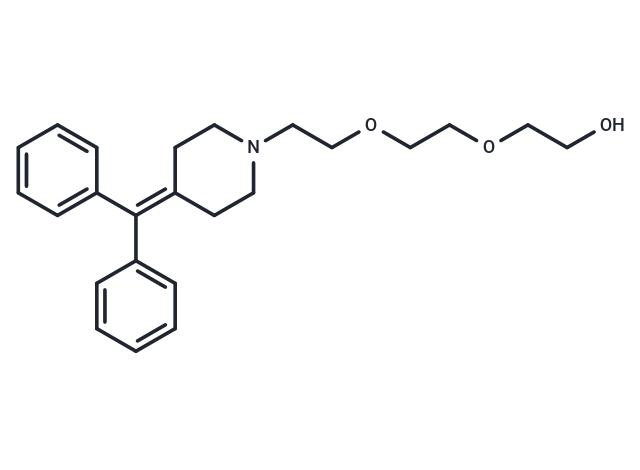
Pipoxizine
CAS No. 55837-21-3
Pipoxizine( —— )
Catalog No. M36111 CAS No. 55837-21-3
Pipoxizine has an antagonistic effect on histamine-induced bronchoconstriction and may be used in the study of asthma disease.
Purity : >98% (HPLC)
 COA
Datasheet
HNMR
HPLC
MSDS
Handing Instructions
COA
Datasheet
HNMR
HPLC
MSDS
Handing Instructions
| Size | Price / USD | Stock | Quantity |
| 5MG | 247 | In Stock |


|
| 10MG | 371 | In Stock |
|
| 25MG | 620 | In Stock |
|
| 50MG | 863 | In Stock |
|
| 100MG | 1172 | In Stock |
|
| 200MG | Get Quote | In Stock |
|
| 500MG | 2353 | In Stock |
|
| 1G | Get Quote | In Stock |
|
Biological Information
-
Product NamePipoxizine
-
NoteResearch use only, not for human use.
-
Brief DescriptionPipoxizine has an antagonistic effect on histamine-induced bronchoconstriction and may be used in the study of asthma disease.
-
DescriptionPipoxizine has an antagonistic effect on histamine-induced bronchoconstriction and may be used in the study of asthma disease.
-
In Vitro——
-
In Vivo——
-
Synonyms——
-
PathwayOthers
-
TargetOther Targets
-
RecptorOthers
-
Research Area——
-
Indication——
Chemical Information
-
CAS Number55837-21-3
-
Formula Weight381.51
-
Molecular FormulaC24H31NO3
-
Purity>98% (HPLC)
-
Solubility——
-
SMILESC(=C1CCN(CCOCCOCCO)CC1)(C2=CC=CC=C2)C3=CC=CC=C3
-
Chemical Name——
Shipping & Storage Information
-
Storage(-20℃)
-
ShippingWith Ice Pack
-
Stability≥ 2 years
Reference
molnova catalog



related products
-
m-PEG2-Br
m-PEG2-Br is a PEG-based PROTAC linker that can be used in the synthesis of PROTACs.
-
16α-Bromoepiandroste...
16α-Bromoepiandrosterone (BEA) is a water-soluble synthetic sterol related to DHEA and is used in studies of type II diabetes and non-diabetic tuberculosis infections.
-
Laricitrin 3-O-gluco...
Laricitrin 3-O-glucoside is an antioxidant agent. Laricitrin 3-O-glucoside correlates significantly with DPPH assay and CUPRAC assay.
